Monet & Venice
de Young
March 21 – July 26
“Venice …no, I will not go to Venice…” Monet wrote to a friend.
Claude Monet visited Venice only once. Yet, while he was there, he created 37 paintings – often considered his most dazzling works.
This exhibition is the first dedicated to Monet’s Venetian cityscapes since their debut more than century ago. Featuring more than 100 artworks, the exhibition places Monet’s Venice paintings alongside select works from across his career, including his beloved Water Lilies. We are also treated to Venetian views by artists such as Renoir, Sargent and Canaletto.
Unlike the bustling scenes painted by other artists, Monet’s Venice is eerily deserted, its architecture, buildings and canals dissolving in an encompassing, hazy light. He paints Venice in his well-known “enveloppe” – painting the atmosphere, light and colored air surrounding a subject, rather than the subject itself.
Some may find Monet’s Venice perplexingly unfulfilling: a sunset too lurid and unsubtle, buildings too squat, heavy and wobbly, the subtleties of its water seemingly beyond his typical brushwork. Clearly, his cataracts were already beginning to affect his color perception. Yet, his choosing to continue his work, accepting his impediment, suggested a way for other physically challenged artists, like Matisse and Kahlo, to embrace their physical limitations and still flourish.
Take a Vacay
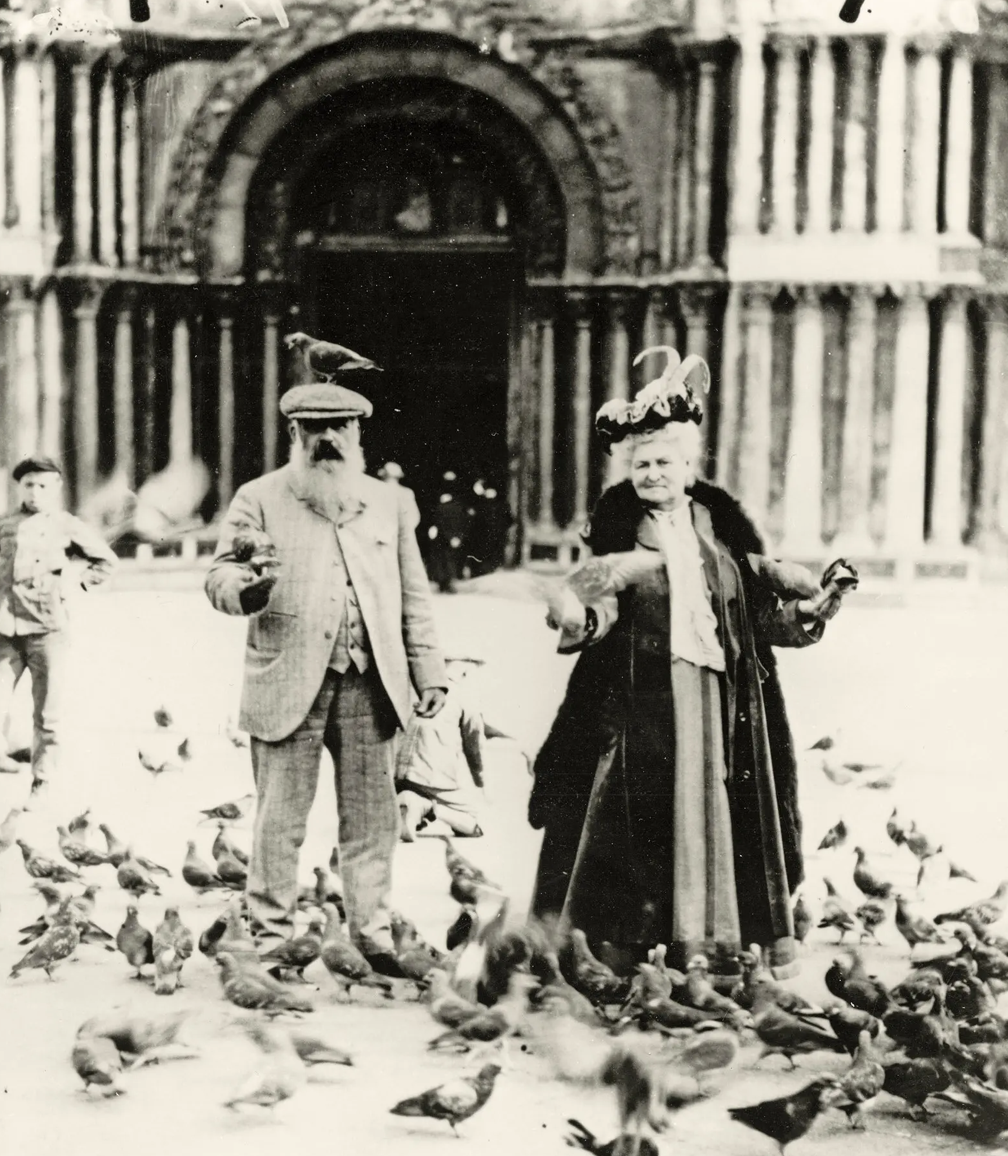
Someone snapped a picture of Claude and Alice, arms outstretched and covered in birds. The couple have that look of tourist obligation, dutiful, a little silly, tired. A bird perches on Monet’s cap.
Monet’s gallery dealer had always urged him to create works featuring Venice, believing the paintings would sell well in Paris. At 68, he shrewdly chose to stick to his own territory, a triangle of Normandy stretching down through Rouen to the ornamental water garden he kept northwest of Paris. Then his wife, Alice Hoschedé, insisted her husband forget his ongoing frustrations with his “endless water lilies” attempts and accept an invitation to stay free of charge in the floating city. Monet agreed to a vacation, with no intention of painting.
They arrived on October 1, 1908, and hired gondolas to travel down the Grand Canal. “I’m too old to paint such beautiful things,” he assured her. They admired the Tintorettos at the Scuola Grande di San Rocco. They cupped handfuls of birdseed for the pigeons at Saint Mark’s Basilica. They were tourists on vacation.
Then the dam burst. An eight-day-week after his arrival, he was putting in ten-hour days on the water in two-hour shifts. He sat, shivering at his easel until December. 😵💫
His 21 paintings in this exhibition illustrate that what grabbed him was the special density of the light there and the dreamlike supremacy of water. How could these charms fail? As you view the 100 artworks in the show, you are surrounded by proof that Venice – La Serenissima – never fails.
The show presents 70 works by Monet’s contemporaries and forerunners. These paintings allow you to consider the less obvious trials that Monet faced. These challenges, of recognition and art history, cut to the heart of his craft and apparently emboldened him to play with water and solids in a way that eventually would make his iconic Water Lilies so successful.
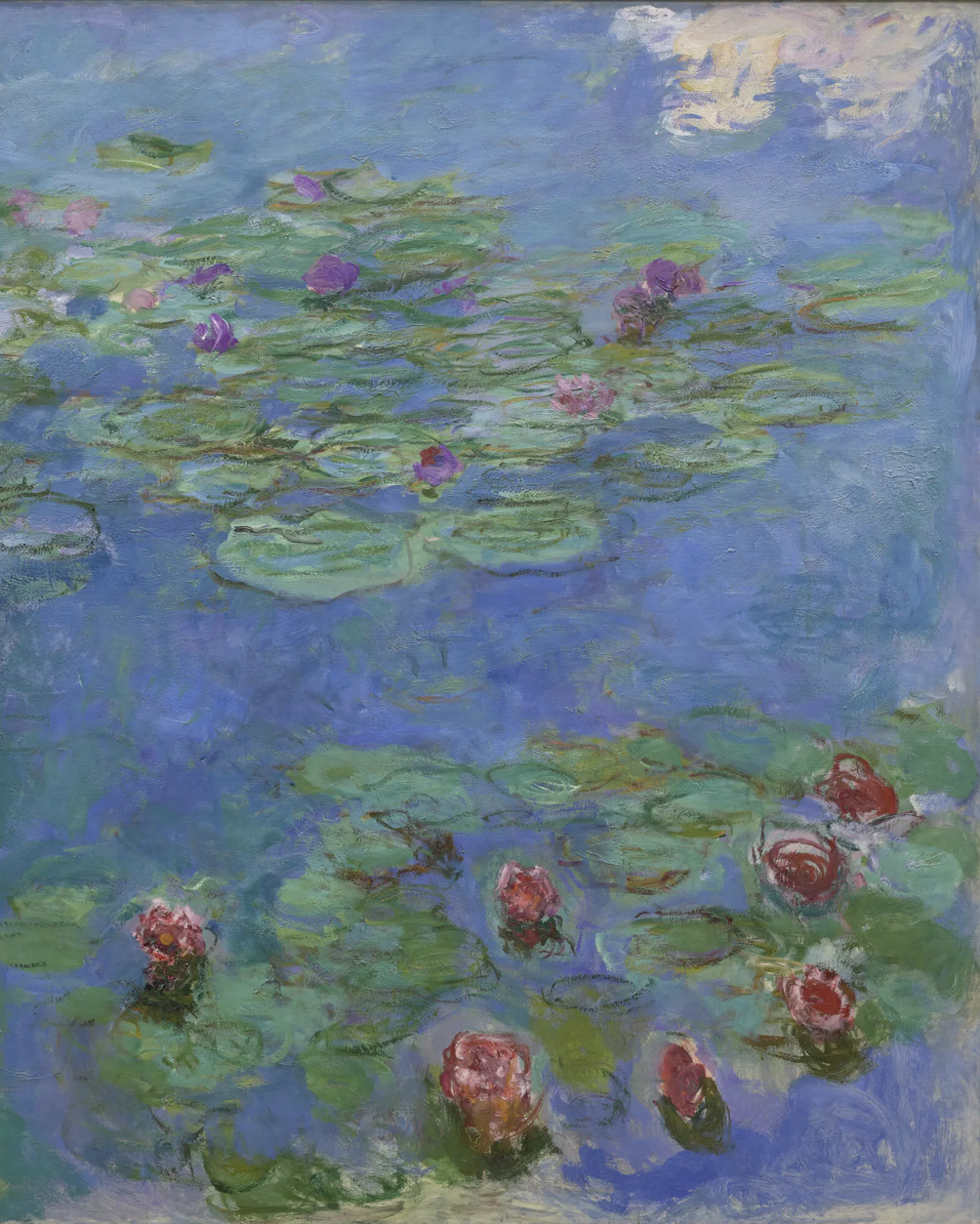
When he returned from Venice, Monet resumed work on those abandoned Water Lilies paintings. Writing to Durand-Ruel, he revealed, “My trip to Venice has had the advantage of making me see my canvases with a better eye.”
Water, Water Everywhere
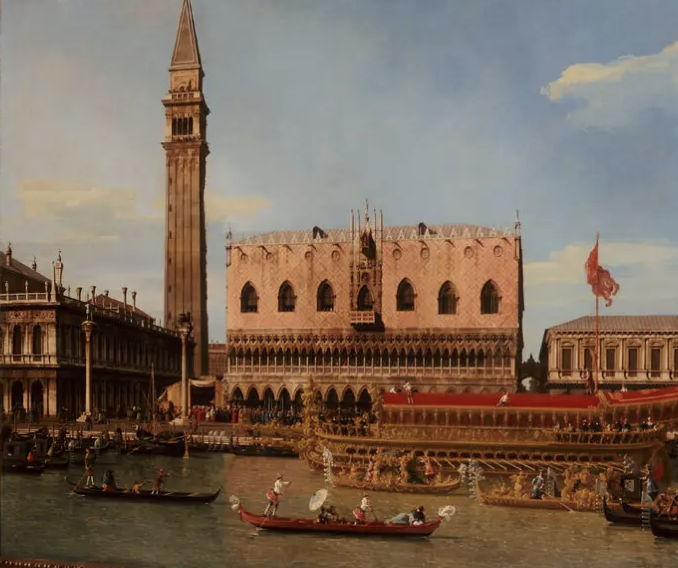
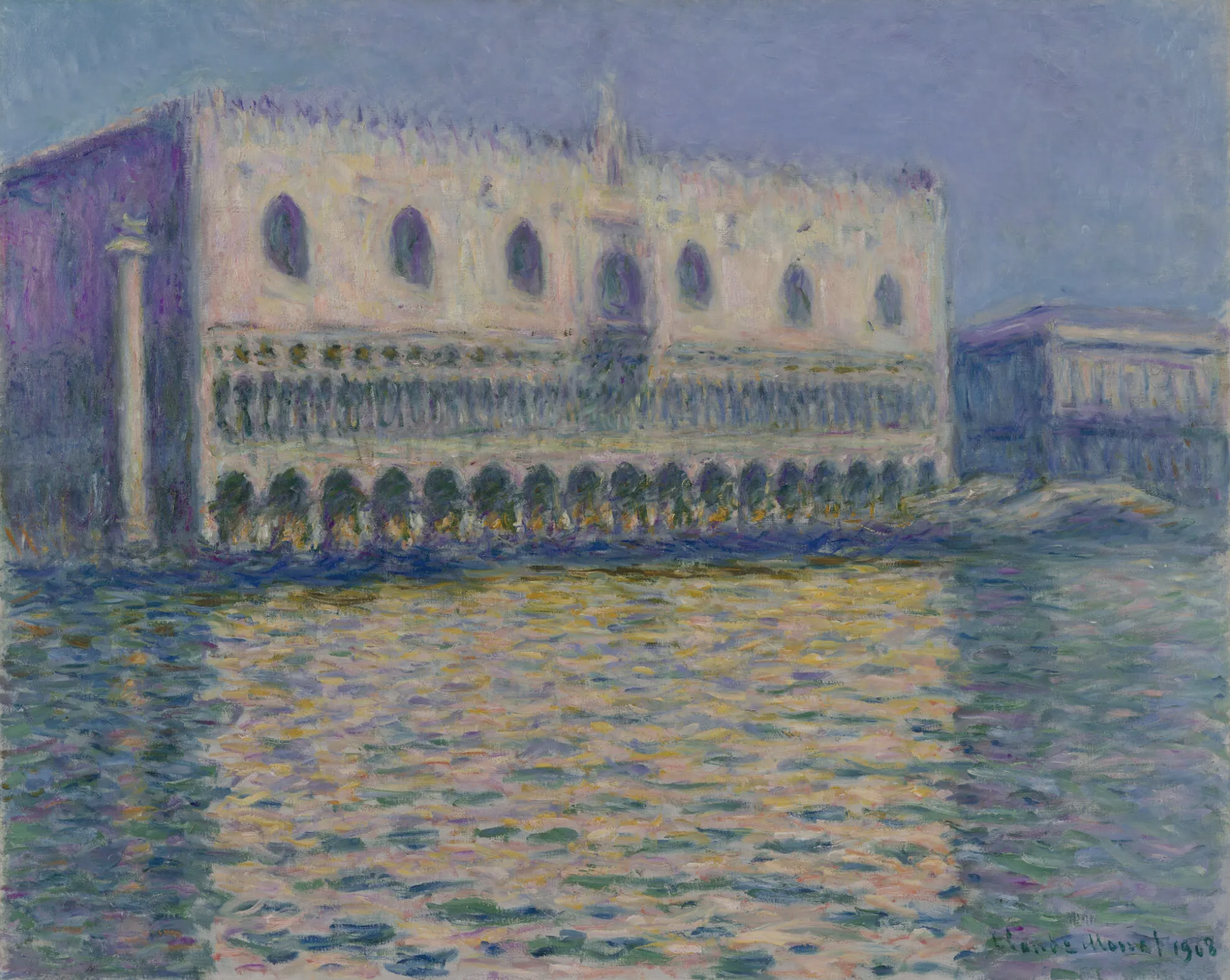
L2R Canaletto and Monet in their renditions of the Doge Palace. In life, the Doge stands as a broad rectangle of marble atop a colonnade. In Monet’s work, the Palace is imposing but also oddly see-through, thanks to its alternating pink and white stonework, like a bar of lathered soap standing on tippy toes.
For his three renditions of the Doge’s Palace, Monet would begin his day across the water from it at 8am. You will notice how unromantically the building has been rendered. Despite Monet’s gentle brushwork, he intentionally does not hide the pocked, somewhat clunky solidity of the rectangle with its seven Gothic windows, the two rightmost ones drooping to depict the renovations after a fire in 1483.
In Venice, Monet seems more inclined toward representation. In the five views of San Giorgio Maggiore, the domed church that dominates the Grand Canal and which Monet would paint daily from 10am until lunch, he details specific pediments and column bays “envelopped” in periwinkle, emerald, buttercream and rose. (See directly below and in triptych near the bottom.)
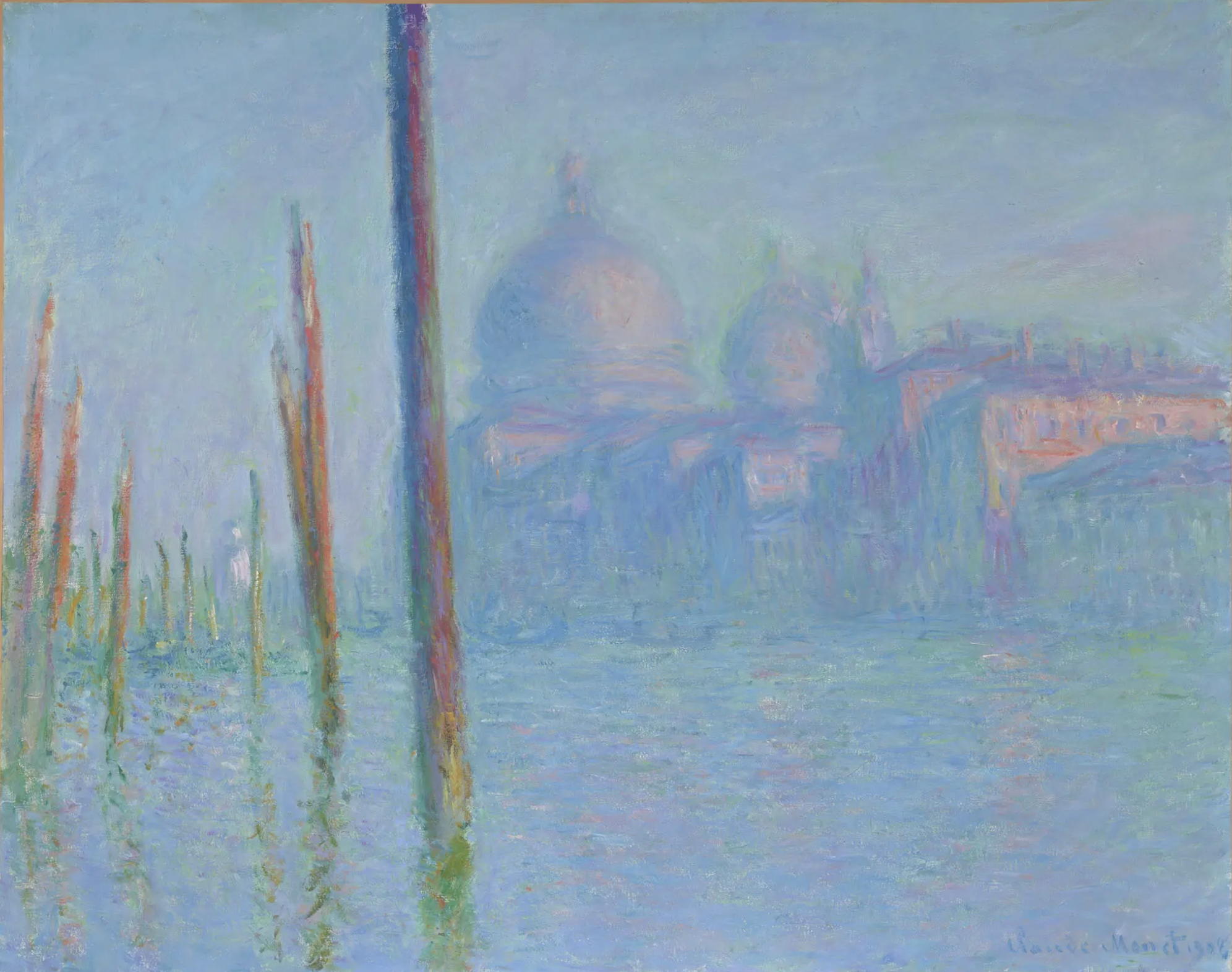
The Church of San Giorgio Maggiore. Whether you’ve seen these buildings in person or just books, you are drawn into the game of “Are these colors true to life?”
Long before the 20th century, Venice was a painter’s mecca. This show offers a glorious array of the works of other great artists caught in the city’s charms. Six of J.M.W. Turner’s watercolors are here, effervescent and quick. So too is an exacting architectural watercolor from John Ruskin, Venice’s preservationist scold. Signac’s oils capture pastel lagoons, Whistler provides moody streetscape etchings; this is joined by the works of early art photographers Steichen and Coburn.
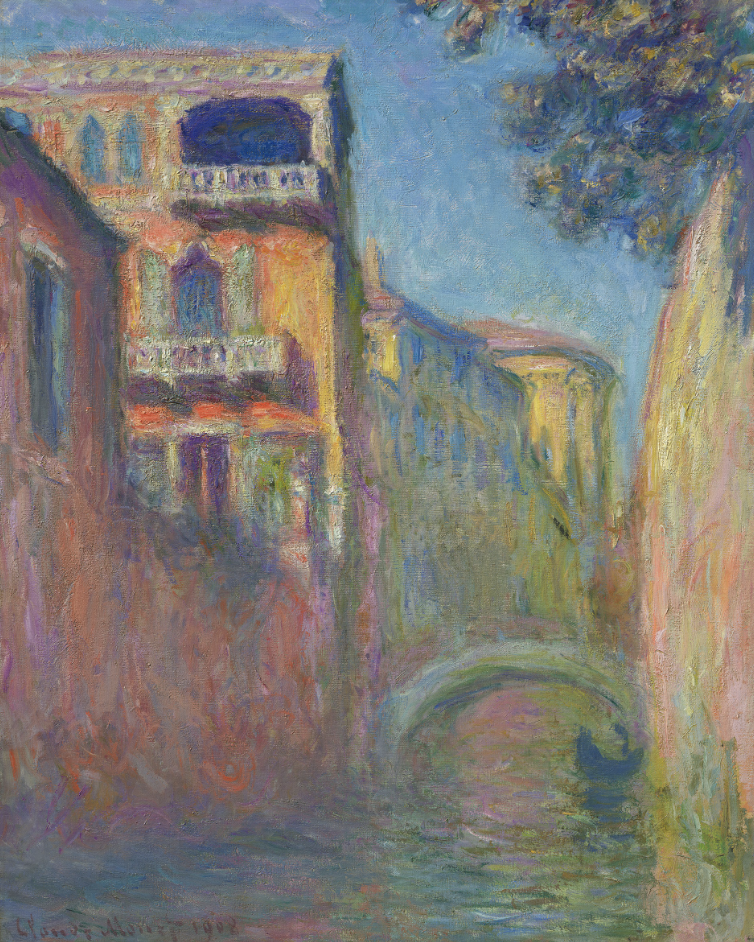
Rio della Salute. The sharp yellow scoops down in the fore-water of a Ducal Palace and the bruise-colored mudslide present the physical world as if space and time have divorced.
“It’s frightening the number of painters here, in this small square on San Giorgio,” Alice wrote to her daughter. In fact, the American artist Louis Ashton Knight (working cheek by jowl with Monet) had to lend the shivering older man his coat, as he postponed his departure one day. Monet’s visit coincided with the annual Presentation of the Virgin. “A ship is almost every day anchored precisely in front of the motif that I wanted to paint,” he complained. Alice saw him circle a scene in his gondola for hours, “absolutely furious and regretful.”
When Monet spills a slice of dock into the foreground of his vibrating Ducal Palace (above), he seems to be standing you, the last human alive, where he once was, to witness an abandoned Floating City. In this, he foreshadows Derek Parfit in his photo-pilgrimages and filmmaker Nicolas Roeg in his haunting scenes from Don’t Look Now, as they captured the isolating beauty of a Venice unobserved. And so it continues … La Serenissima seduces, again and again.
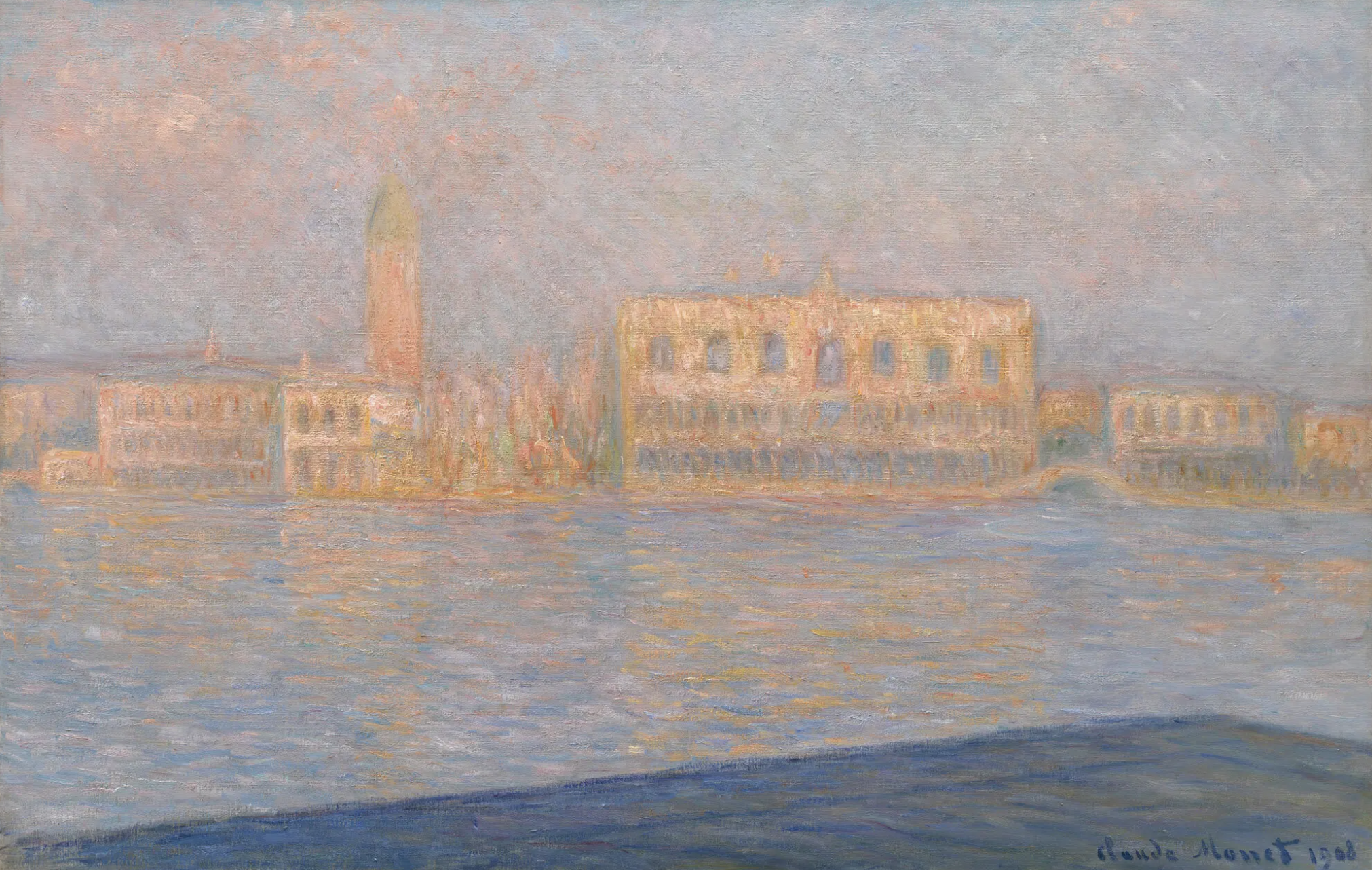
The Palazzo Ducale, Seen from San Giorgio Maggiore
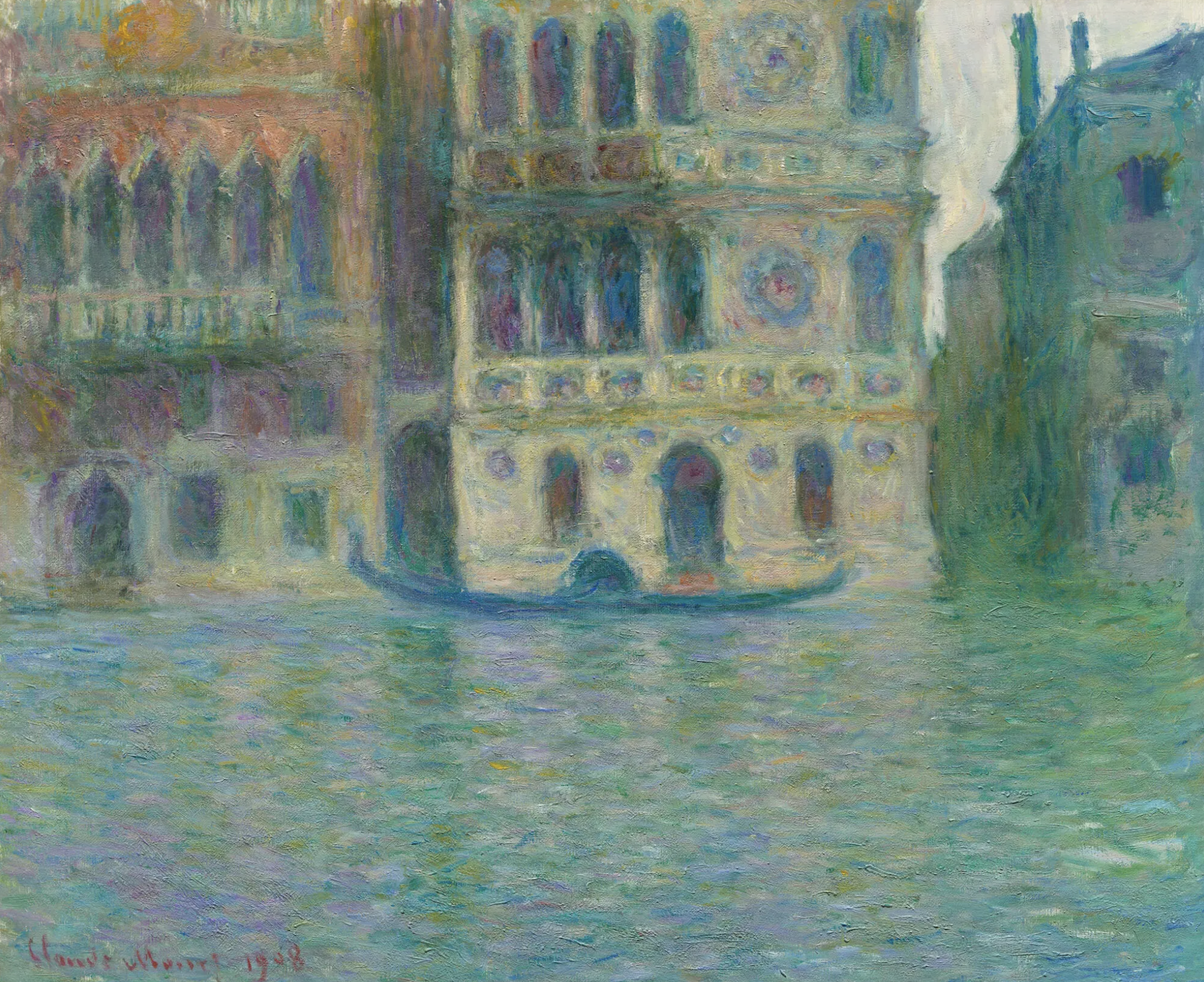
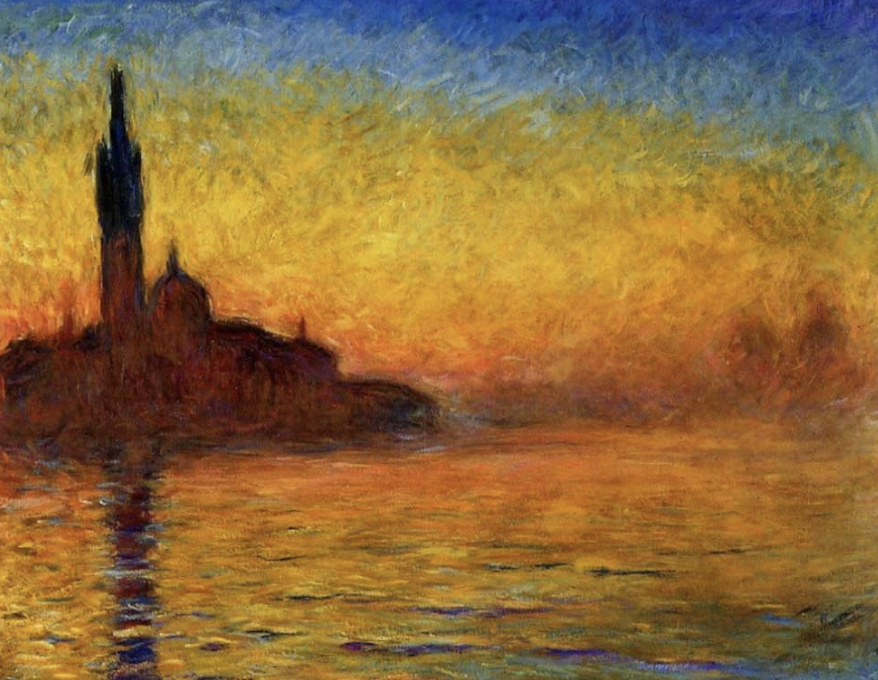
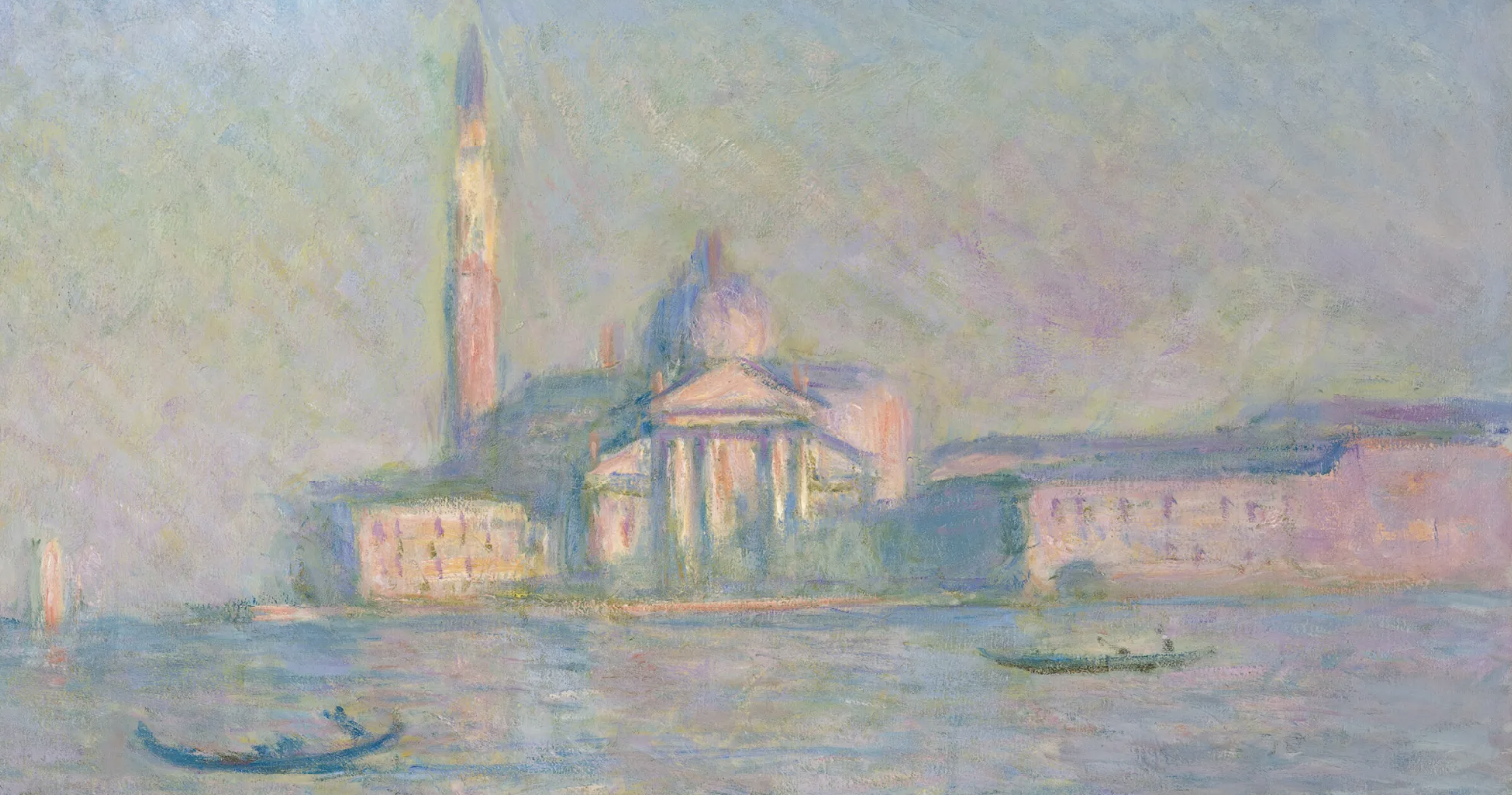
L2R: Palazzo Dario; San Giorgio Maggiore at Dusk and The Church of San Giorgio Maggiore
Back in Giverny, after Alice died of leukemia in 1911, Monet finished the Venice pictures. Revisiting them, he thought only of Alice, he said. When the paintings went up at Bernheim-Jeune in 1912, to critical praise, he confided to his longtime dealer Paul Durand-Ruel, “They are bad and I’m certain of it.”
Great painter; lousy critic. A truth we should remember for our own lives.
Special Events:
Member Reception – March 19, 7:30-9:30
Member Hours – March 20-21, 5:15-8:30
Opening Day Talk – March 21, 1:00
For tickets to the Special Events, click here.
For more information on this exhibition, click here.
Success!
Water Lilies, post-Venice
My thanks to Walker Mimms / New York Times