Resistance & Exhaustion
The Prince of Homburg:
Solo Exhibition – P. Staff
Yerba Buena Center for the Arts
Ongoing – June 14
P. Staff challenges us:
“Why fight for power on the terms that … [are] given to us?
Why not just destroy everything?
…Then you get to become the sleepwalker.”
At a time when issues of identity, autonomy, body politics and social control feel especially urgent, the YBCA presents The Prince of Homburg. Enjoy this video and the surrounding artworks in its first unveiling outside of Europe.
Loosely inspired by Heinrich von Kleist’s 1810 namesake play,* the work explores resistance and exhaustion as a response to structural oppression. P. Staff, a visual and performance artist based in London and Los Angeles, has chosen to codify these tensions through a focus on queer and trans bodies, experiences and histories, along with contradictory yet intertwined feelings of pain and pleasure.
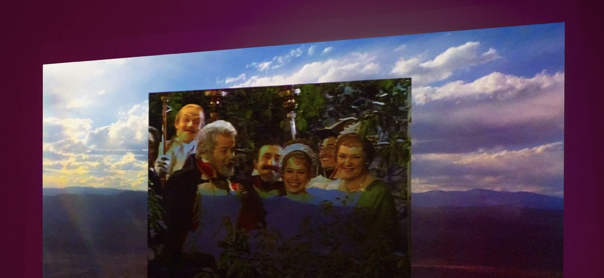
The centerpiece of the installation is a 23-minute video, which alternates between nighttime scenes of a sleepwalking protagonist in a dystopic landscape, and daytime clips of scholars, activists and artists reflecting on contemporary queer and trans identity.
Leitmotif – Individual Will v. State Control
Curator Jeanne Gerrity explains, “In recent months, as this country, and the world, keep sliding further into fascism, and we continue to witness the condemnation of certain lives, I feel like The Prince of Homburg – with its focus on agency and state control – really resonates. It offers a way of understanding ourselves as political subjects and considers sleeping and dreaming as a form of resistance.”
“The message of the play is actually quite ambiguous and it has been interpreted by different societies to fit their agenda,” Gerrity continues. “[I]t’s sometimes considered a triumph of individual will, whereas other times, most notably by the Third Reich, it’s viewed as an example of the omnipotence of the state.”
Staff’s take on the play differs. “For [Staff], neither of those interpretations is correct. Neither the individual citizen nor the government will prevail,” Gerrity explains. “Staff’s interpretation is intentionally (in the artist’s own words) ‘promiscuous and abstracted.’”
YBCA has chosen to present the video within an intimate, cabaret-style gallery, with visitors seated at café tables. The immersive installation also includes photograms and a security fence sculpture with impaled objects. All the surrounding artworks feature items related to the video.
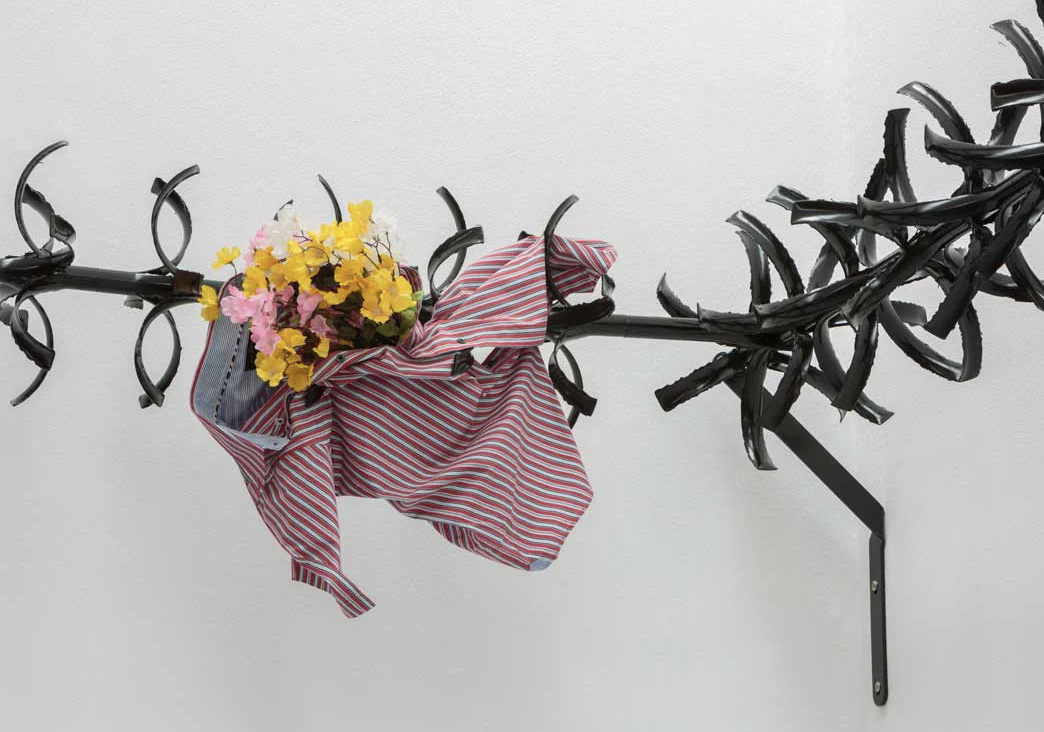
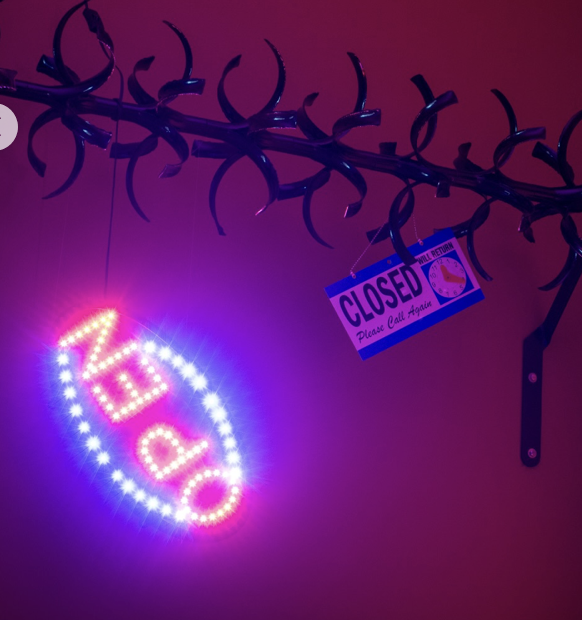
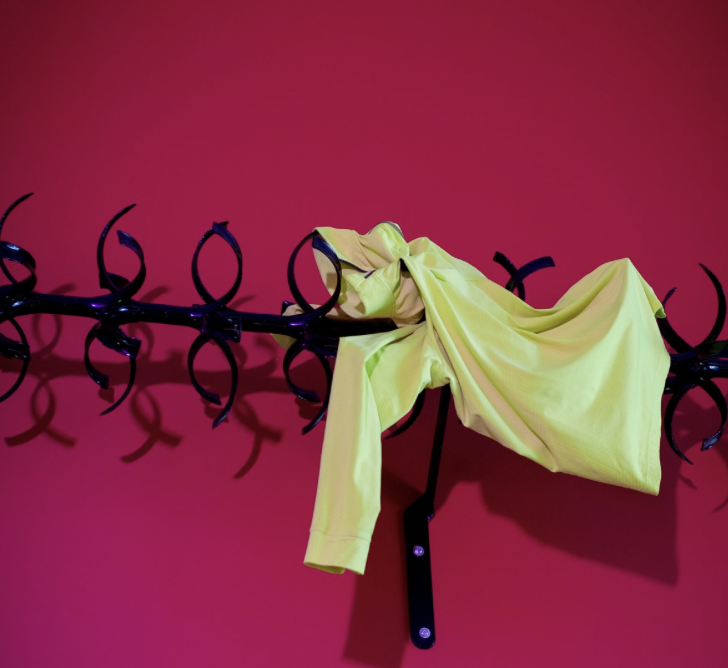
Looking at the impaled objects scattered throughout the exhibition, I am eerily reminded of Mattthew Shephard, a 21-year-old gay University of Wyoming student who was kidnapped, brutally beaten, robbed, tied to a fence in a rural area near Laramie, WY and left there to die, in October 1998. (Shephard actually succumbed to his injuries several days later.)

The Play Is the Thing
*You really didn’t think that I was going to leaving you hanging, did you? (If so, you are not regular readers of this blog series and its one-stop-shopping approach.)
von Kleist’s The Prince of Homburg is a drama exploring the conflict between duty and desire. Prussian Prince Friedrich is talented but impulsive. He sleepwalks, daydreaming of victory and of his love for Princess Natalie. In this state, he fails to hear the Prussian general’s strict command not to attack the Swedes until ordered to do so. Thus, at the Battle of Fehrbellin, the Prince charges early, leading to a decisive victory but violating military law. He is arrested, court-martialed and sentenced to death. In the feel-good twist ending, the judge pardons him and the Prince is led (blindfolded) to the altar not the firing squad.
For more information on YBCA’s The Prince of Homburg, click here.