Weaving a Legacy
Drawing with Thread
ShinJa Lee
BAMPFA
(Berkeley Art Museum)
Ongoing – February 1, 2026
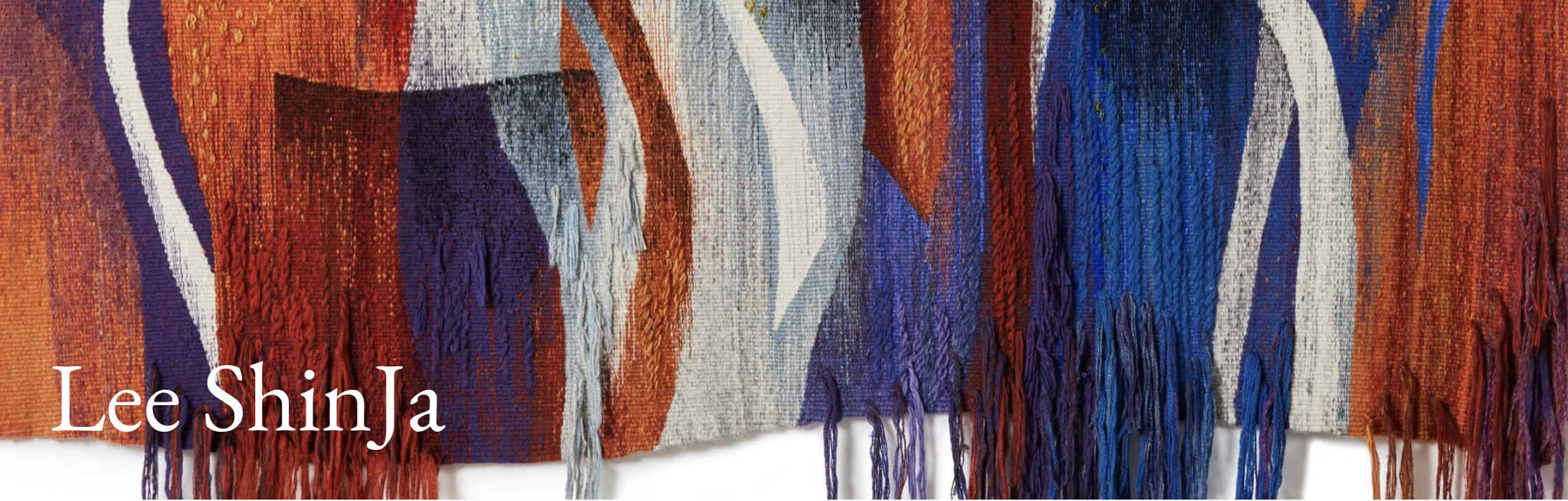
We all know that it takes courage to be an artist. Courage to acknowledge that you cannot stifle the creative voice. Courage to reveal your works to a disinterested public. Courage to continue to believe in yourself in the face of early setbacks. At 95, ShinJa Lee has displayed that courage since she entered art school in 1950..
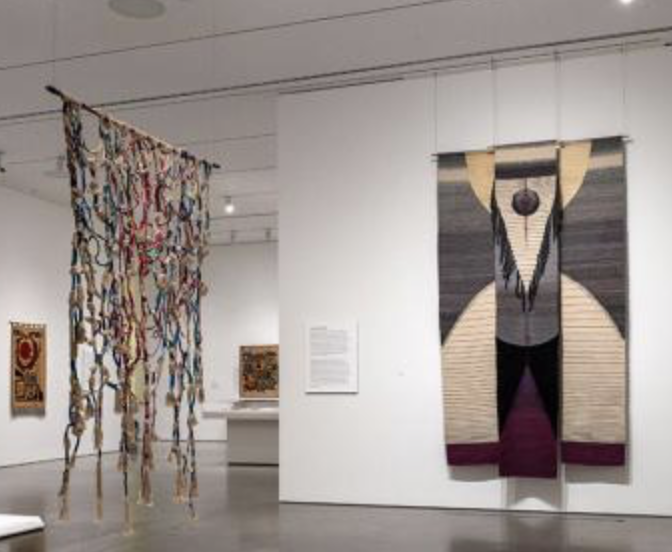
Lee is a pioneering first-generation Korean fiber artist and educator. During the 1950s-’60s, when working with thread and fabric was considered domestic labor, Lee broke new ground in the evolution of Korean art. She experimented with modern formal techniques, driving innovations in embroidery, dyeing, weaving and tapestry to make increasingly large-scale sculptural forms. Lee expanded the breadth and depth of tapestry using found and made objects, figuration and abstraction. Ultimately, she broke with the dominant idioms and traditions of recognized Korean craft, developing a then-unestablished genre.
At a time when figuration and traditional embroidery were marked by limited styles and techniques, her work was marked by the intrepid use of wax-resist dye and contemporary embroidery applications to break up shapes and emphasize textures. Her 1965 solo exhibition featured bold collages made from everyday materials such as flour sacks, mosquito nets, aluminum foil and magazines. Short-sighted critics accused her of “ruining traditional Korean embroidery,” failing to appreciate her art form, displayed in works such as Portrait of My Daughter, which is made with cotton and wool threads and oil pastels.
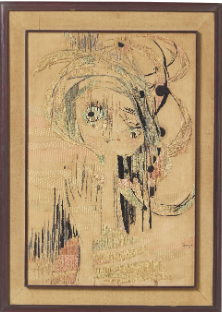
Portrait of My Daughter
In the 1970s, due to limitations in sourcing materials, she repurposed fibers from wool sweaters and thread from bedding. With exposure to the works of international fiber artists at the 1970 Osaka World Expo and later the 1983 Lausanne International Tapestry Biennial in Switzerland, she began to expand her practice into unique sculptural forms and installations. In the 1972 Korean National Exhibition, she presented Wall Hanging, which is considered Korea’s first-ever exhibited tapestry artwork.

“Without any formal training in embroidery or weaving, I often became the subject of ridicule, with people jokingly asking whether I stitched my works with my toes instead of my fingers.”
Her pieces from the 1980s are particularly notable for their intense contrast of red and black and their grand verticality. They convey Lee’s loss and despair following the death of her husband, painter Chang Woon Sang, while emphasizing her reverence for life and will to live.
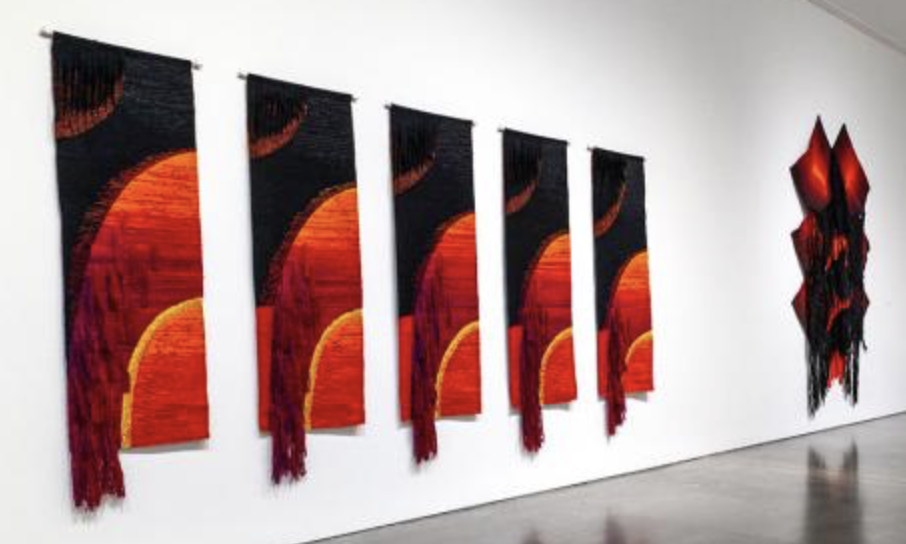
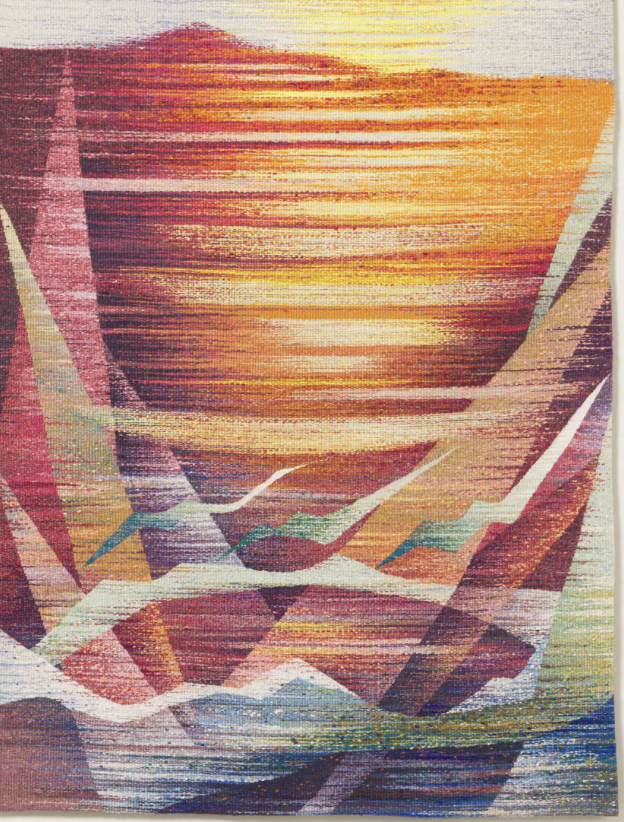
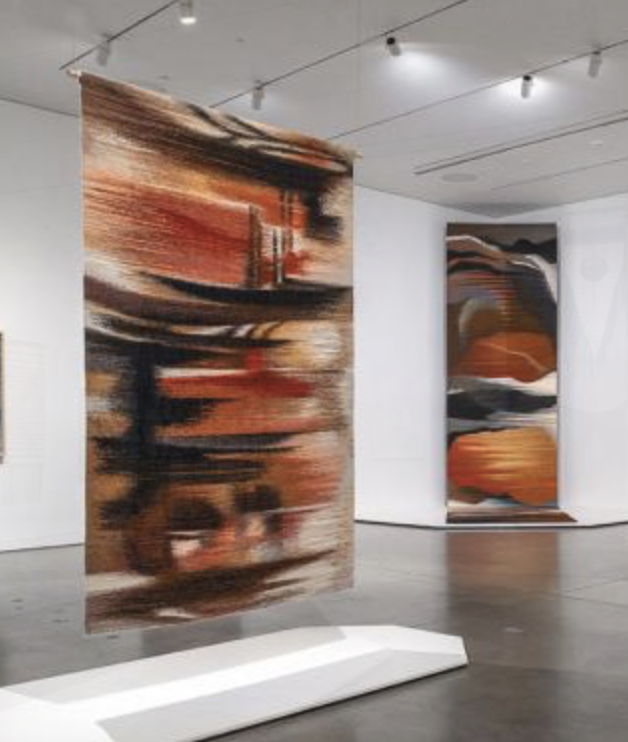
Also in the 80s, Lee expanded her practice by integrating other media, such as painting and sculpture. Using materials like twine, paper, twigs, wires, and cables, she expanded her textile works to large-scale sculptural installations. Lee continued to push boundaries in her series “Spirit of Mountain” from the 1990s. In these and other works, the artist sought to capture the intrinsic order of nature and her longing for the landscape of her hometown. The metal frames in these later works serve as windows, offering abstract glimpses into nature.
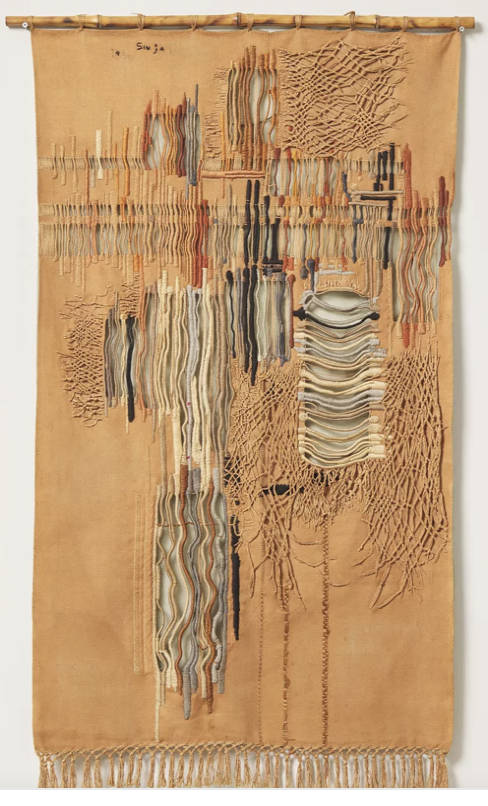
While known in Asia and Europe, Drawing with Thread is the first North American survey of the work of this historically under-recognized Korean artist. Spanning more than five decades, from the 1950s to the early 2000s, the exhibition showcases the artist’s bold innovations in fiber through forty monumental textile works, woven maquettes and preparatory sketches.
For more information, click here.