Transforming Time & Space
Dewey Crumpler: Sonic Lineages
MoAD
(Museum of the African Diaspora — SF)
September 30 — May 30
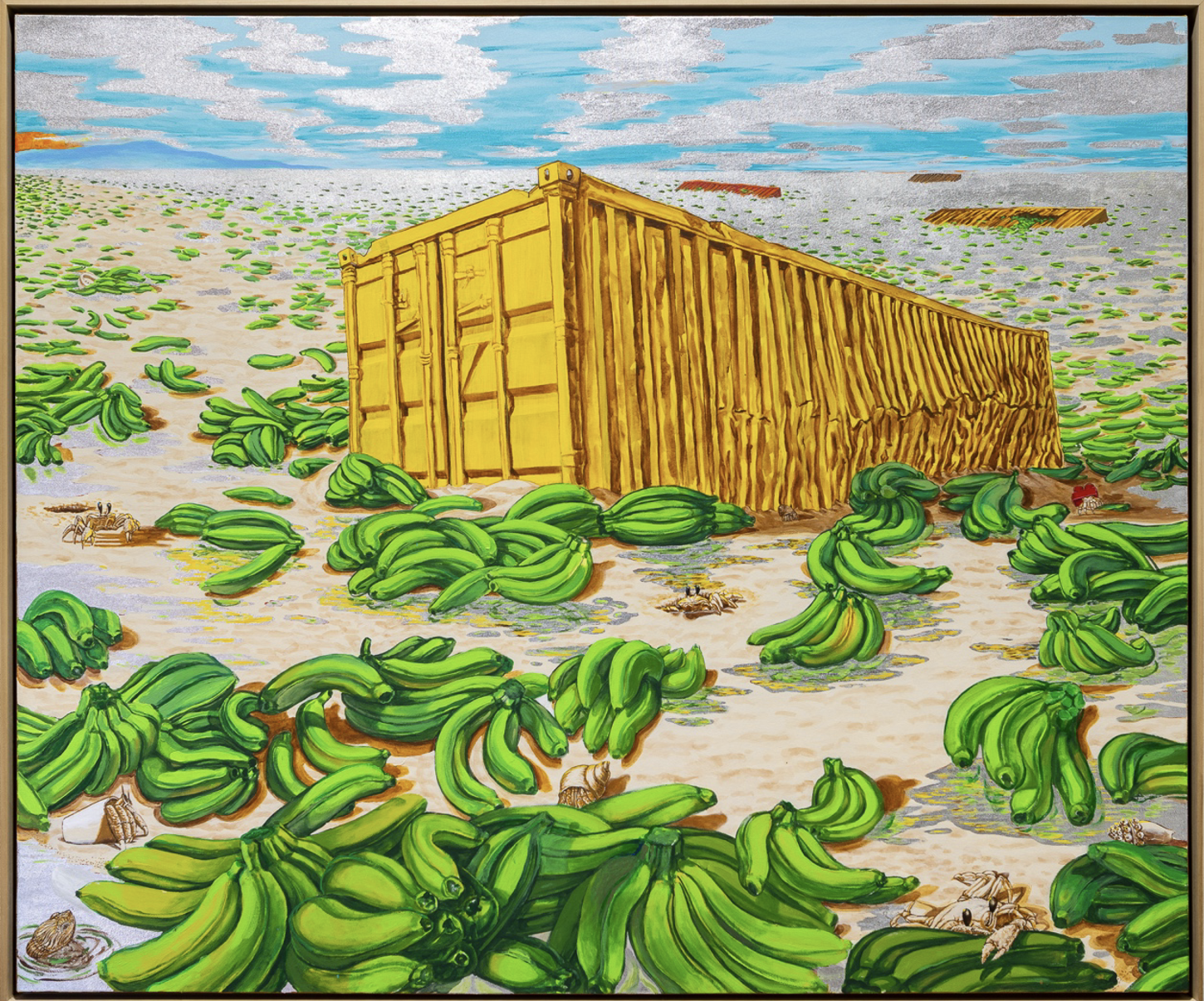
Crumpler, Green Bananas. In the 1990s the artist began his popular paintings using container ships, which furthered his investigations of Blackness within modern-day economic and philosophical conceptions alongside new configurations of Black existence in the West.
Here, the modern flotsam and jetsam of shipping containers from an abandoned vessel mimic the floating wreckage, discarded cargo and items of little value reminiscent of the attitude towards the bodies of Africans were abandoned and discarded in a strange new world after The Middle Passage.
This landmark museum exhibition celebrates over five decades of work by the Oakland-based artist and educator. It is the first major museum exhibition to reveal the remarkable continuity of Crumpler’s artistic and philosophical practice across more than five decades. Bringing together paintings from multiple periods with new kinetic sculptures and multi-sensory installations, the exhibition traces an artist whose deepest questions have remained alive, changing shape as the world around them changes.
Crumpler approaches art as a way of thinking. Using shipping containers, hoodies, the symbolic power of the void, metallic surfaces and moving forms, he investigates Black consciousness, commerce, spirituality, African cosmologies, memory and time. Paintings created decades apart speak across the galleries, allowing earlier ideas to gather new meaning through proximity, reflection, movement and light.
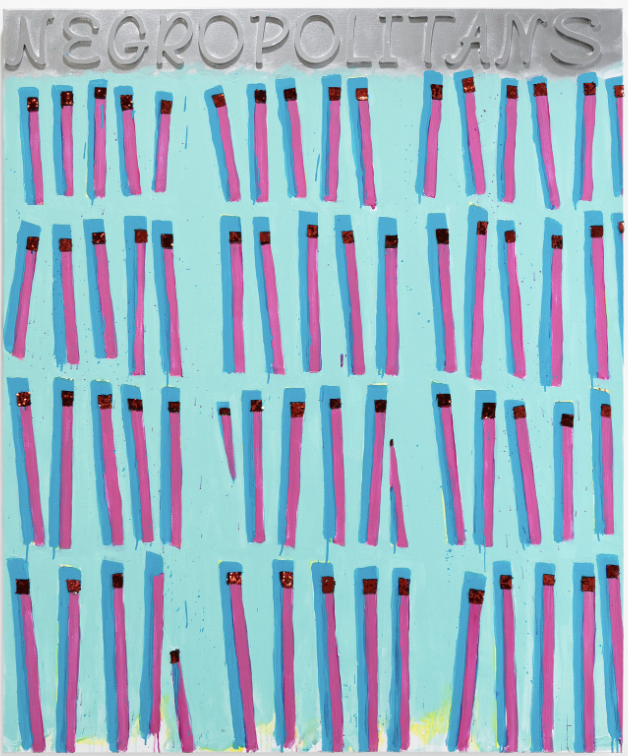
Negropolitans
The exhibition is a dynamic experience that rewards sustained attention and returned visits, offering a rare insight into the full scope of one of the Bay Area’s most influential artists.
At the center of Sonic Lineages is Crumpler’s proposition that Black consciousness transforms time and space. Some works have developed over years, even decades, reflecting his belief that a painting should enter the world only when it has realized its full possibilities. Time becomes part of the material. Looking becomes an active encounter.
Sure, I Like Jazz
Sonic Lineages places Crumpler’s work in a direct dialogue with jazz composition. His kinetic sculptures that move at different timings and rates. Like meters found in jazz, these works dance, swing and evade rigidly imposed tempos in favor of free interplay with one another. Through Crumpler’s brush, jazz functions as a living, structural force, one in which improvisation, repetition and syncopation shape the artist’s visual worlds the way they shape music itself. Visitors encounter time and movement as artistic materials in their own right, sensing that they inhabit several timescales at once.
Figures, forms and small moments of suspension in Crumpler’s paintings contain absences or vacancies, replicating moments in jazz where negative space invites call-and-response or emotional tension. Several of these paintings originate from reflections on an oval iron collar that the artist encountered in a book on the Atlantic slave trade. Iron collars were once used in African spiritual ritual and dance, but were repurposed as an instrument of bondage and torture. Crumpler inherits these void-forms as ancestral memory and tunes them to a new conceptual frequency — musicality.
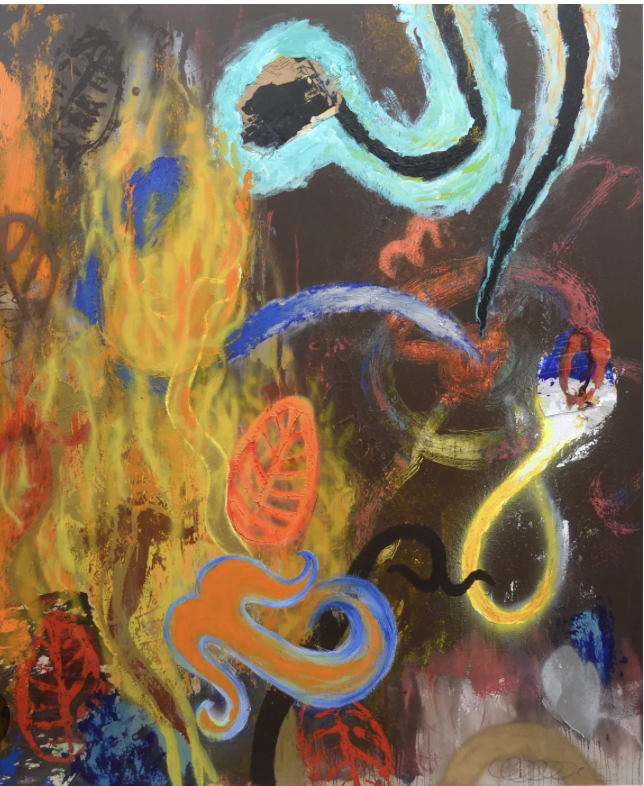
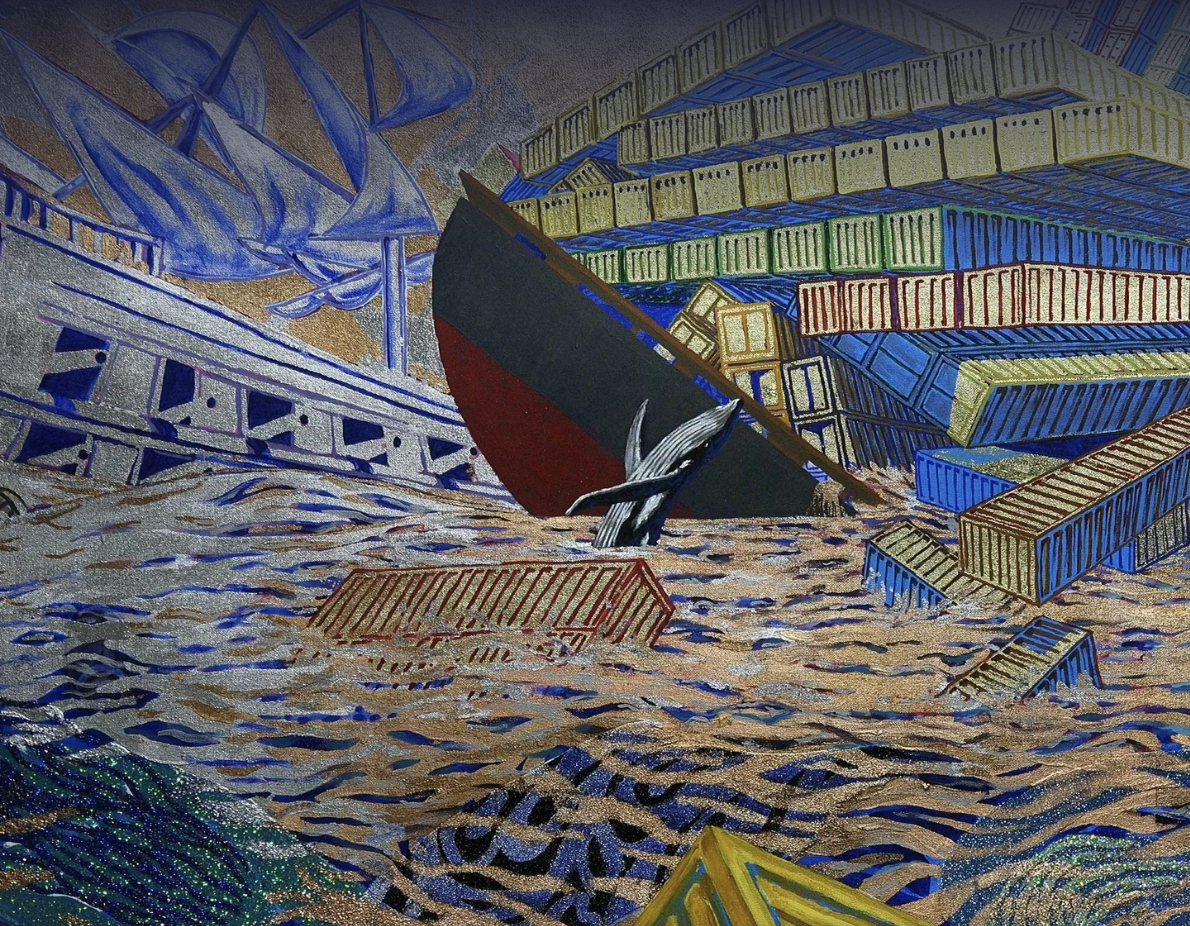
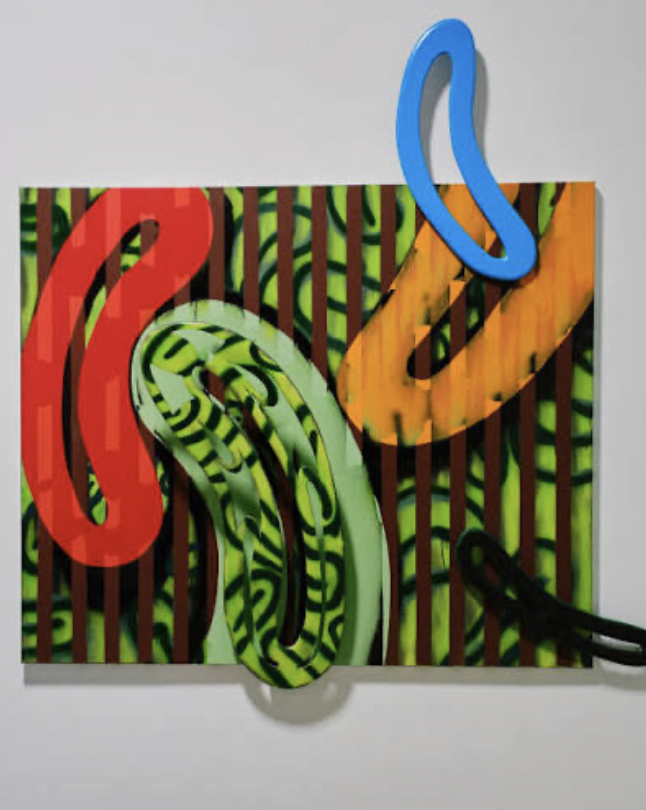
L2R: Tulip Memories IV; ; Breach (detail), and [Unidentified] Jazz as painting
As You Move Through It…
I’m not one to always believe that patience is its own reward. Yet, in this instance, that old chestnut may be true. Be sure to allow yourself the time to engage as the show expands throughout the museum.
You will experience an exhibition that shifts as you move through it, and move through it you will, as the show unfolds over all three floors of MoAD. Reflections will change, kinetic works will activate and relationships will gradually surface. The exhibition traces connections between African diasporic histories, migration, memory and improvisation. Through dynamic exchanges between visual art and music, Crumpler transforms abstraction into a language of possibility, revealing how Black histories and futures continue to resonate across generations, geographies and artistic disciplines.
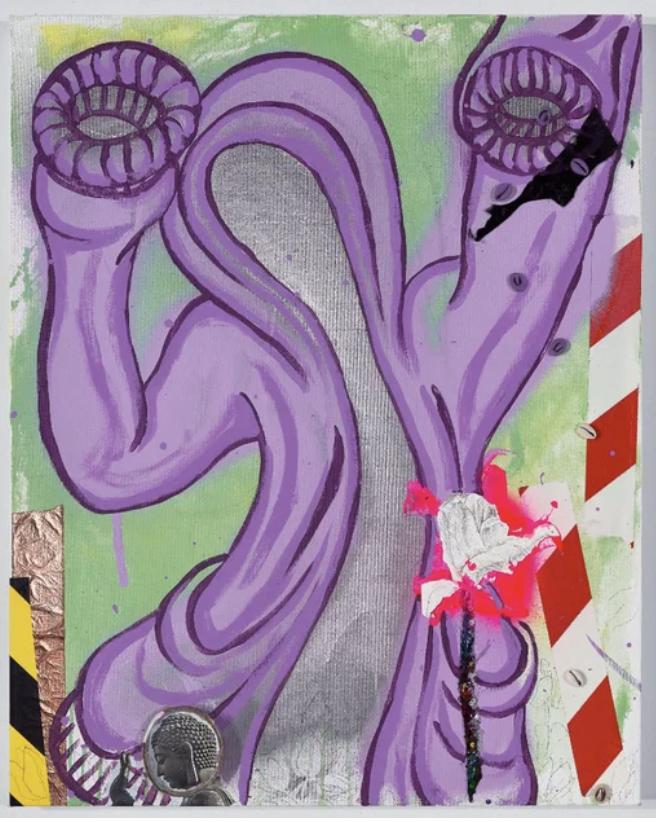
In the Moment depicts a hooded form moving through an expansive field of color, gesture, and cosmic possibility. Emerging from Crumpler’s long engagement with Black cosmology, abstraction, and the symbolic power of the void, the artist’s hoodie paintings transform the familiar silhouette into a site of speculation and becoming. The hood is at once body, portal, vessel and universe: a recurring form through which Crumpler explores the relationship between visibility, remembrance and the boundless potential contained within Black life.
Sonic Lineages rewards attention and return, offering a rare opportunity to encounter one of our region’s most influential living artists in the full depth of his practice. It asks what becomes visible when we give art, and ourselves, the time to keep looking.
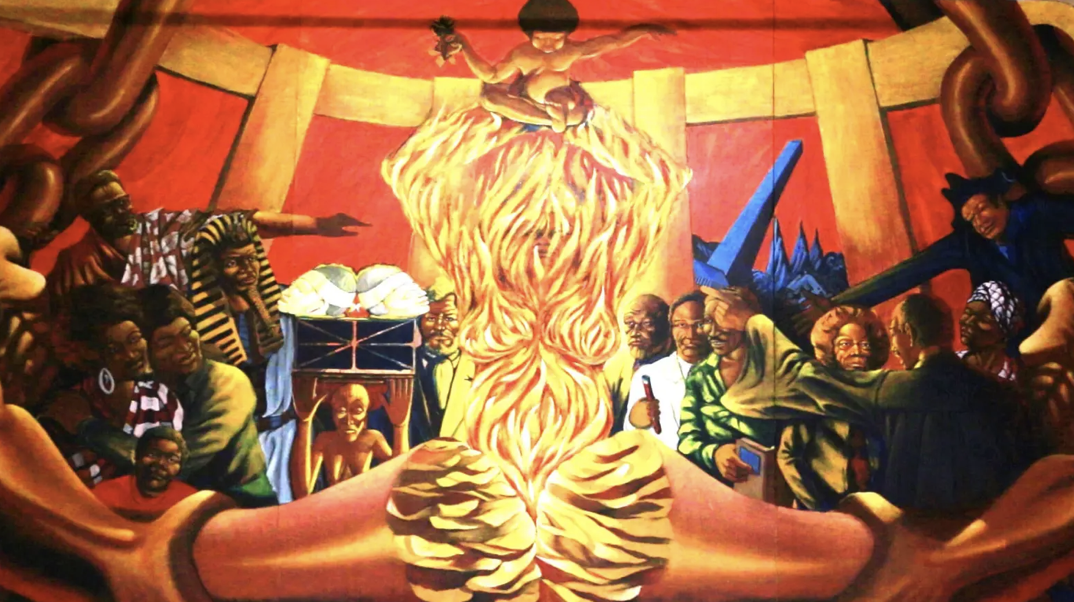
Detail from one of Dewey Crumpler’s triptych of murals, Multi-Ethnic Heritage, completed in 1974 at George Washington High School as a response to the controversial Life of Washington mural.
My thanks to Lee Sharrock, culturalee.art
For more information, click here.