Thousands of Years in the Making
Jeremy Frey: Woven
Canter Arts Center
Ongoing – July 20
There is only one place on the Left Coast where you can see this groundbreaking exhibition of contemporary and Indigenous art. So, you must find your way to the Cantor. Stanford is also the final stop for this acclaimed show organized by the Portland Museum of Art, Maine.
Wabanaki baskets have existed for more than 13,000 years in what is today known as Maine. Basketweaving is the oldest continuously practiced art form in that state.
This tradition was under threat when Frey, a seventh-generation basket weaver and Passamaquoddy (one of four federally recognized Wabanaki tribes), began making baskets out of ash and sweetgrass, helping to revitalize the art form. “It’s said that our cultural hero, Glooskap, fired an arrow into the black ash tree and our people came dancing out — it’s tied to us,” he explained.
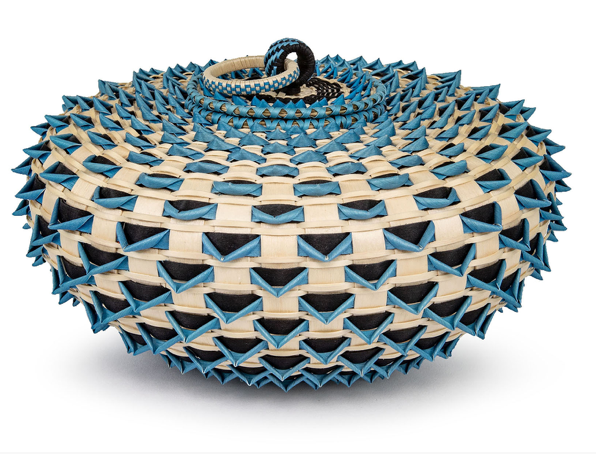
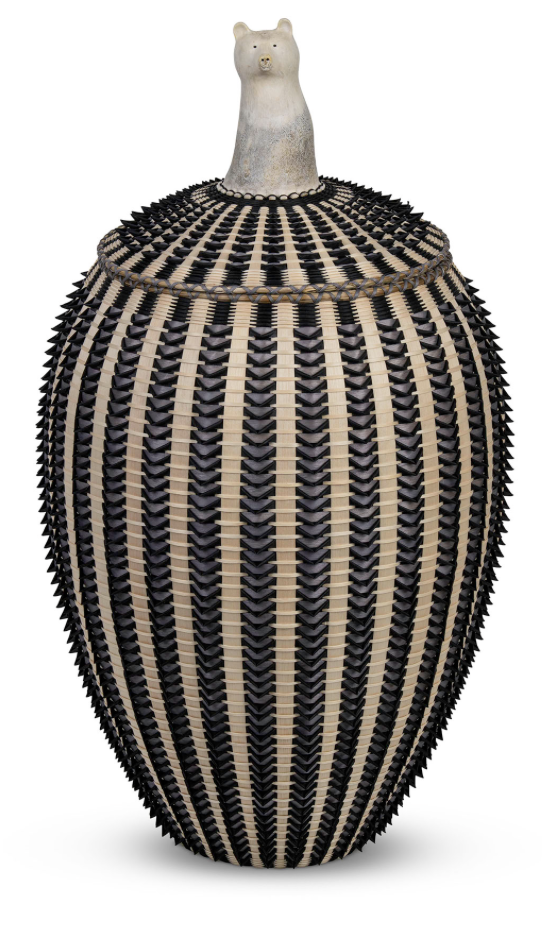
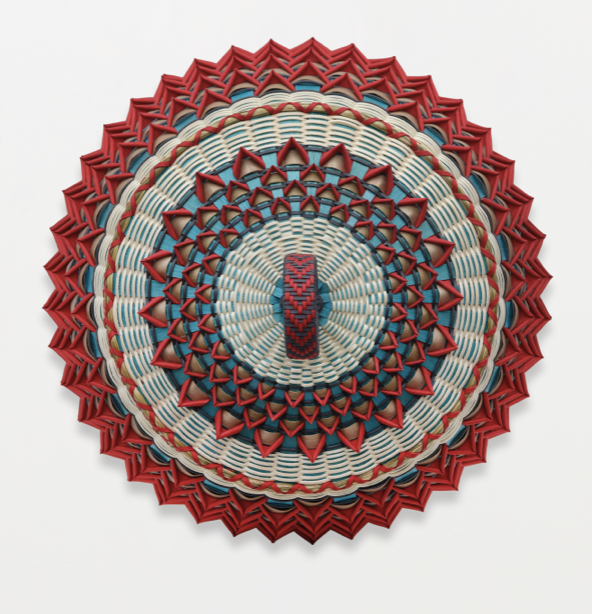
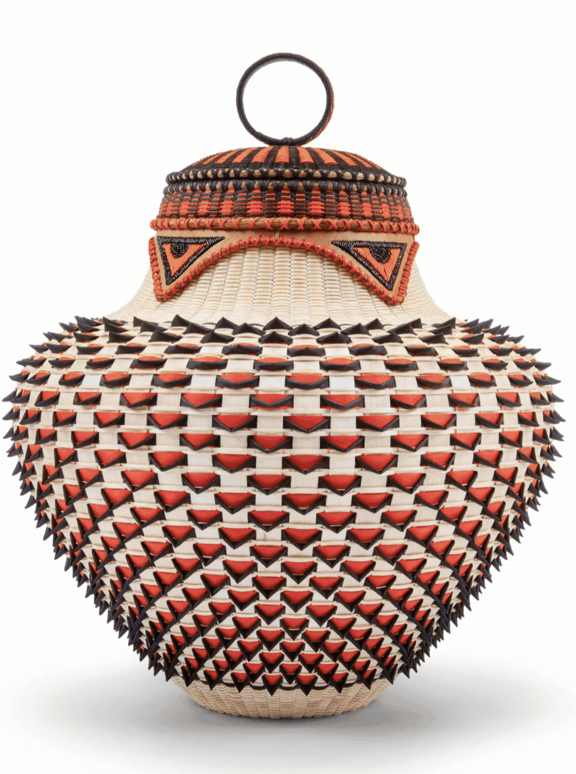
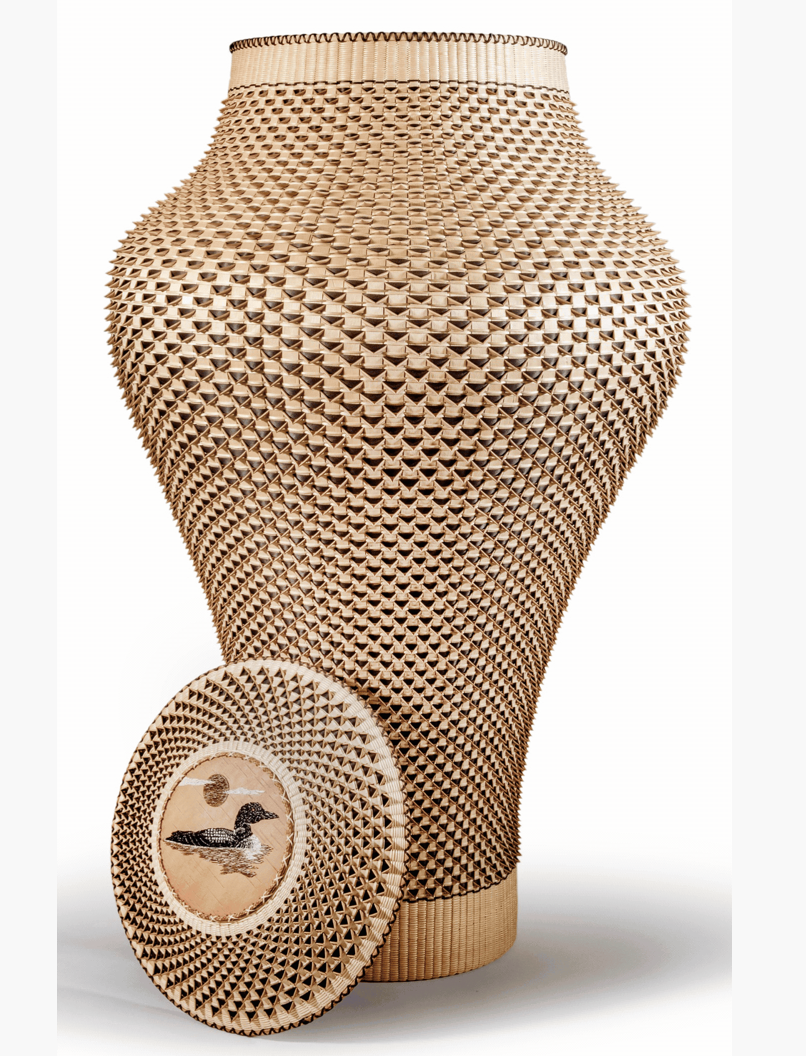
L2R: Blue Point Urchin, the urchin is one of Frey’s signature forms; Ghost Bear, and Presence.
THE OLD CANARD: ART v. CRAFT
“There was this hierarchy that still sometimes exists within the museum practice of what is art, what is craft, who is an artist,” said Jaime DeSimone, chief curator of the Farnsworth Art Museum in Rockland, Maine. Even 10 years ago, a fine art museum in the Northeast would not have accepted a donation of a Wabanaki basket, according to Theresa Secord, a member of the Penobscot Nation and basket maker.
In 2000, when Frey began marketing baskets, they sold at roadside installations near resorts for $100. Now, Frey’s baskets sell at the Karma gallery in New York for $20,000 to $100,000 and are part of the permanent collections of several museums, including the Metropolitan Museum of Art.
In its 2015 biennial, the Portland Museum broke new ground in the art world, where baskets by five Wabanaki artists, including Frey and Secord, were positioned front and center in the opening gallery, “making a statement that these were the original artists here in what we know as the state of Maine,” DeSimone said. “There was not this distinction of us and them — they were just artists.”
FREY’S PROCESS
Frey learned to weave from his mother, Frances “Gal” Frey, an accomplished artist, and from workshops offered by the Maine Indian Basketmakers Alliance to facilitate an intergenerational transfer of this knowledge. He began to attract national recognition for fine weave baskets that involve whittling down ash to nearly thread-like widths and for his baskets in the shapes of sea urchins. Indeed, Frey pounds and processes ash logs into long silky smooth strips, which he gauged as thin as one thirty-second of an inch to make finer weave baskets than others were creating.
Known for making his own tools, Frey also harvests his materials — from identifying promising ash trees in the woods to chop down, to pounding logs with the blunt end of an axe to loosen the growth rings that form the strands of each basket. “I’m always trying to see what the wood can do, what I can do,” said Frey, who’s challenged himself with unconventional color combinations and dynamic contours, mesmerizing patterns and three-dimensional textures, weaving the exterior and interior surfaces — essentially two baskets in one — or scaling them up as tall as six feet.
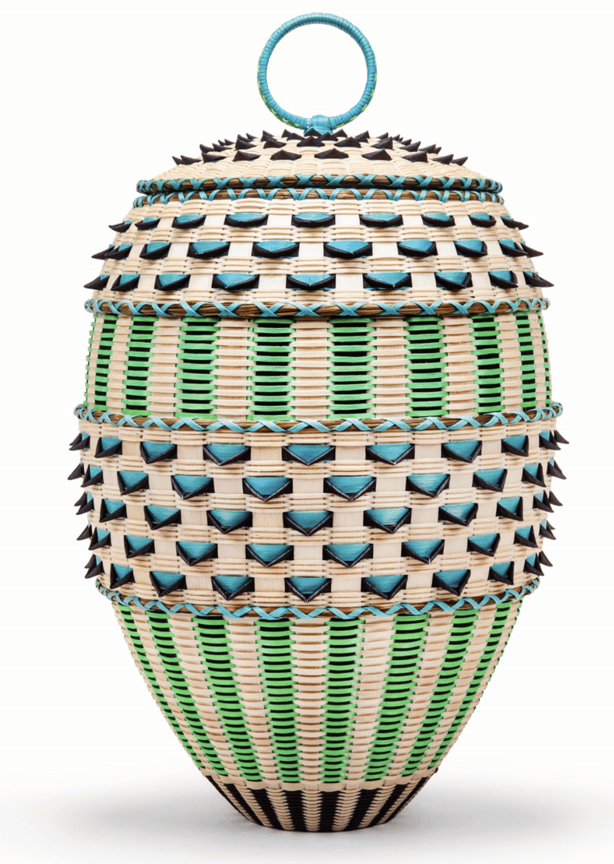
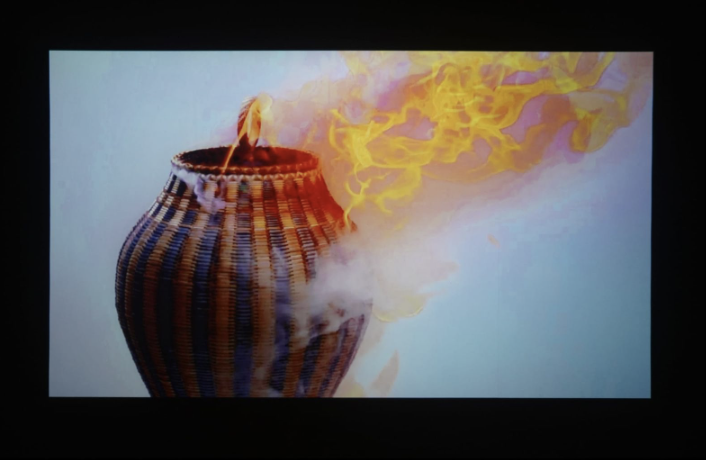
A still from Frey’s video art piece where a meticulously hand-woven ash basket is placed on a pedestal in a gallery, where it begins to smoke, bursts into flames, and collapses into ash.
Frey chooses to leave the video’s interpretation open-ended. DeSimone suggests: “What does that mean to appear and have a presence and then disappear sort of instantly? You can imagine feelings and realities about Indigenous people here in the United States and life and loss. How can a basket symbolize an entire population?”
My interpretation? One day, each of us will become ash. Maybe, just maybe, the energy from our souls will live on (simple thermodynamics). That energy is enhanced when we embrace the art around us. That’s reason enough to make the trek to Palo Alto.
For more information, click here.
My thanks to Hilaire M. Sheets, New York Times