They’re Back
Treasures of the Pharaohs
de Young
Ongoing – January 31
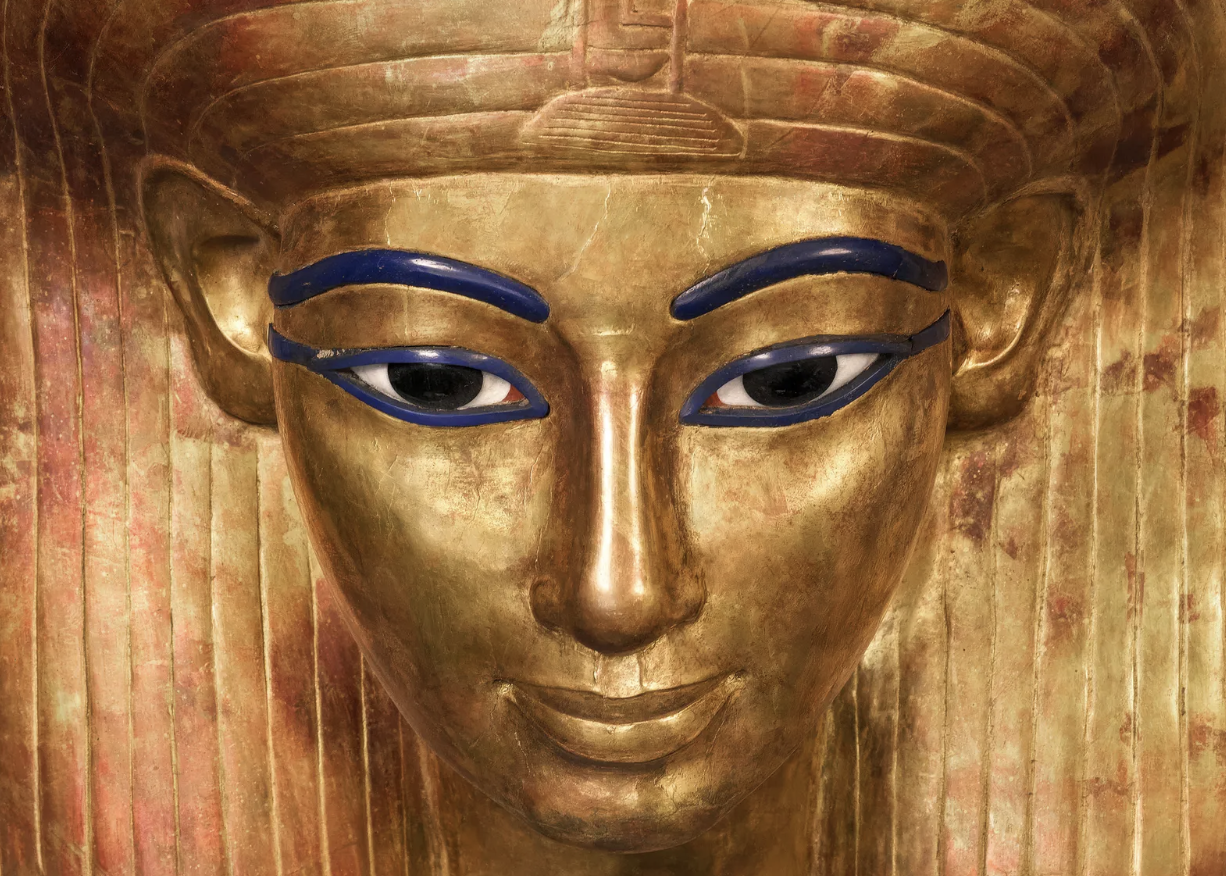
Outer anthropoid coffin lid of Thuya. Luxor, Valley of the Kings, Tomb of Yuya and Thuya (KV 46), New Kingdom, Dynasty 18, reign of Amenhotep III. Wood, gilded stucco with inlays of blue glass, obsidian (eyes), light blue, dark blue, and red glass.
I moved to San Francisco in August 1978.
I’d already heard about the blockbuster exhibition due at the de Young the following year and purchased my ticket early.
I waited in the long line of ticket holders and eventually entered an extraordinary ancient world.
I wasn’t disappointed.
This is the fourth exhibition of “Kemet” hosted by the de Young. It brings the world of the pharaohs to life through 130 exquisite works spanning 3,000 years of history. From towering stone statues and gilded masks to intricate gold jewelry, these objects reveal the power, beauty and beliefs of the ancient Egyptians.
It begins with the pharaoh, who was seen as both a king and a god. It then expands to explore the people and beliefs that shaped Egyptian life. Explore how Egyptians viewed death not as an ending, but as a new beginning — and the elaborate rituals they created to prepare for it. Objects found in tombs—jewelry, cosmetics, tools and furniture—offer a glimpse into their daily life and values.
Something Old; Something New
Even well-versed Egyptologists will find something special to enjoy. As for the rest of us… Well, here are a few fun facts to consider:
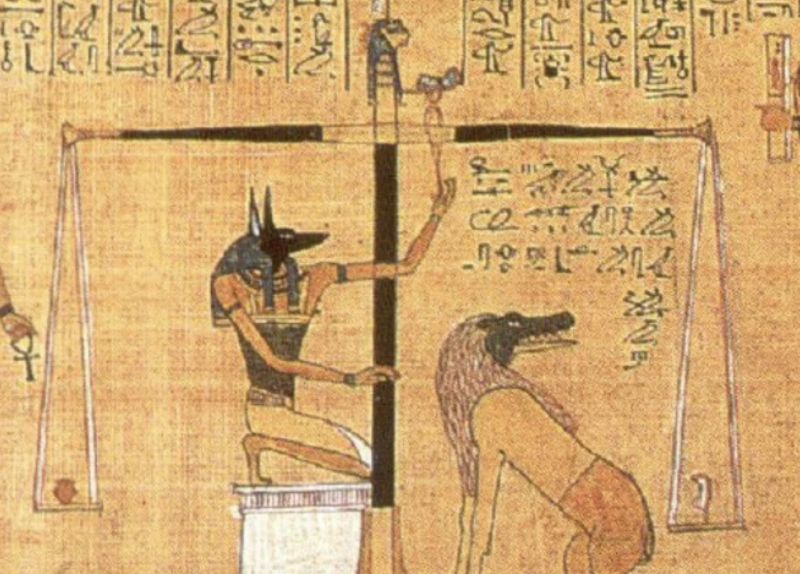
One’s entry into the afterlife depended on weighing your heart against a feather. Only those whose hearts were free of wrongdoing could enter the next world. If their heart was heavy with sin, they would be destroyed by the monster Amamet or condemned to the lakes of fire. If proven to be “true of voice” (righteous), the deceased joined the realm of the gods for eternity.
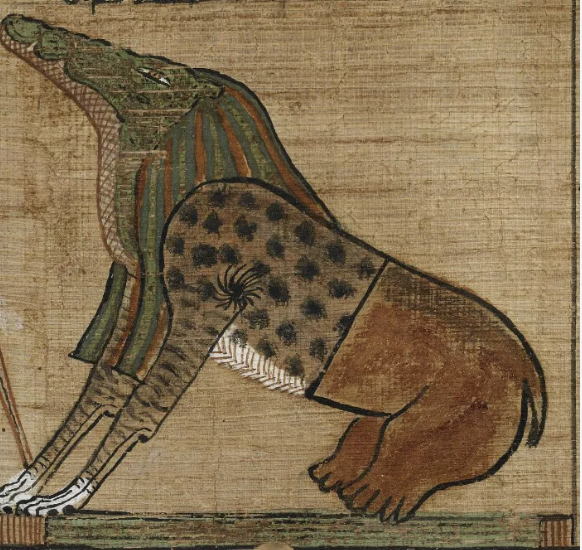
Amemet—with the head of a crocodile, the upper torso of a lion and the body of a hippopotamus—was not someone you wanted to greet you on the way to the after life.
There was at least one woman Pharaoh. Kingship in ancient Egypt was defined as a male role. Queen Hatshepsut had royal blood, but was unable to claim the throne because of her gender. Her husband/half-brother, Thutmose II, became pharaoh. When he died, Hatshepsut’s young nephew, Thutmose III, became pharaoh under her guardianship. Hatshepsut was his co-regent, and I imagine that chafed. As regent, she ordered that her renderings include male characteristics. She was depicted as male in sculptures and on the walls of temples and chapels.
Eventually, Hatshepsut declared herself King of Upper and Lower Egypt. During her 20-year reign, Egypt was a place of peace, prosperity and growth.
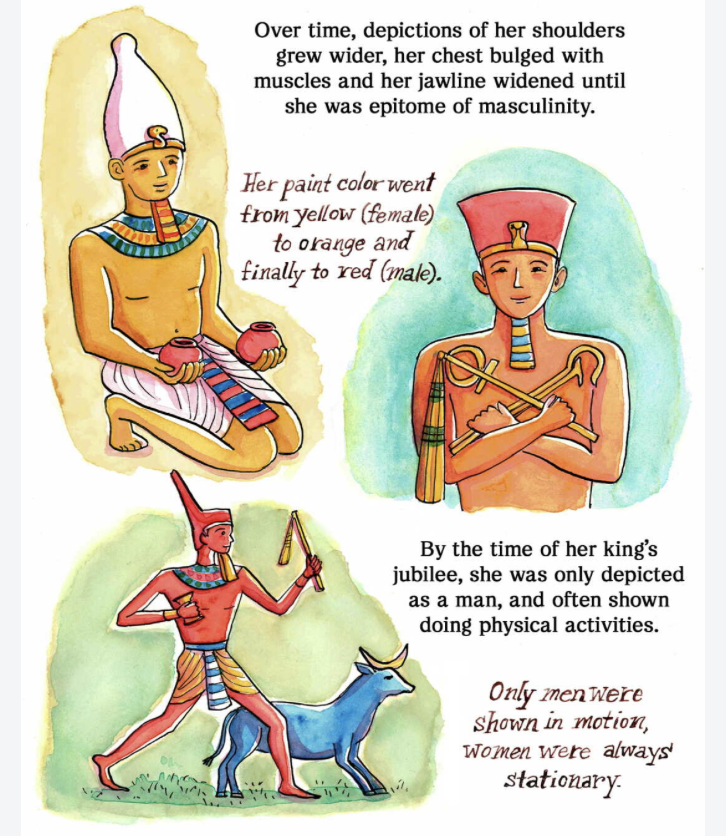
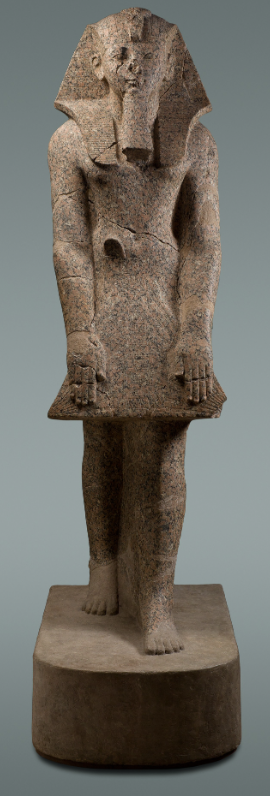
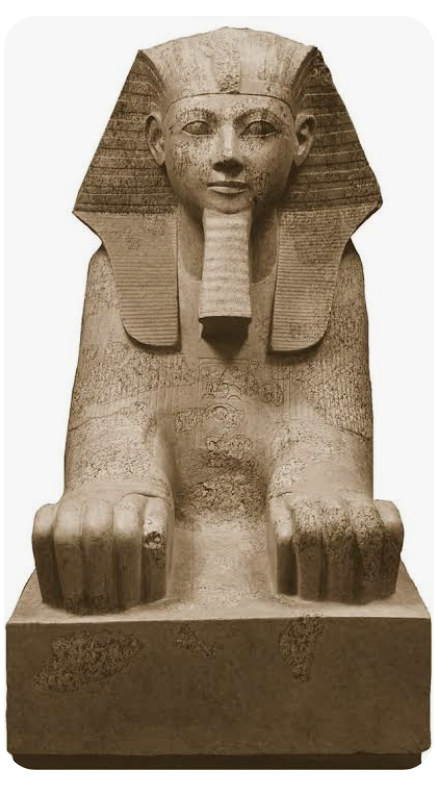
Middle& Right: Hatshepsut as Pharaoh/King and as a Sphinx
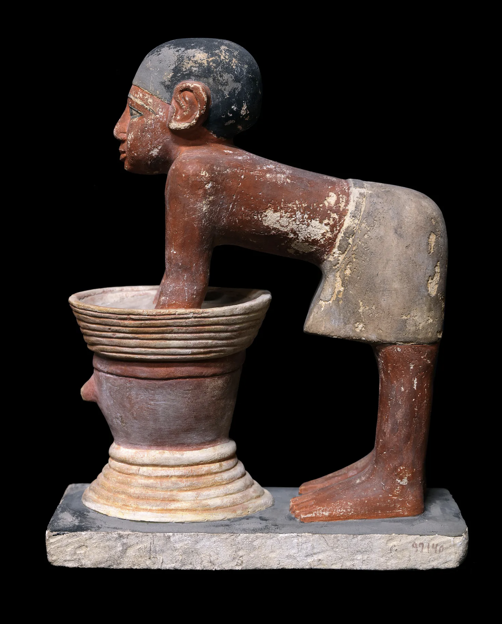
Egyptians loved their beer. Well, who doesn’t? Besides, historically, the brewing process made contaminated water safer to drink, largely because boiling water as part of the fermentation process killed dangerous pathogens that could lead to dysentery or cholera, while adding the yeast created an acidic environment making it difficult for new, dangerous microorganisms to survive in the finished drink.
Along with bread, beer was one of the main sources of nutrition in ancient Egypt. Thick Egyptian beer was filled with complex carbohydrates and sugars. It was a good source of fats, amino acids, vitamins and minerals. Hmm, I wonder if I have one in the fridge right now? Beer was also a key commodity, used as a unit of exchange in Egypt’s pre-money economy.
A special highlight is the US debut of objects from the Golden City, a newly unearthed workers’ community near Luxor. The royal tombs at Golden City and Tanis are two of the most important archaeological discoveries in modern history. They contain untouched pharaoh burial grounds and treasures that rival King Tutankhamen’s tomb.
The suddenly abandoned Golden City is a moment frozen in time, much like Pompeii. The artifacts from this find illuminate one of history’s most extraordinary civilizations.
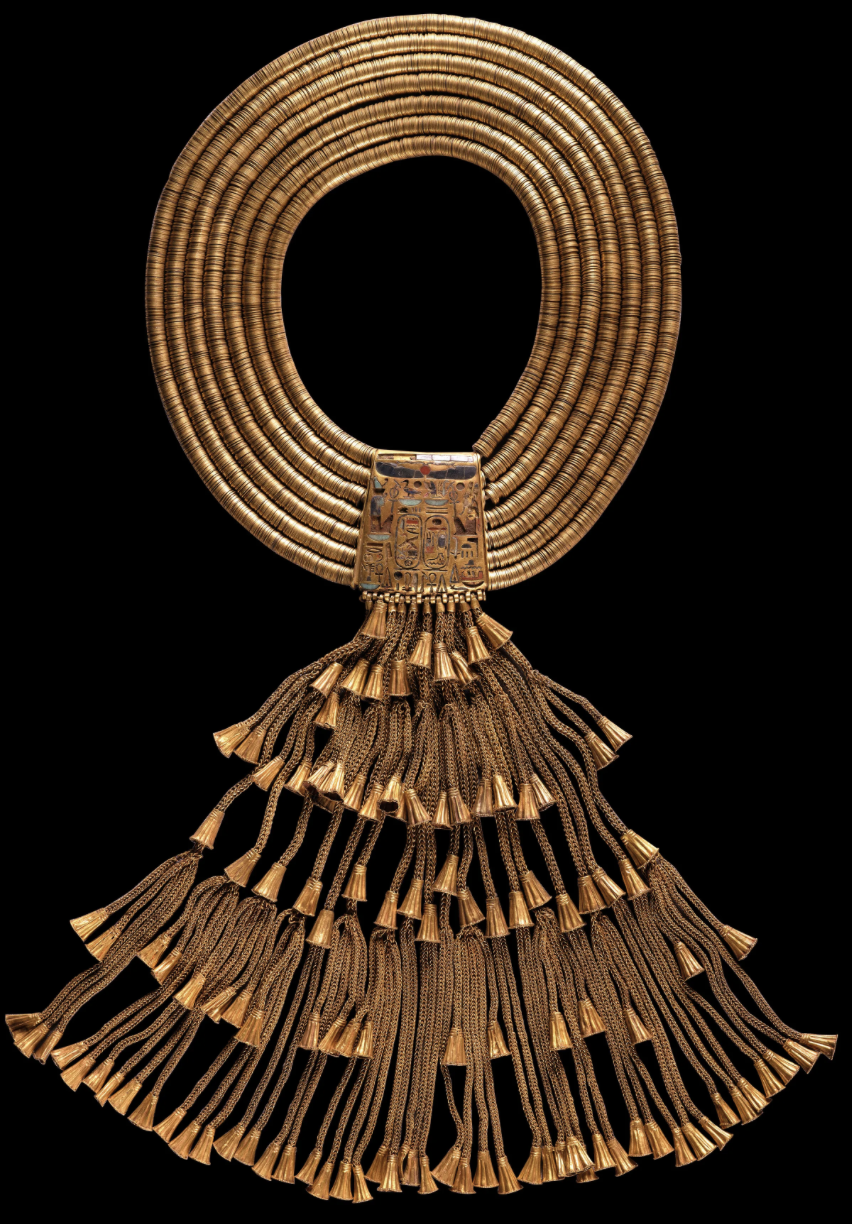
If Bling’s Your Thing: Collar of Psusennes I. Tomb of Psusennes I, Tanis. Third Intermediate Period, Dynasty 21. Gold, lapis lazuli, carnelian and jasper, weighing 13 pounds. Psusennes I was found in a solid silver coffin, wearing a gold mask. The collar was draped across his chest.
For more information, click here.