You, Me & Tuscany
The Etruscans:
From the Heart of Ancient Italy
Legion of Honor
Ongoing – September 20
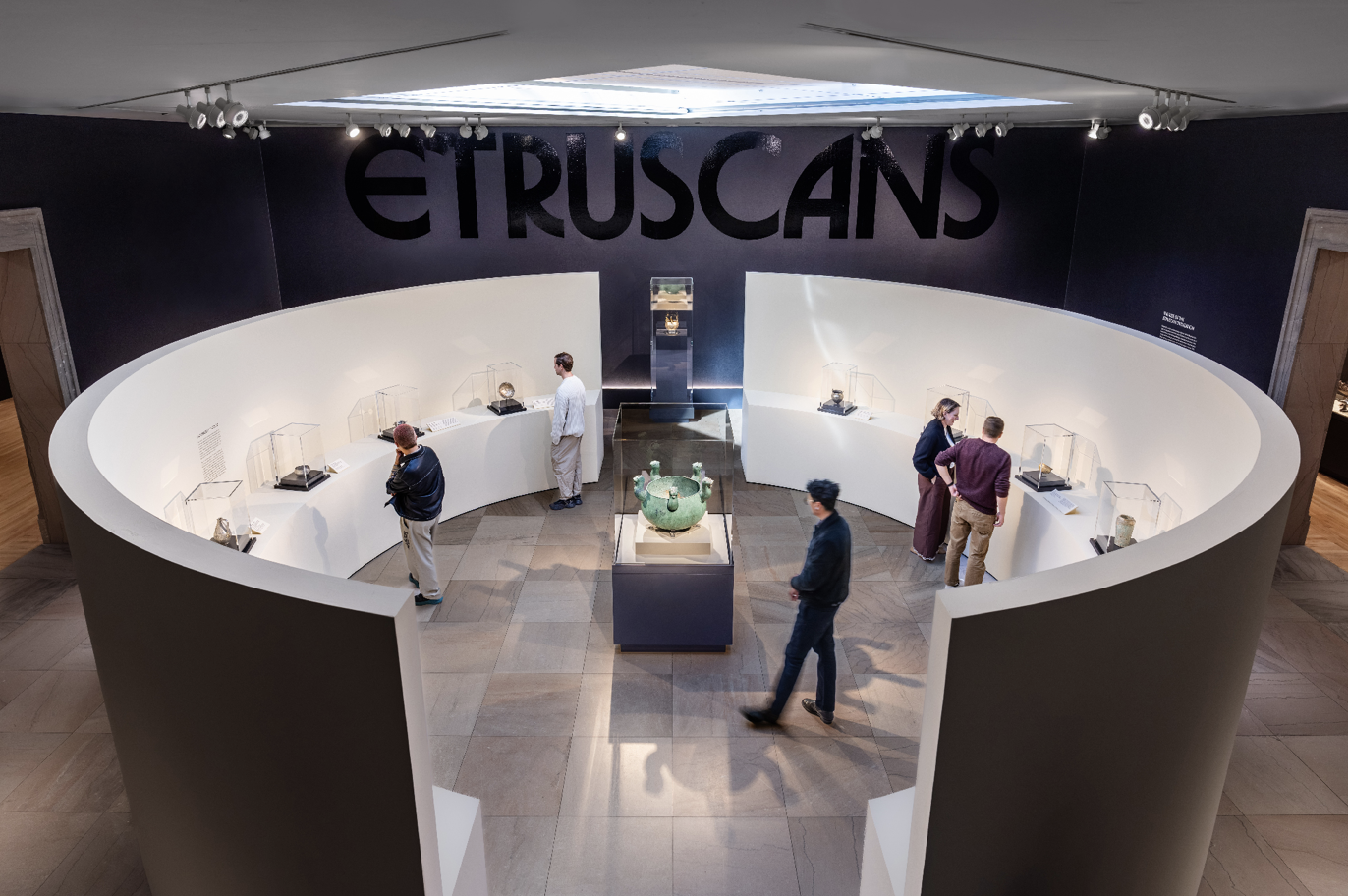
The show is organized thematically: objects highlighting the Etruscan’s evolving beliefs about the afterlife; exotic goods they imported from the Phoenicians and Greeks, and a section of opulent gold jewelry, including a drinking cup decorated with 250,000 gold granules, on loan from the Victoria & Albert Museum.
Sophisticated togas, urban planning, complex hydraulic engineering, multi-chambered temples, winemaking and even “Roman” numerals were actually Etruscan innovations. Still, the victors write the history books, so violà – Roman innovations. The Etruscans thrived in Italy for almost a millennium, from around 900 BCE to 100 BC, overlapping briefly with the rise of the Roman Empire. They flourished between the Arno and Tiber Rivers in what is present-day Tuscany. (Surprised?)
Drawing on the latest archaeological discoveries and cutting-edge scholarship, this is the most comprehensive exhibition on Etruscan culture in the US to date. The installation presents stunning objects renowned for their unparalleled beauty and exquisite craftship. Almost 200 exquisitely fashioned and well-preserved examples of bronze and terracotta sculpture, gold jewelry, ceramics and architectural features, as well as the longest-surviving piece of Etruscan writing, reveal a legacy that continues to captivate. These items are gathered from 30 international museums – many objects have never been seen in the US.
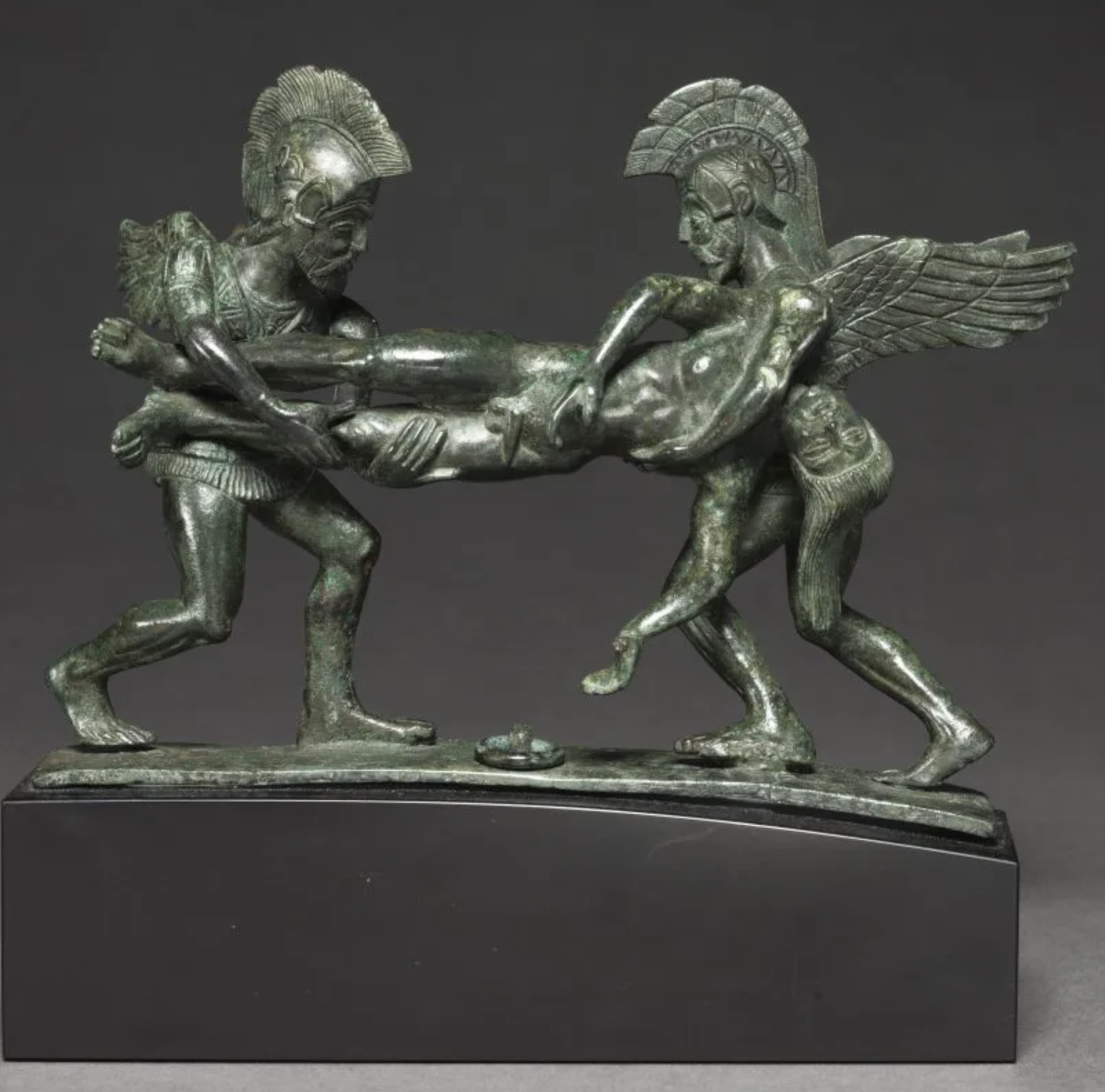
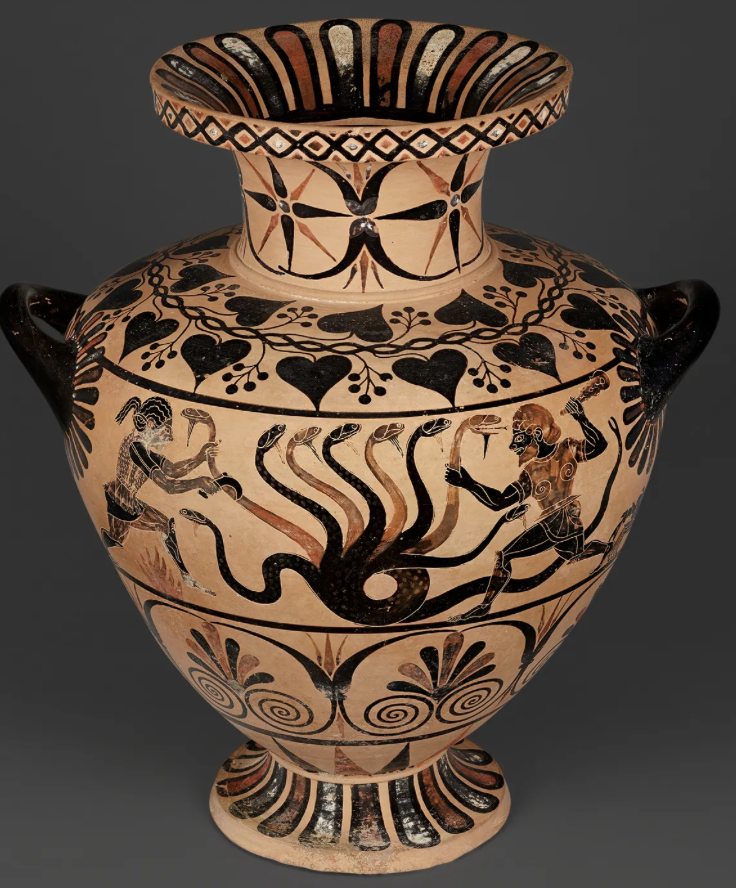
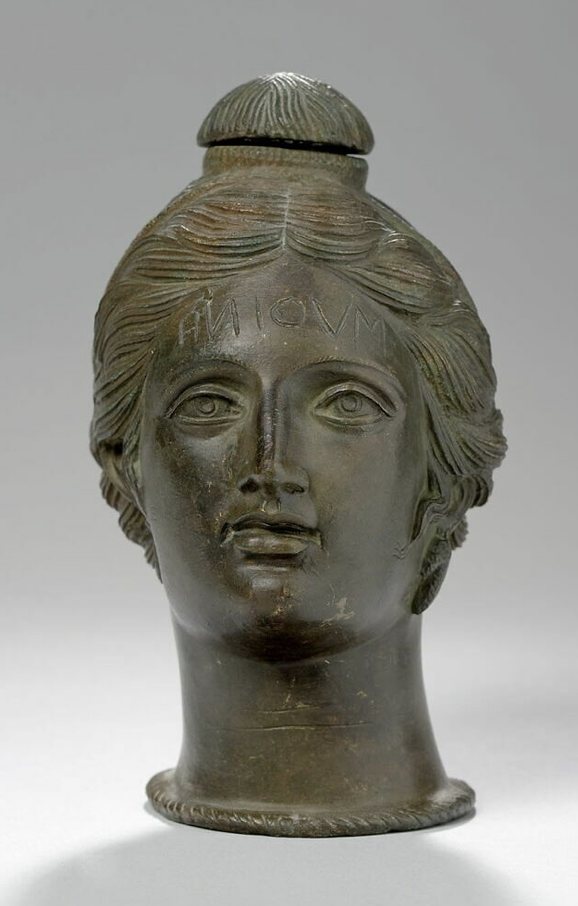
L2R: Bronze chest handle featuring Sleep and Death; Terracotta Caeretan hydria attributed to Eagle Painter, and Bronze funerary vase.
Who Are Those Guys?
Etruscans were sophisticated and wealthy. They left behind a rich history and traditions vividly represented by magnificent objects deposited in their tombs, temples, sanctuaries and scattered cities.
They were major contributors to Western civilization, laying the foundation for present-day architecture, engineering and artistic achievements. Yet their culture remains overshadowed by ancient Greece and Rome.
Historians haven’t encountered many written records from the Etruscans. “They wrote plenty, both about themselves and their history,” said Reneé Dreyfus, ancient art curator at the Fine Arts Museums of San Francisco and the mastermind behind this show.
“It was lost because they wrote, primarily, on impermanent material like linen.” That left the Greeks and Romans to tell their story, and “they didn’t always look kindly on the Etruscans.” The Etruscan language presents another puzzle. Like the Etruscan people, no one knows for sure where it came from. However, in recent years, scholars have grown more adept at translating Etruscan inscriptions. Given the new research the Legion of Honor catalog serves as a new definitive resource.
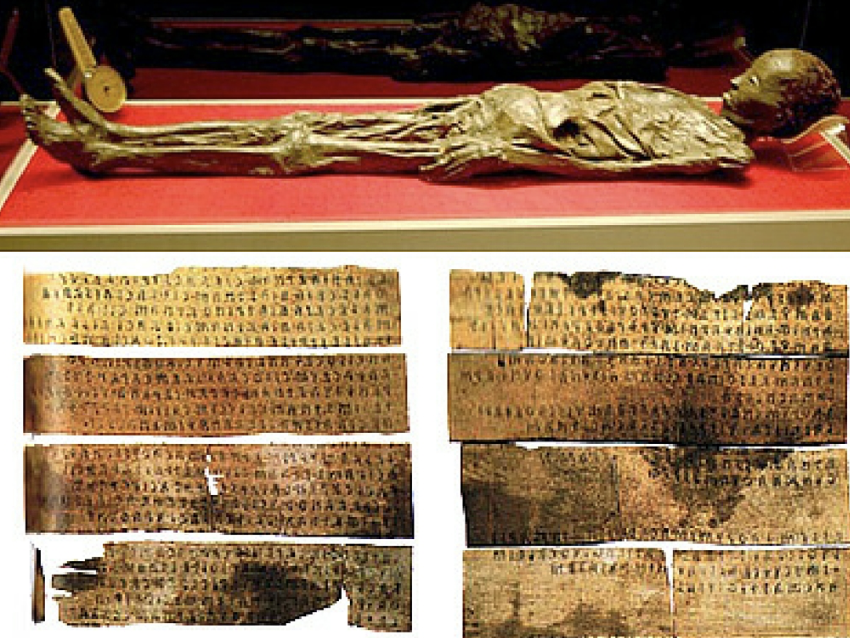
Etruscans used the Greek alphabet, generally read from right to left. However, their language was a unique non-Indo-European tongue with no known antecedents or modern descendants. Most of the Etruscan writing that exists now is funerary inscriptions. Despite that scarcity, viewers will get to see the longest example of Etruscan writing: a wide, framed display on strips of linen that has its own incredible backstory.
The Liber linteus zagrabiensis (Linen book of Zagreb) is the longest-surviving Etruscan text (i.e., Europe’s oldest book). Believed to be a calendar of ritual sacrifices and prayers, it dates back to the mid-third century BCE. The text exists only because the manuscript was cut into strips and used to wrap an Egyptian mummy. Preserved by Egypt’s dry climate, the deconstructed book was identified as Etruscian writing in 1892, nearly 50 years after it was purchased in Alexandria.
“There’s so many things that we want the world to know about the Etruscans that have been secrets they’ve kept for millennia,” Dreyfus said. With recent finds incorporated into this exhibition, finally their secrets are coming to light.
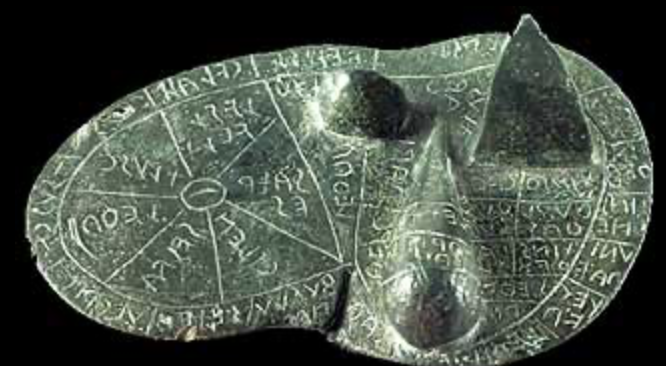
An Etruscan model for the study of divination. The Liver of Piacenza, is one of the most remarkable objects on display. The life-sized bronze replica of a sheep’s liver is inscribed with the names of Etruscan deities. It acted as a guide to reading the entrails of sacrificed animals, used to determine the will of the gods.
Hall of Antiquities
Is there any location in San Francisco better than the lower level of the Legion of Honor for viewing The Etruscans? The civilization that emerges through this exhibition is one of great joy. They carved toiletries boxes shaped like a fawn and put peaceful smiles on the renderings of their dead. As visitors climb back up from from the Legion’s basement, may they be inspired to bring a bit more Etruscan bliss into our modern world.
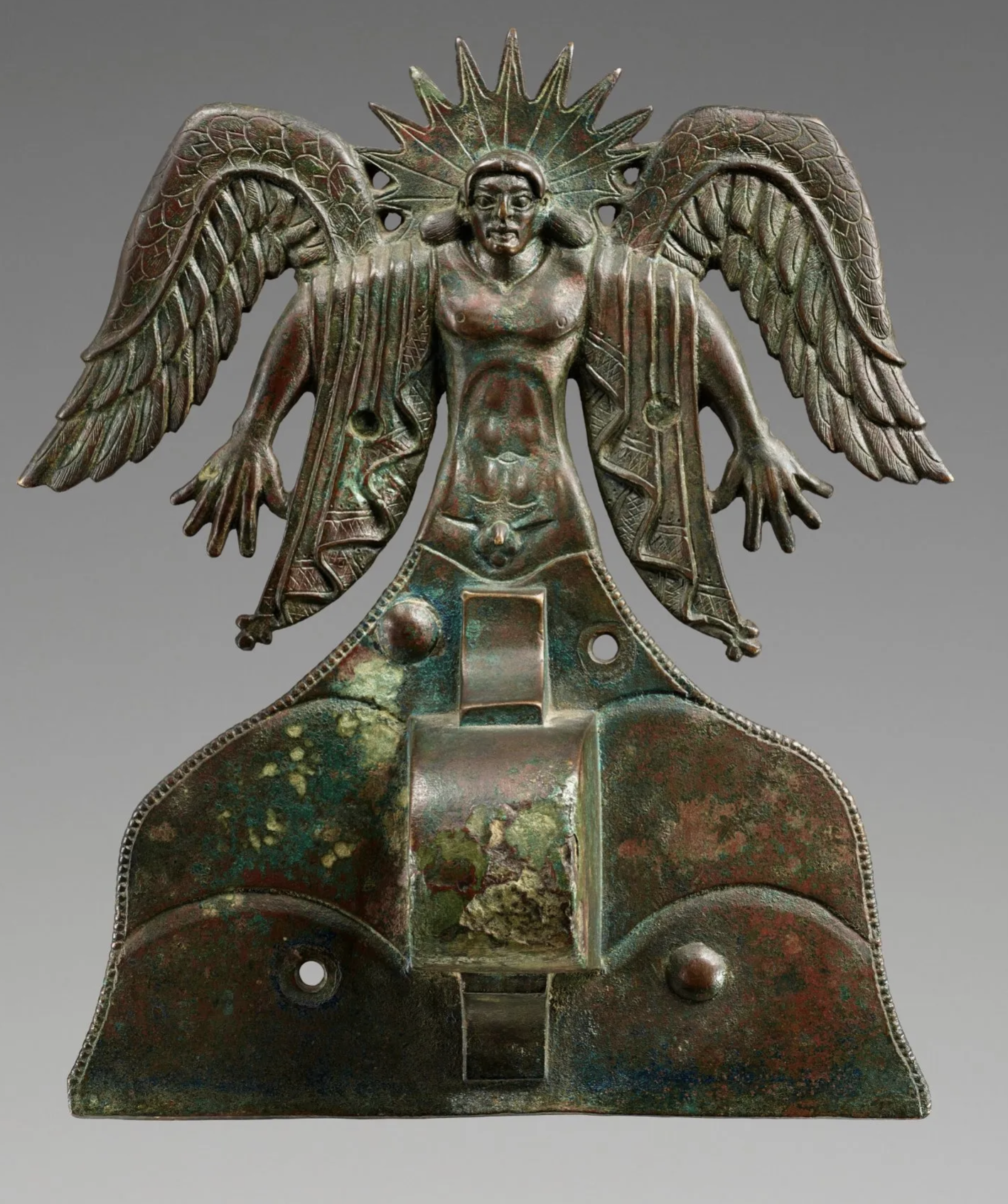
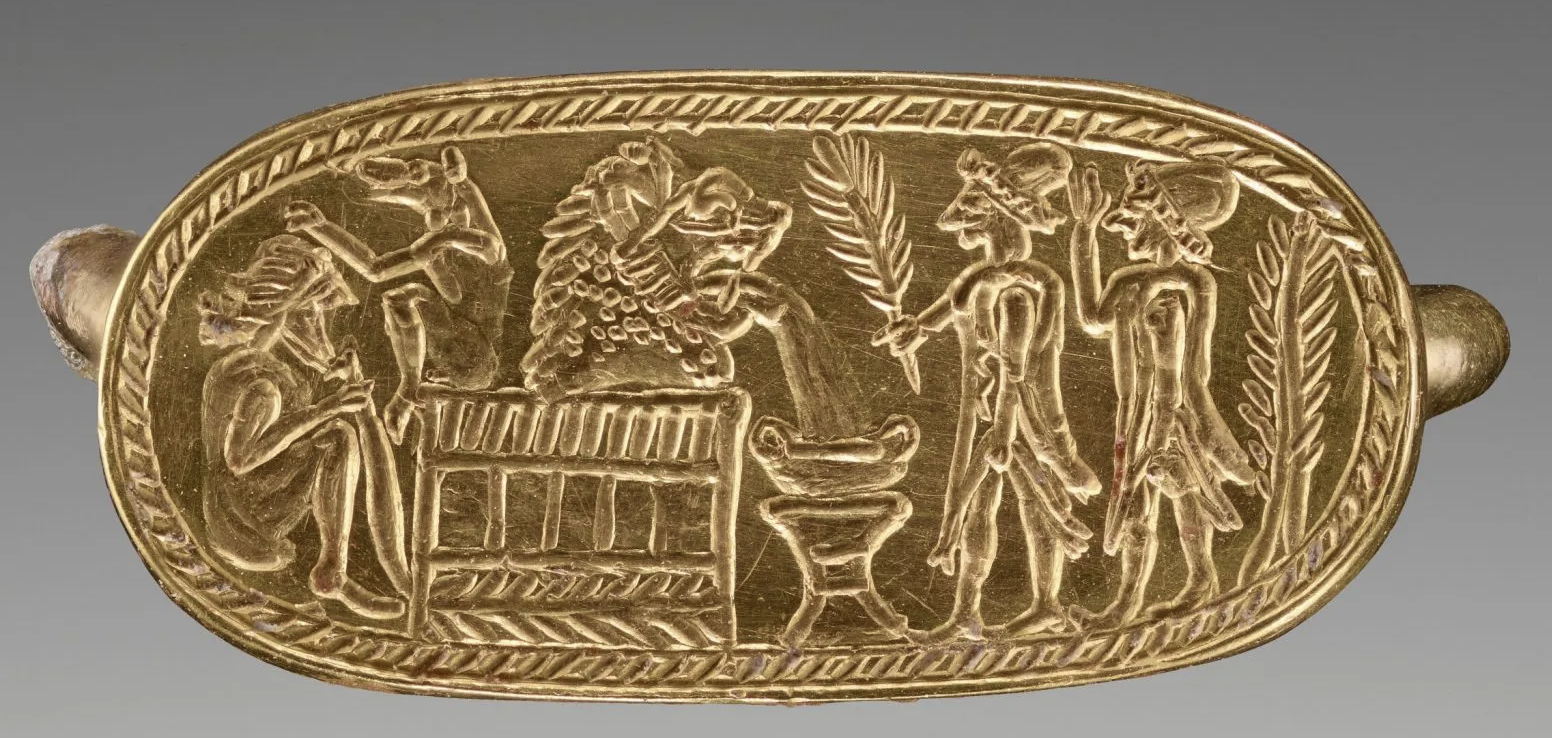
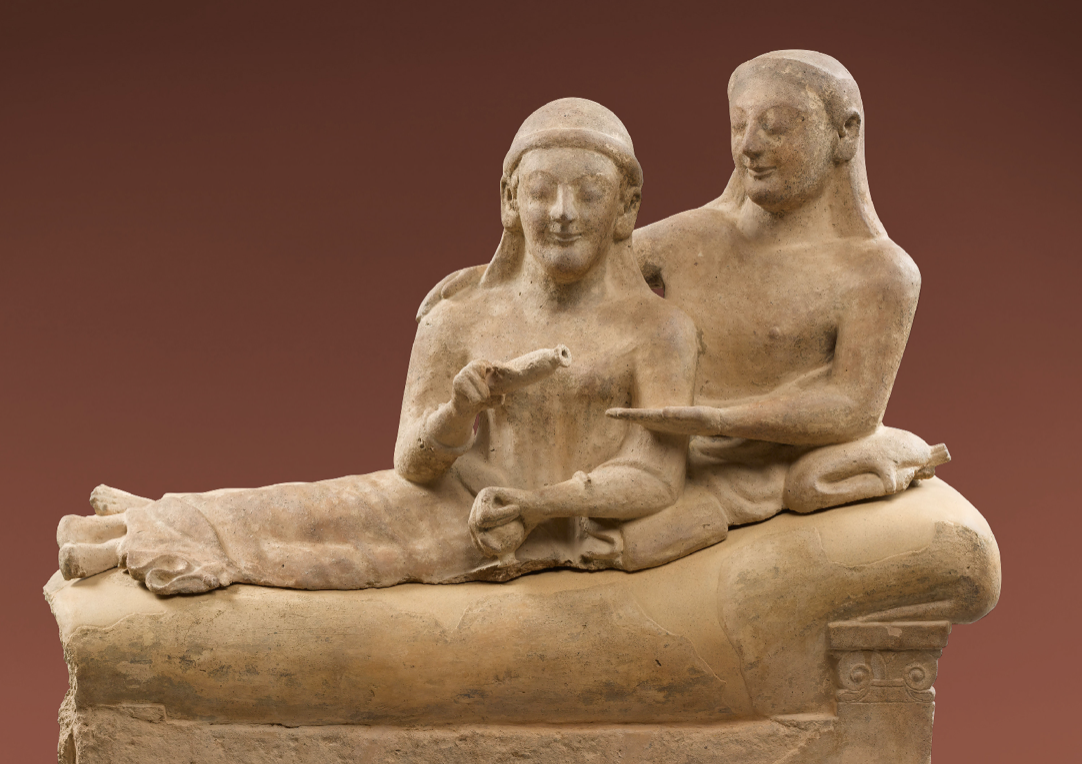
L2R: Bronze appliqué honoring the Sun God Usil; Gold-plated silver and gold finger ring depicting the Ambush of Achilles, and Cinerary urn for spouses
For more information, click here.
My thanks to Vittoria Benzine / @artnet & Sarah Hotchkiss / KQED The Do List