The Power of a Single Image
(Re)Constructing History
SFMOMA
Ongoing – May 3, 2026

Yasumasa Morimura, An Inner Dialogue with Frida Kahlo (Collar of Thorns)
For the last several years SFMOMA has been amazing us with one remarkable show after another. In these times of grave financial constraints for American museums, it is not surprising that it has chosen to take a slight pause. Of course, when we stop and take a breath, we are often rewarded a clearer vision of what is right in front of our eyes. Such is the case with SFMOMA. It is as if the institution said: “Wait a minute. Let’s dust off the cobwebs and take a good look at what we’ve got in our own closet.”
The exhibition (Re)Constructing History uses only photographs and archival material from its own permanent collection as it reflects on Carrie Mae Weems’ groundbreaking work Constructing History from 2008. This installation wholeheartedly embraces Weems’ viewpoint of the power of a photograph to both record an instant in time while simultaneously capturing the history embedded within the moment. Viewing these photographs, some of them decades after they were originally taken, forces us to confront a record that upon re-viewing collapses the past and the present.
THREE GALLERIES
In addition to Weems, this presentation celebrates contemporary Black artists Nona Faustine, Carla Williams and Dawoud Bey as anchors in each gallery. These artists create works that move beyond static, silent documents, offering imaginative images that reveal stories of Black life previously unseen or unconsidered.
Across three galleries, the photographs unflinchingly examine complicated, painful and yet, familiar histories.
First gallery examines Wall Street as a symbol of American power, a nexus for understanding and critiquing the United States.. Central to the story of Wall Street as a concept is Faustine’s provocative work From Her Body Came Their Greatest Wealth, which shows her standing naked in white high heels with hands shackled atop a wooden crate on Water Street, a site at the heart of New York City’s banking and finance sector that was associated with the slave trade 160 years ago. With one image, Faustine connects the hidden trauma of the past to its impact in the present-day Black American experience.
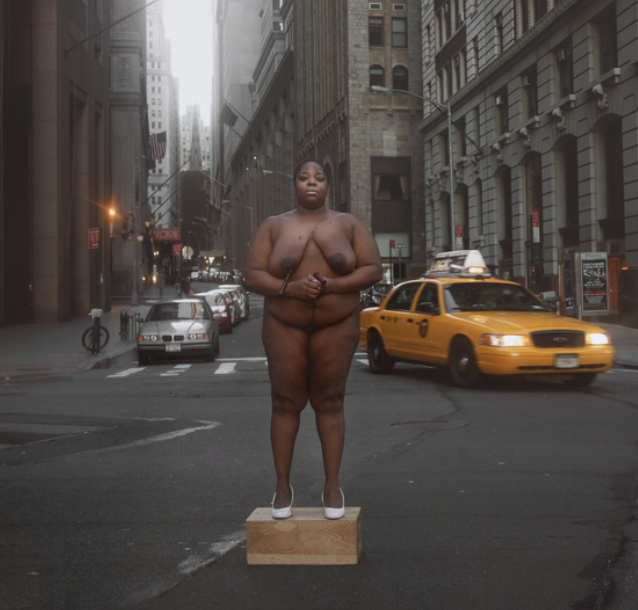
Faustine, From Her Body Came Their Greatest Wealth
Second gallery features artists who rework visual traditions through reference and appropriation. We see contemporary artists such as Yasumasa Morimura (above), Cindy Sherman and Weems who question, celebrate and appropriate visual cultures that preceded them, from Renaissance paintings to canonical photographs.
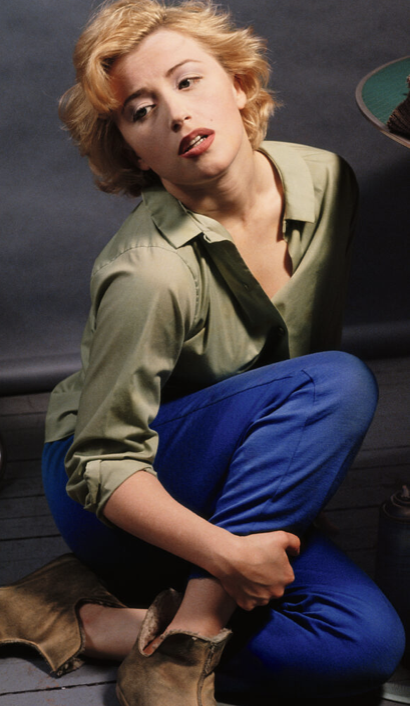
Sherman, Untitled/Marilyn (Sherman is the model)
In particular, Sherman’s work reminds us identity, particularly female identity and celebrity persona, is a constructed performance.
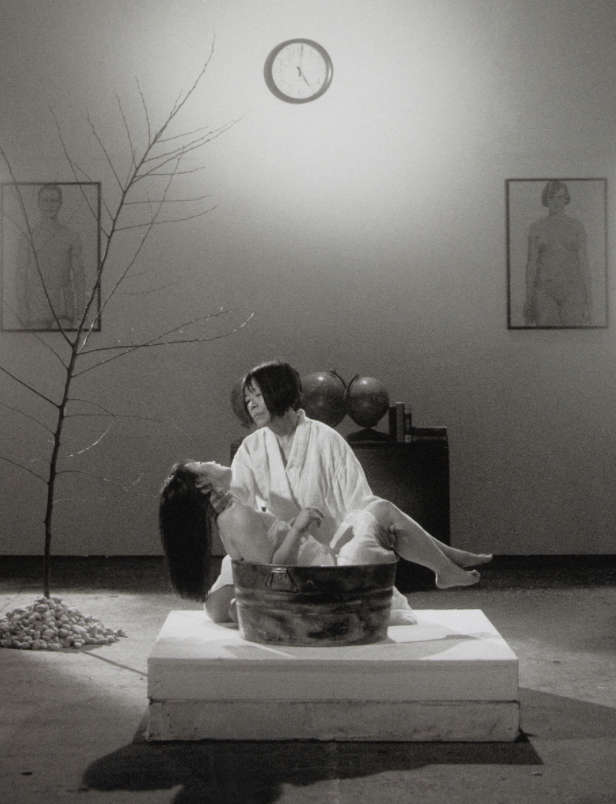
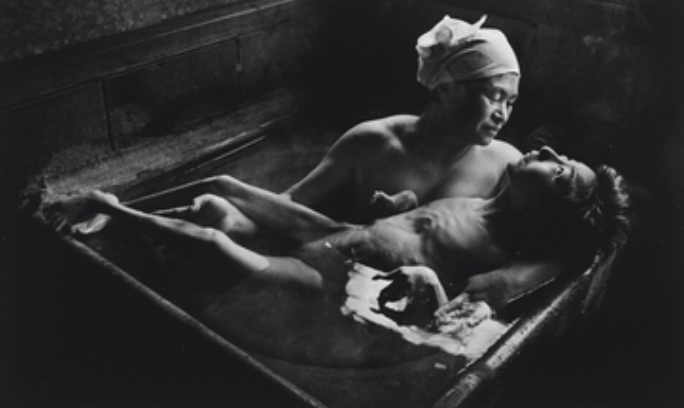
L2R: Weems, The Tragedy of Hiroshima (detail); Smith, Tomoko and Mother in the Bath (although the latter is not on display in this exhibition). Weems’ Hiroshima is often paired and compared with this photograph of Ryoko Kamimura bathing her daughter, Tomoko, who is suffering from mercury poisoning)
Third gallery considers how photography is uniquely positioned to expose the hidden forces behind changing environments and landmark formation. Through geography-based artworks like the 1977 Rephotographic Survey Project, which documents the evolution of Southwestern landscapes between the nineteenth century and the 1970s. It invites us to explore the layers of meaning behind the images we see – and the stories we might overlook.
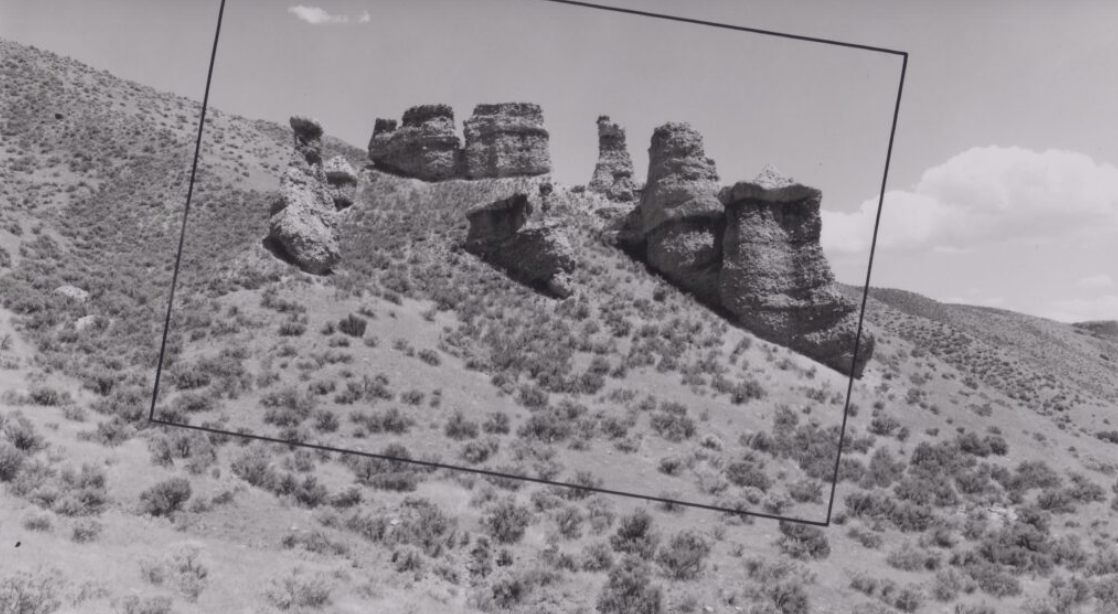
Dingus, Witches Rocks, Weber Valley, Utah
(Re)Constructing History invites audiences to imagine the layers of history we encounter through a seemingly fixed image and examine power, tradition and transformation.
For more information about (Re)Constructing History, click here.