Seeing Red
Two Home Countries
Chiharu Shiota
Asian Art Museum
Ongoing – July 20
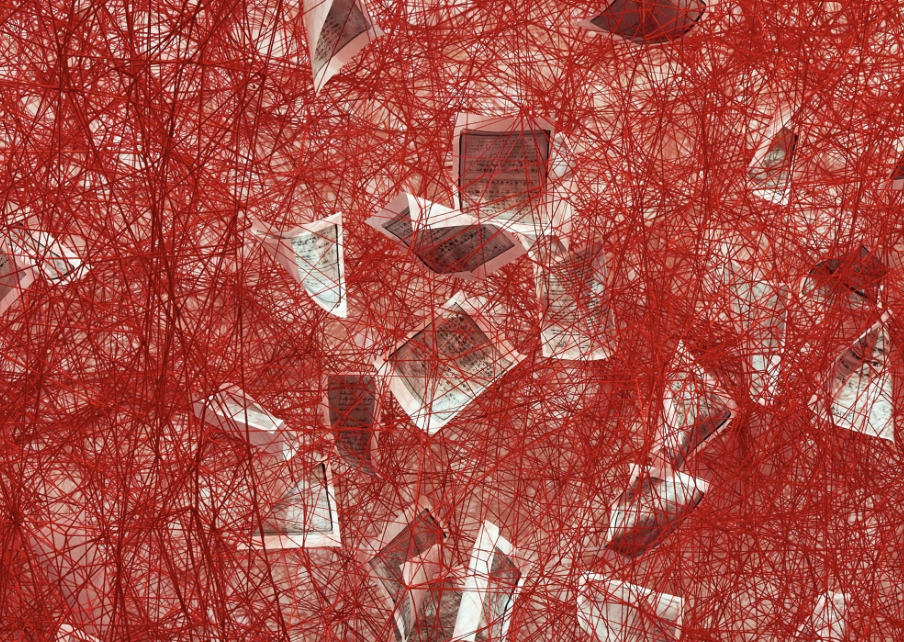
Made with red yarn and handwritten diaries from WWII, some written by Japanese soldiers and others by German civilians. Together they ask: What remains of life after a body is gone?
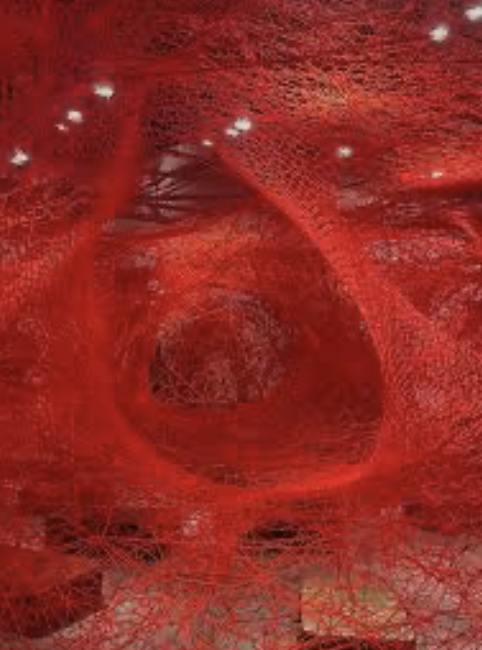
Two Home Countries is the first solo museum exhibition in the Bay Area by Chiharu Shiota, best known for her large-scale installations that fill spaces with densely woven webs of colored fibers. Featuring works from throughout Shiota’s career, including sculpture, video, drawing and stage design, the exhibition offers a timely meditation on belonging, impermanence and living with “in-betweenness” – Shiota’s description of her bicultural identity. Thus, a red dress unravels into a sea of cascading red cords, stretching to fill the metal frames of two houses while restlessly climbing the gallery wall.
In the monumental installation Diary, the Osaka-born, Berlin-based artist explores themes of nationality, identity and memory through her distinctive visual language, reflecting on her own experiences of her “two home countries.” Strands of red yarn stretch across the 88-foot long space, creating a spectacular structure that surrounds audiences as they pass through. Overhead, handwritten pages from the journals of Japanese soldiers and postwar German civilians hang suspended in the dreamlike web.
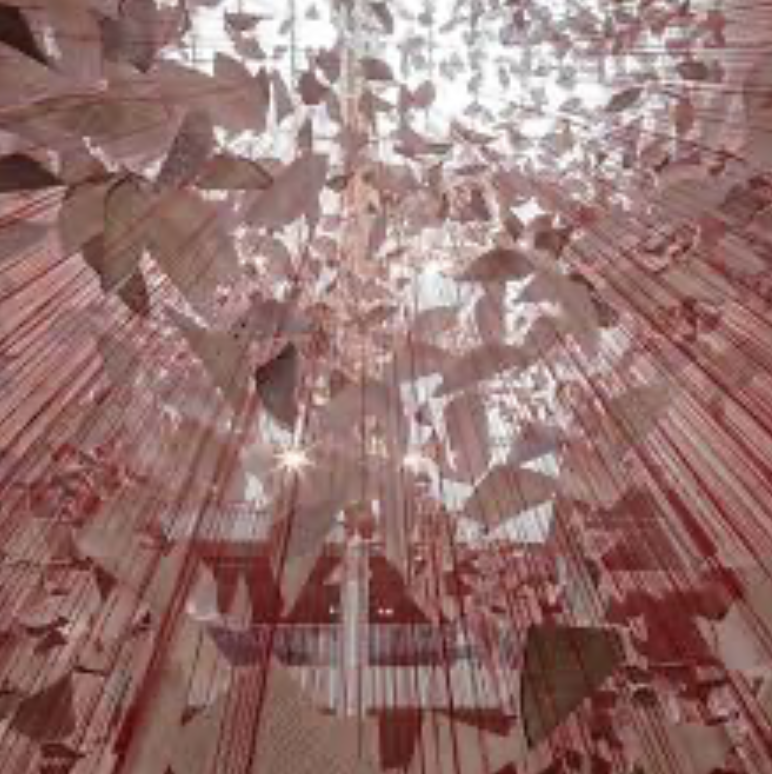
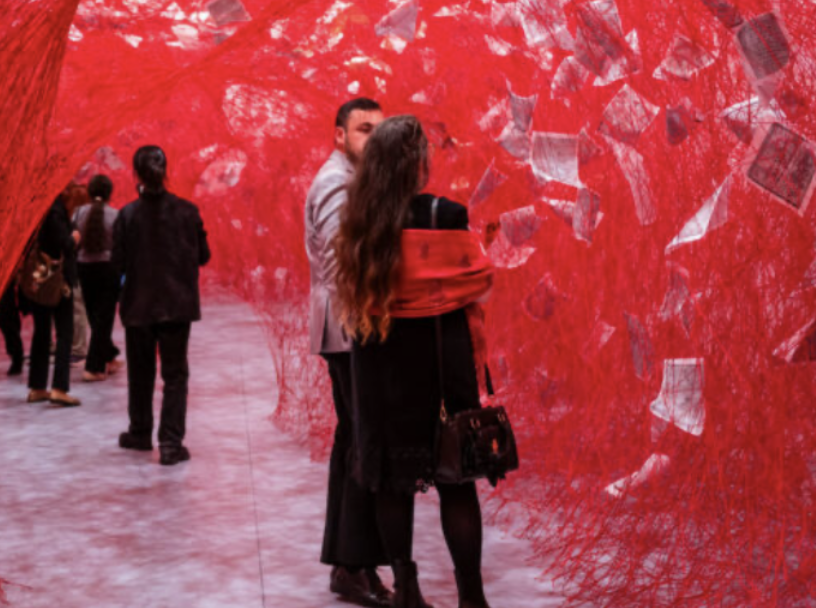
“Shiota is interested in what remains after a person is gone,” says Dr. Robert Mintz, Chief Curator at the Asian Art Museum. “In Diary, the voices of individuals who never met are brought into conversation. The installation makes history feel personal, fragmented and profoundly present.”
As Two Home Countries unfolds, audiences accompany the artist on a journey that is both deeply personal and universally relatable. Navigating an existence suspended between Japan and Germany, absence and presence, isolation and belonging, Shiota explores the threads of memory, history and identity that make up the complex fabric of our shared reality.
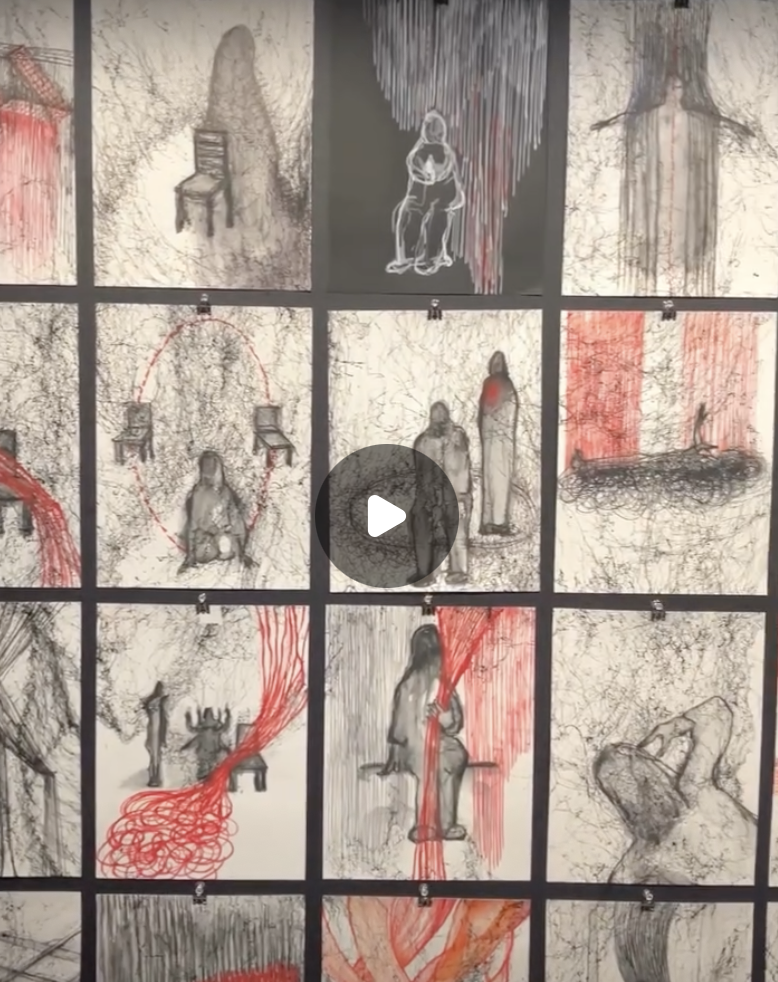
The installation also features sketches, concept drawings and video highlights offering a behind-the-scenes look at Shiota’s work as a stage designer for KINKAKUJI (The Temple of the Golden Pavilion), a theatrical production commissioned by the Japan Society in New York. Other sections of the exhibition feature sculptures, performance videos and works on paper in which the artist confronts her own body as a home that offers neither comfort nor belonging. As she questions the body’s place in the universe, Shiota finds unexpected beauty in its vulnerable depths.
“Chiharu Shiota’s work resonates because it makes emotional states visible,” says Soyoung Lee, Director and CEO of the Asian Art Museum. “Her installations speak to the experience of living between places, histories, and identities — an experience that feels increasingly familiar to many people today.”
Why Red?
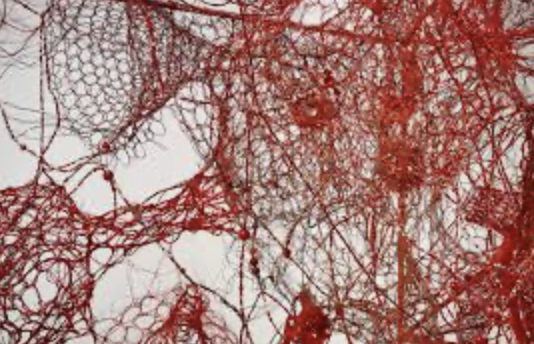
Shiota is known for her signature use of thread, spun into all manner of webs, often in large-scale, ephemeral installations. Before she began experimenting with cord, Shiota was an abstract painter. She still sees her work through that framework, describing her practice as “painting in the air.” “The canvas was quite limiting for her artistically, and she felt like anything she did two dimensionally as an oil painter was just something that had been done before,” according to Naomi Kuromiya, NY’s Japan Society’s senior research associate.
Shiota and her team arrive at a museum two weeks ahead of any opening, working tirelessly to build the dense, intricate netting. Over the years, she’s perfected her system, working down from the ceiling, letting the work fall into place. The resulting works take over entire galleries, consuming the space and drawing in the viewer.
When she first moved beyond the canvas, Shiota used black cord, to mimic lines of graphite in pencil drawings. The color red evokes blood; the many threads produce a network of life-giving vessels and veins. Shiota is also alluding to the East Asian concept of the “red thread of fate,” an invisible string that is believed to bind together people who are destined to meet.
Objects we take for granted become powerful totems in Shiota’s work. Making art that incorporates people’s belongings, such as their historic wartime diaries, is a deeply personal exercise for Shiota. While moving into the installation, we are surrounded by thousands of people no longer present. These missing souls advance human connection and relationships.
For more information on this exhibition, click here.