Moving Pictures
Kinetic Paintings
Samia Halaby
SFMOMA
Ongoing – May 19
Halaby may - or may not - have invented NFT’s [Non-Fungible Tokens]. Nonetheless, her computer artworks from the 1960s are examples of moving digital art and are 50 years ahead of McCoy’s Quantum from 2014, the first, officially-recognized NFT.
A prolific painter and pioneer in digital art, Samia Halaby has been exploring the visual language of abstraction for over six decades. The artist’s dynamic painting compositions investigate how we perceive the moving world through the interplay of textures, surfaces, color and light. This direction emerged out of her love of the early 20th century abstractions of Cubism, Futurism and Constructivism, wherein time emerged as a new dimension in pictures.
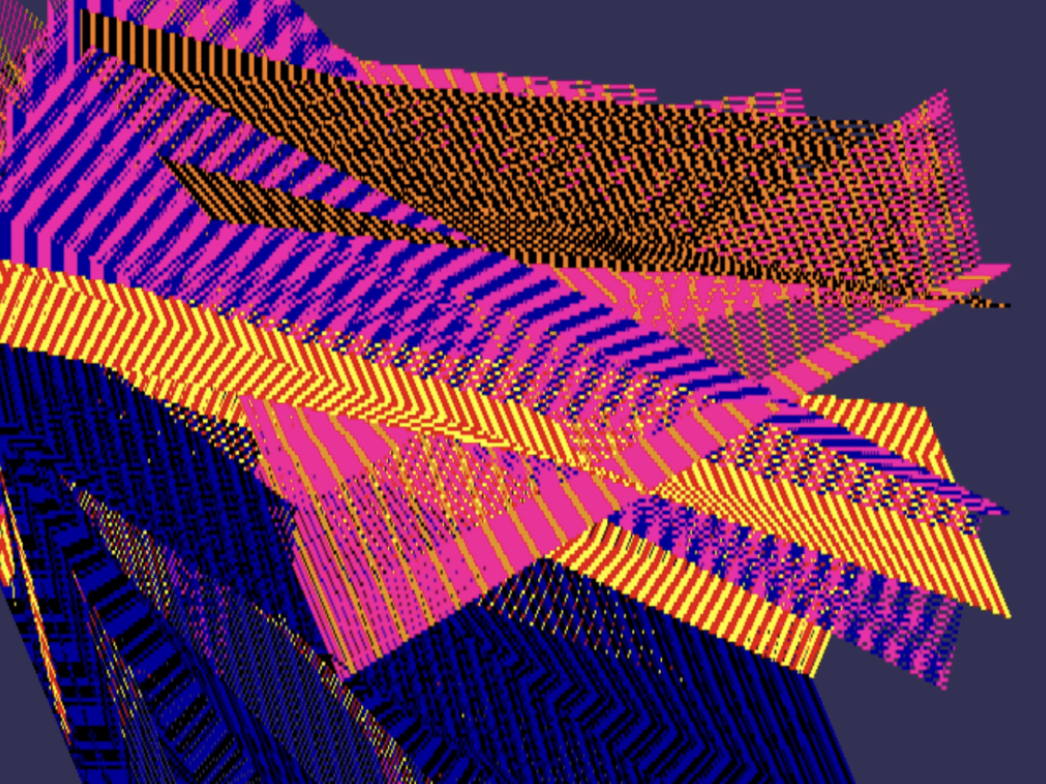
Halaby’s explorations in computer programming led to abstractions in motion. After purchasing a Commodore Amiga 1000 in 1986, she taught herself how to code, using the computing languages BASIC and C. From this emerged what she calls “kinetic paintings.”
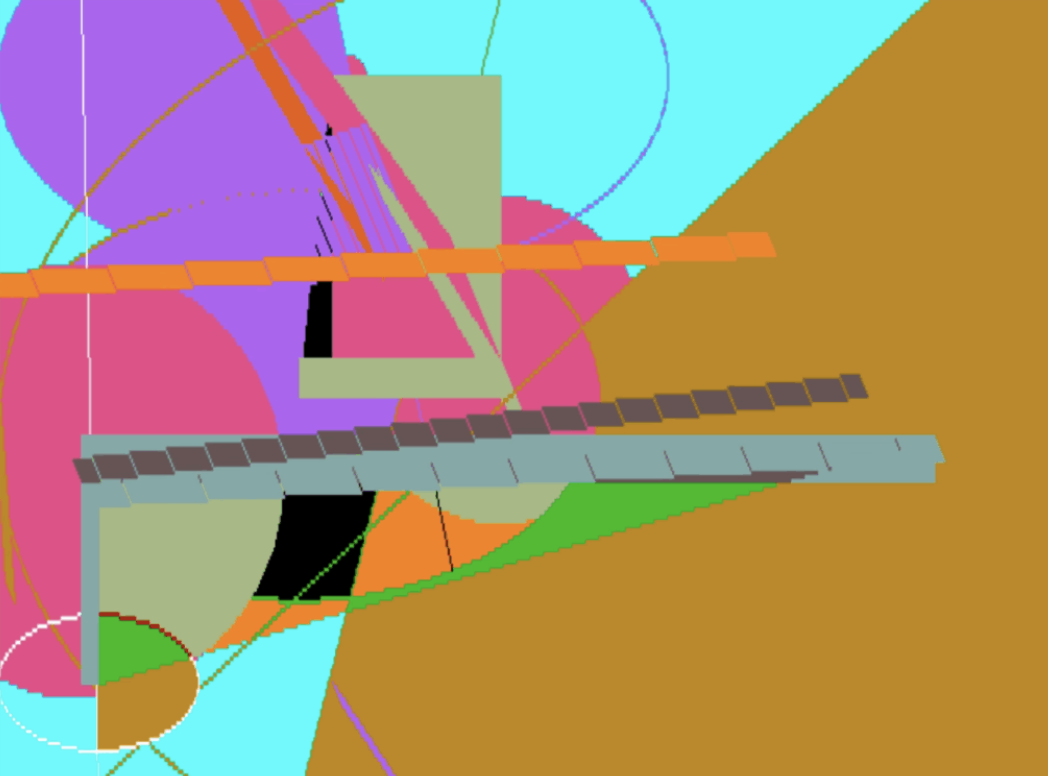
Combinations of numbers became her color palette. Marks on a canvas turned into illuminated pixels on a screen. Lines and shapes are no longer static planes in this expanded form of picture making. They can sprout, grow and change, with these actions captured over time on a computer surface with endless depth, akin to the living and generative characteristics of nature.
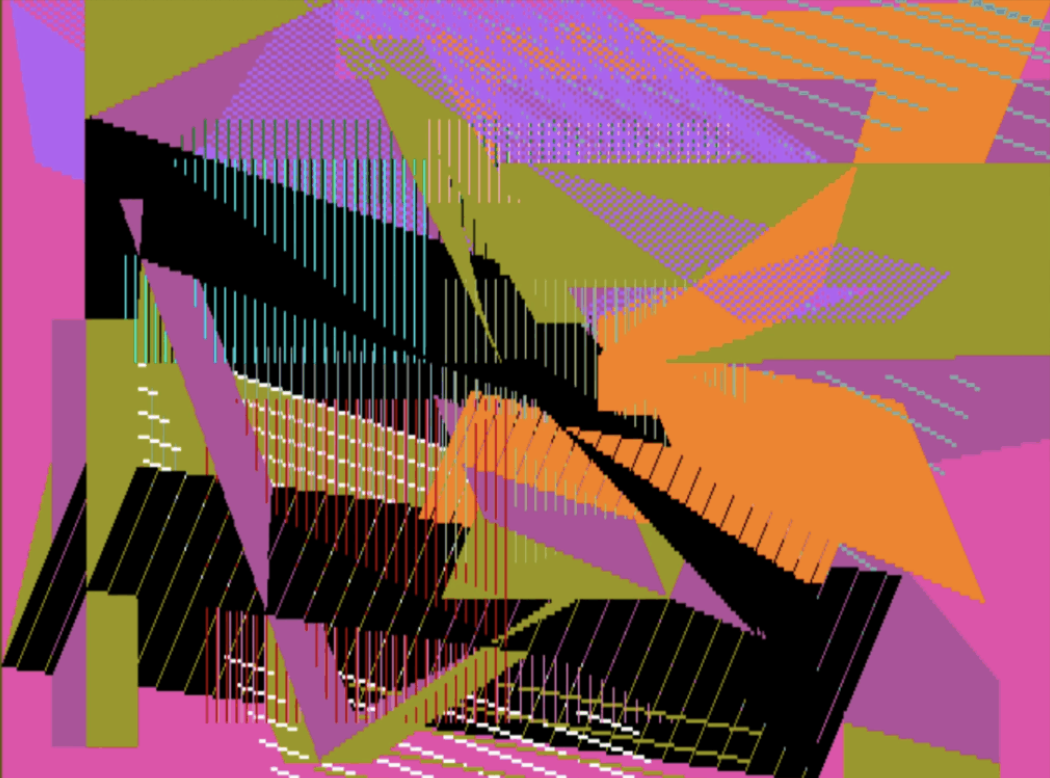
This presentation brings four kinetic paintings from SFMOMA’s collection to a monumental digital screen in the Museum’s Atrium. Each work was independently coded by Halaby and previously could only run on their native machine, in other words, non-reproducible, just like modern NFTs. In recent years, the artist was able to preserve and record these digital works through a computer emulator, allowing audiences to experience them in new display formats and through renewed technologies.
After you enjoy Halaby’s work, take a moment to consider if whiffs of sexism and nationalism may have incorrectly post-dated the first NFT. It’s been known to happen. Just ask Mary Leakey and Heselon Mukiri.
For more information, click here.