Cultural Burning
GOOD FIRE: TENDING NATIVE LANDS
Oakland Museum
Ongoing – May 31
LAND ACKNOWLEDGEMENT
The Oakland Museum of California occupies the unceded, ancestral land of the Lisjan people who, for hundreds of generations, have belonged to the land that is now known as the East Bay of the San Francisco Bay Area.
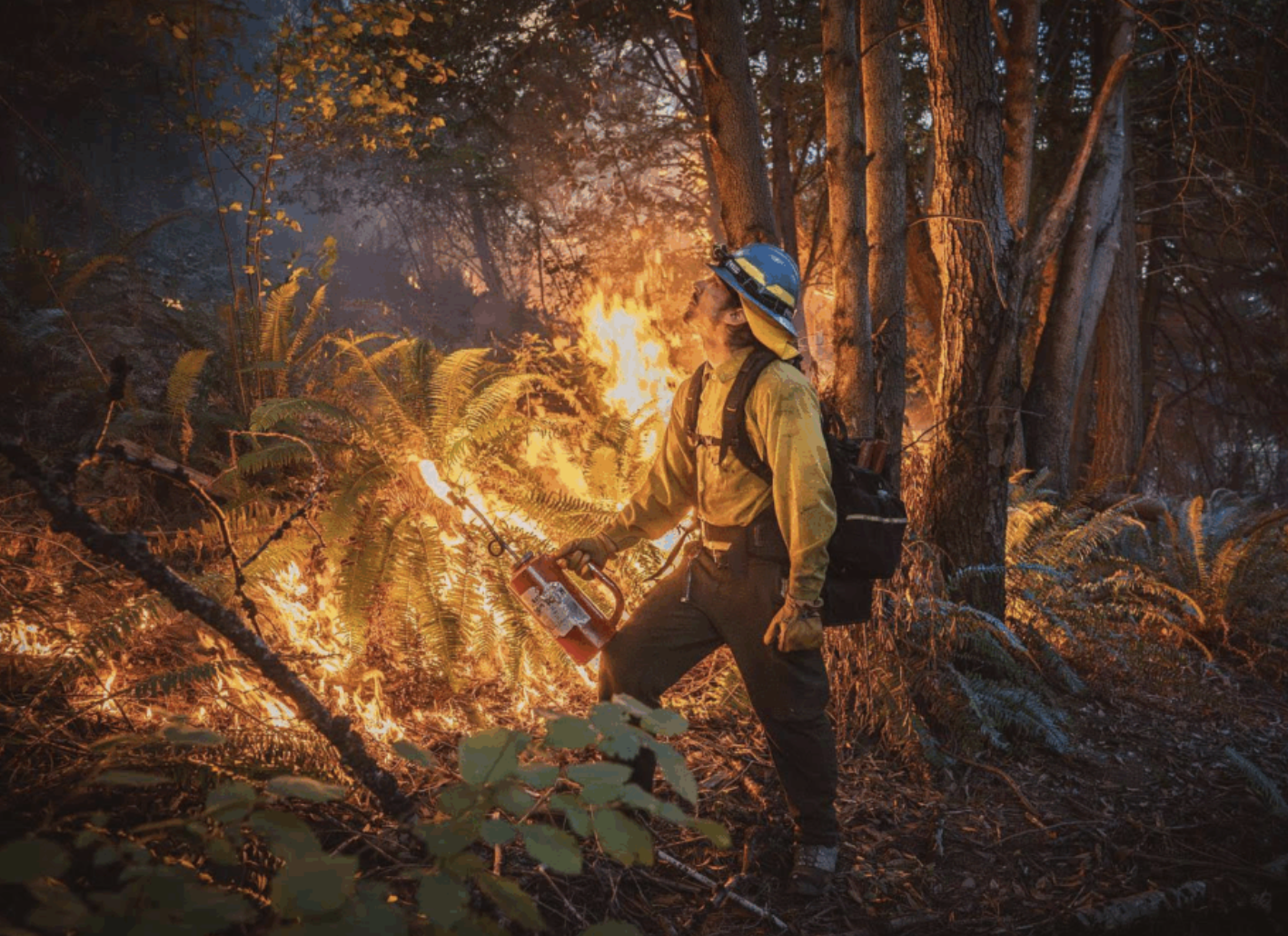
Steven Saiz (Hupa) uses liquid fuel from a drip torch to spread fire
“Fire is the first child of land and water.”
– Diana Almendariz (Wintun, Nisenan, Hupa, Yurok)
No doubt, the megafires in California this century have left us distraught, depressed, devastated. Yet, I suspect that, at some point, many readers of this Blog have made their way to Muir Woods and stood inside the Redwoods that were partially hollowed out from previous fires. It’s a powerful reminder: Fire need not represent total destruction. Fire (at least the right kind of fire) can be life-affirming.
This exhibition explores how Native communities in Northern California have used controlled burns – also called “good fire” – to care for the land and sustain traditions for millennia. Organized in collaboration with Native Northern California fire practitioners, artists, ecologists and cultural leaders, the exhibition recognizes fire as much more than a destructive force. It is an essential tool for supporting healthy ecosystems and vibrant communities.
In a century when wildfires have dominated headlines, Good Fire reframes the story: In the wrong hands, fire is a force of destruction. Used properly, it is a powerful tool for renewal, biodiversity and community wellbeing. Good Fire weaves together art, science, history and storytelling to reveal how cultural burning supports healthy landscapes and living traditions.
Visitors begin their journey inside an evocative sensory environment that simulates a cultural burn – the sounds of crackling fire and laughter mingle with imagery of regrowth and resilience. In this immersive exhibition, explore fire-dependent plants, regalia, basketry, videos of cultural burns and artworks that help us understand how “good fire” benefits all life – humans, animals, and plants alike.
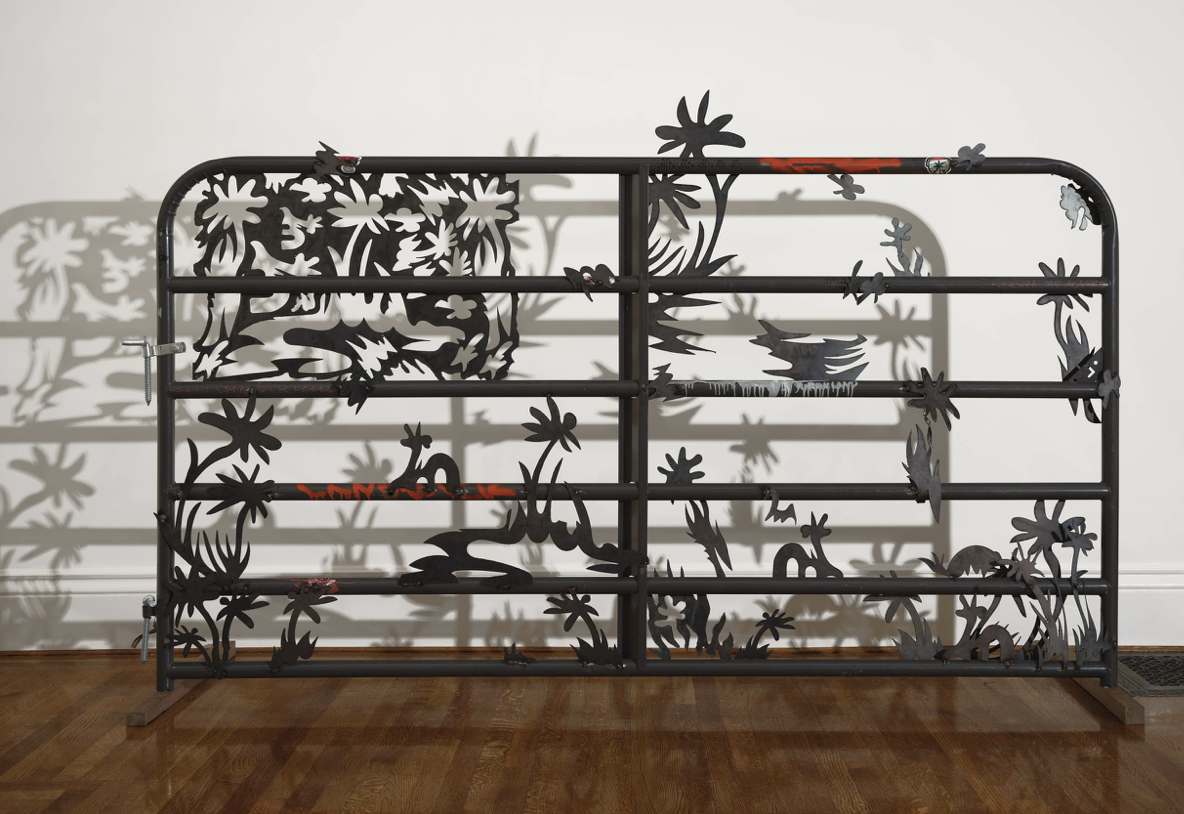
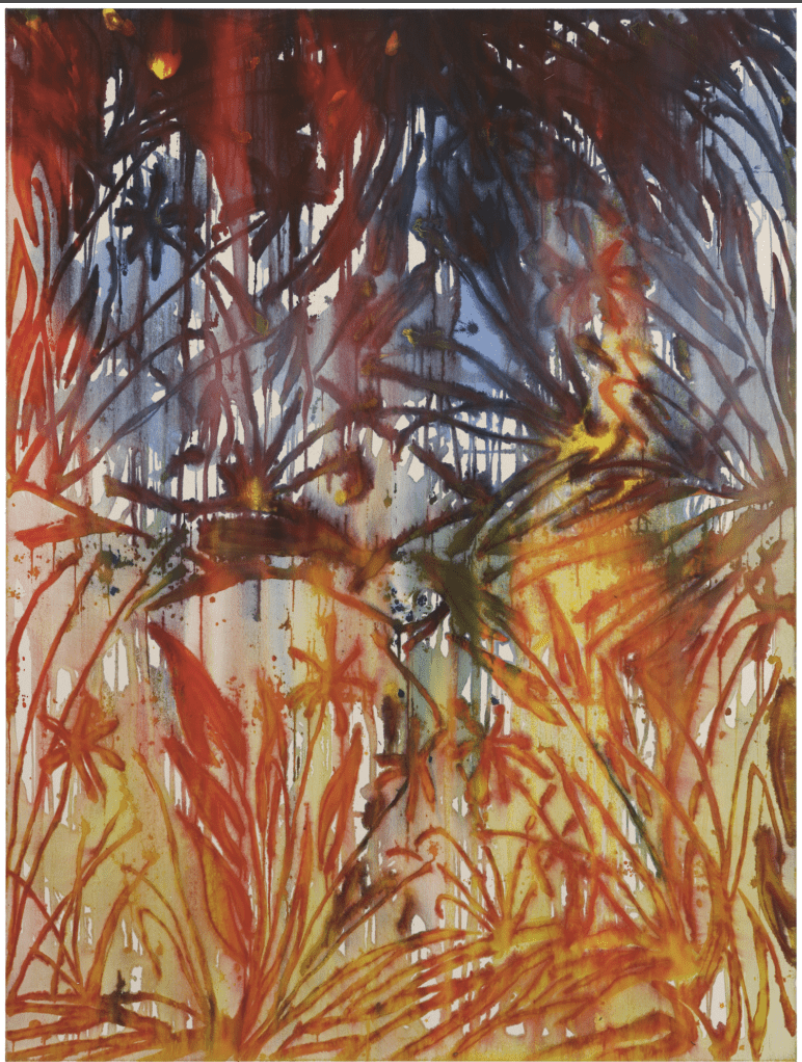
L2R: Both by Saif Azzuz (Yurok, Libyan), Who says, Stickers, ink, bungee cord, chains, and steel (The metal cattle gate conveys how livestock grazing cut off Native access to ancestral lands. Yet, it incorporates symbols of resilience. Welded into the metal gate are shapes of animals, plants, also present are what appear to be splashes of flame. It’s evocative and moving, and worth contemplating.) Next is that time will come.
The presentation also interweaves sculptures, paintings, collages, photographs and cuts from tree trunks with burn scars, along with a collection of T-shirts from Indigenous sovereignty movements, such as the succinct “Land Back, Fire Back.” Taken together, the display highlights connections between the exclusion of Native peoples from their homelands and environmental decline. In addition, these elements illuminate ongoing efforts such as prairie restoration, Land Back campaigns and the work of Native groups like the Cultural Fire Management Council.
Three thematic sections guide the experience:
Working with Fire showcases tools, stories and artworks by Native makers, including pieces that celebrate fire as a life-giving practice
Good Fire, Interrupted traces the colonial suppression of cultural burning and its devastating ecological impacts
The Future of Fire looks ahead to the revitalization of these ancestral practices through short films, contemporary art and community-led restoration efforts like those of Sogorea Te’ Land Trust and the Cultural Fire Management Council.
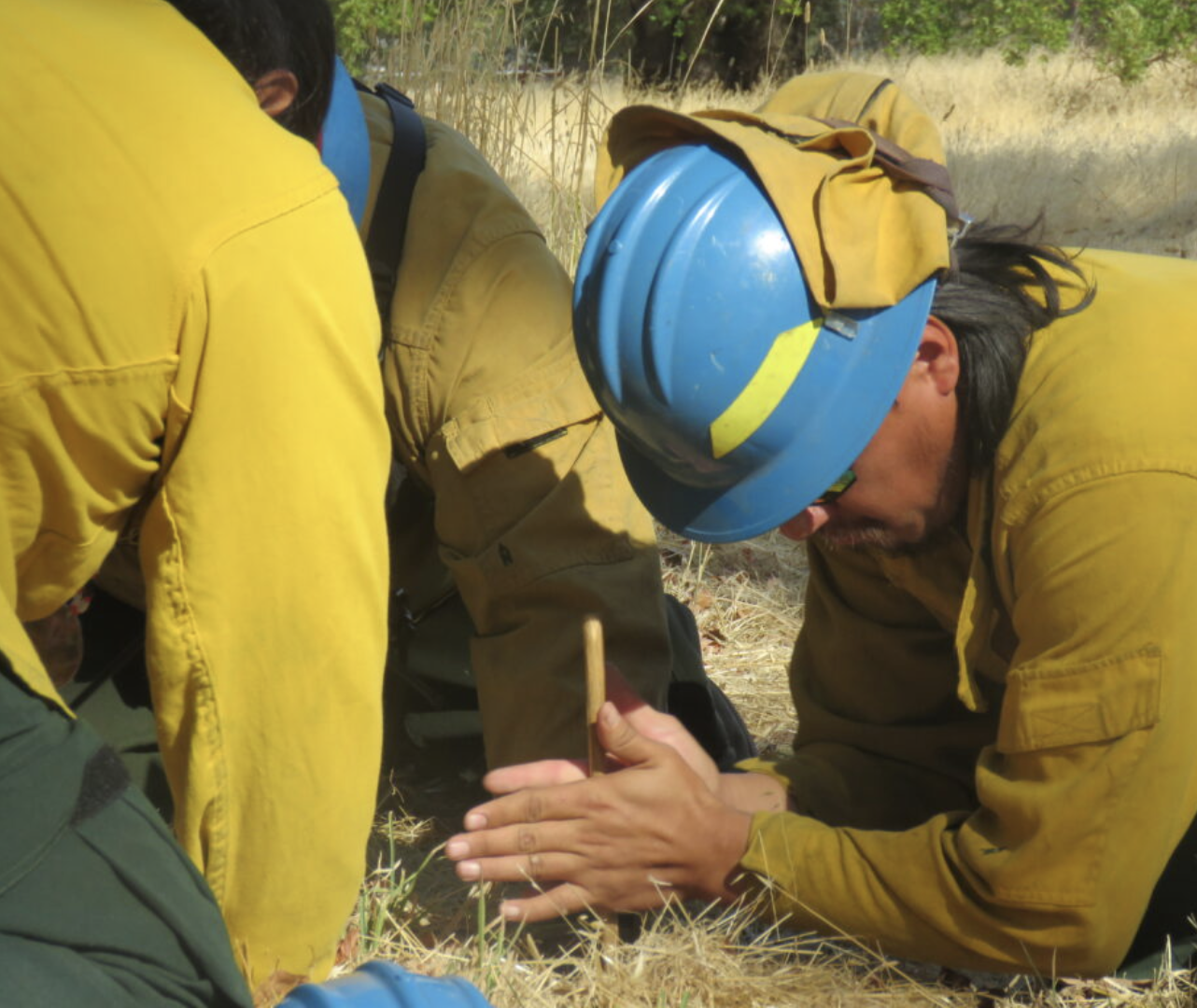
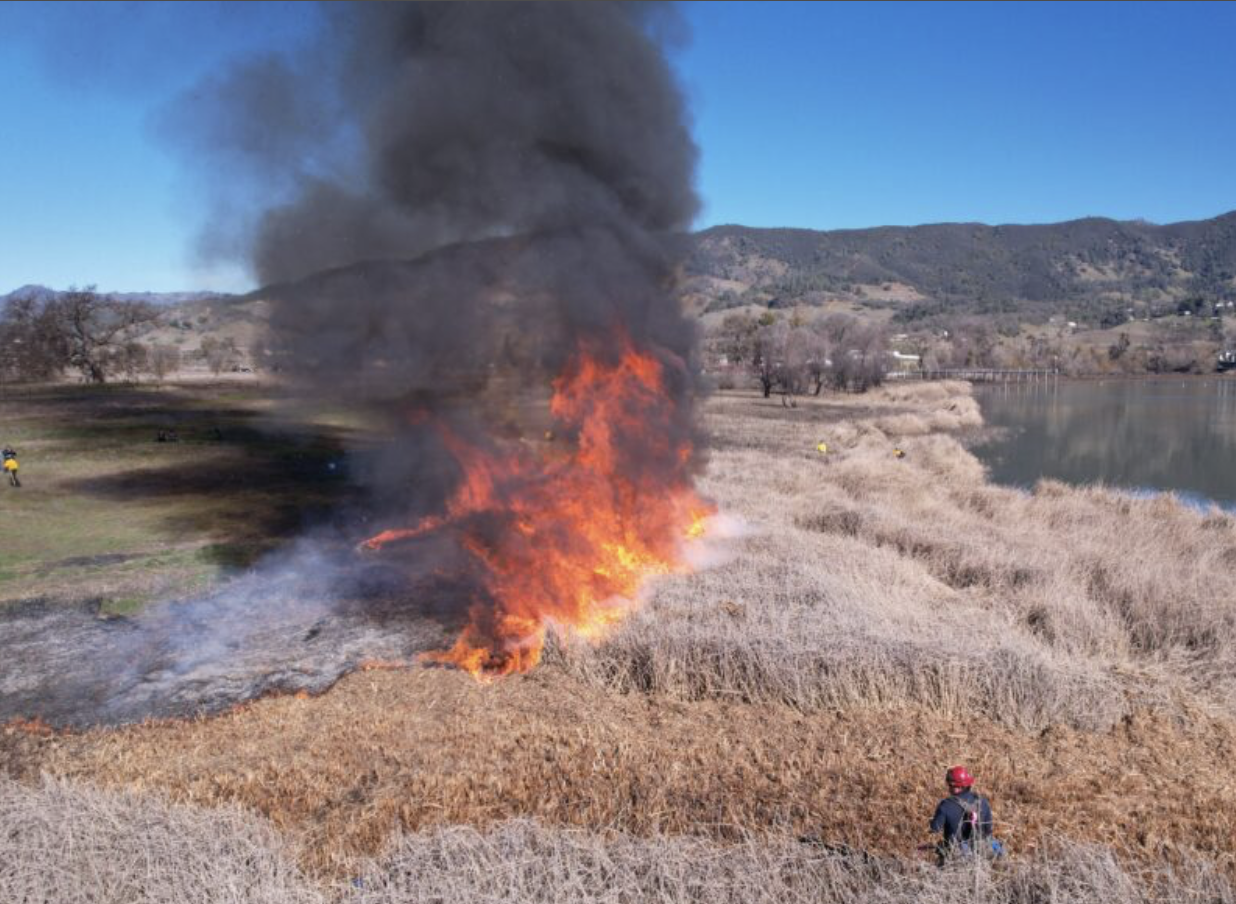
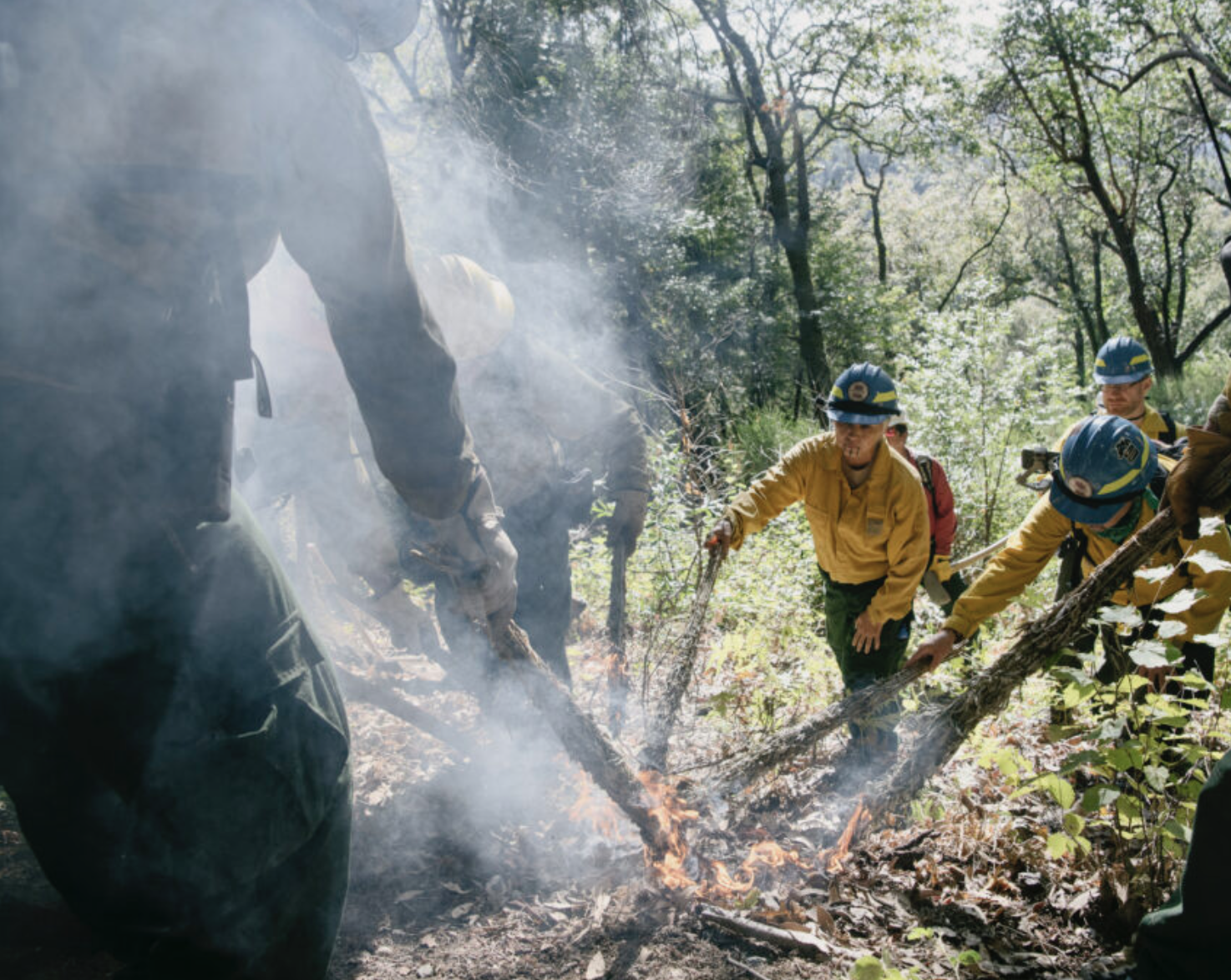
L2R: Tribal EcoRestoration Alliance crew members Will Smith (Stewarts Point Rancheria) and Mark Duncan (Robinson Rancheria) start a cultural burn at Middletown Rancheria using traditional fire by friction; Tule burn led by the Tribal EcoRestoration Alliance on the shores of Clear Lake; Margo Robbins (Yurok), of Cultural Management Council, leads a beneficial burn on Yurok homelands. The group starts the burn using me-chaa-nep (wormwood).
“Good Fire centers Native fire practitioners and culture bearers, whose knowledge is grounded in the specific ecologies of their homelands and thousands of years of experimentation,” says Ryder Diaz, OMCA Curator of Natural Sciences and co-curator of Good Fire. “Good Fire invites visitors to expand their view of fire in Northern California and to respect and support the sovereignty of Native peoples, who have never ceded their right to care for their lands with fire.” Co-curator Dr. Brittani R. Orona (Hupa) adds, “By looking to their leadership, the exhibition not only honors traditions of the past, but also points to the future of land stewardship – one rooted in sovereignty, respect, and the continuance of relationships between people, fire, and place.”
A large-scale map of California’s Tribal Homelands recognizes the enduring stewardship that has shaped these lands for millennia. Good Fire: Tending Native Lands is ultimately a call to reimagine California’s relationship with fire, honoring Native sovereignty and building a future where fire once again sustains life.
A BRIEF HISTORY OF INTERRUPTED CONTROLLED BURNS IN CALIFORNIA
Back in the early 1980s, I worked at the US Forest Service Library for the Pacific Southwest Region (CA, HI and US Pacific Islands.) I mailed scientific articles to forest rangers and scientists in the field. At the time the “hottest” topic was Controlled Burns. For months, I sent out dozens of copies of articles on this topic every day to those in the field. You would have thought that the scientific community had just invented sliced bread.
Currently 60% of California forestland is federally owned. The majority of all our state’s wildfires start on those federal lands and more than half the acreage burned in the megafires is federal land.
In 2021, facing record-breaking dry conditions across the West, the US Forest Service announced it would aggressively put out wildfires that summer. As a result, the agency's use of good fire, the lower-intensity blazes that clear out overgrown forests, was suspended for two years. With thousands of firefighting personnel battling extreme blazes, federal officials said no one could be spared for fire prevention work. That logic is similar to reasoning that: Because workers are need to find horses that are fleeing the barn, no one can be spared to close the barn door.
Good Fire explores the legacy of violence and government policies that made it impossible for Native people to be on their lands, use fire, hunt, gather food and practice their culture. In one displayed quote from 1879, the former director of the US Geological Survey, John Wesley Powell, said, “The fires can, then, be very greatly curtailed by the removal of the Indians… Once protected from fires, the forests will increase in extent and value.” Another example is an 1850 California state law, where Native Americans were fined, punished and even shot for setting fires. Forests became overgrown and primed to burn. (Good News: 🫤 A mere 174 years later, in 2024, the Prescribed Fire Law was passed in California, affirming the rights of California Indigenous to initiate controlled burns.)
As Almendariz reminds us.
“It’s not just an element. It’s alive.
And the first thing it wants to do is eat.
So you better know what you’re going to feed it.
If you starve it, it will become wild.”
For more information about Good Fire at the Oakland Museum, click here.
My thanks to Danielle Venton, KQED/The Do List
Under the 2024 revisions to NAGPRA (1990 Native American Graves Protection and Repatriation Act) authorized by the Biden Administration, all museums shall work in consultation with Native Americans when staging exhibitions of Indigenous Art.
For this exhibition Collaborators are:
Diana Almendariz, Cultural practitioner of Maidu/Wintun and Hupa/Yurok traditions
Weshoyot Alvitre, Tongva and Scottish, illustrator
Kimberly Avalos, photojournalist and producer
Elizabeth Azzuz, Cultural Fire Management Council, Director of Traditional Fire
Saif Azzuz, Yurok/Libyan, artist
California Indian Basketweavers’ Association Board of Directors
Roni Jo Draper, Yurok, filmmaker
Patricia Franklin, Scotts Valley Band of Pomo Indians, basketweaver
Chairman Ron Goode, North Fork Mono Tribe, fire practitioner
Don Hankins, Miwkoʔ (Plains Miwok), CSU Chico, professor
Inés Ixierda, Sogorea Te’ Land Trust
Frank Lake, Karuk, Fire Practitioner
Ayuthea LaPier, Fire Generation Collaborative
Leece LaRue, Karuk Tribe Memory Lab Project Manager
Marissa Lila Kongao, filmmaker
Alice Lincoln Cook, basketweaver, Karuk
Valentin Lopez, Amah Mutsun Tribal Band, Chairman
Timara Lotah Link, Chumash, mapmaker
Starla Madrigal, California Indian Basketweavers’ Association, Board Chairperson
Danny Manning, Asst. Fire Chief, Greenville Rancheria
Tony Marks-Block, Professor, CSU East Bay
Beth Rose Middleton Manning, UC Davis Department of Native American Studies, Professor
Victoria Montaño, Sogorea Te’ Land Trust
Peter Nelson, UC Berkeley, Assistant Professor
Tiśina Parker, Southern Sierra Miwuk/Kutzadika’a Mono Lake Paiute and Kashia Pomo/Coast Miwuk, Regalia maker
Corine Pearce, Pomo, basketweaver and educator
Vikki Preston, Karuk Tribe Department of Natural Resources, Cultural Resources Tech lll, artist
Fern Purdy, Cultural Fire Management Council
Jordan Reyes, Tribal EcoRestoration Alliance, Field Coordinator, Middletown Rancheria of Pomo Indians
Renee Ring Castro, Ohlone, artist
Margo Robbins, Cultural Fire Management Council, Co-Founder and Executive Director
Alyson Sagala, Tribal EcoRestoration Alliance, Operations Manager
Ashley Salaz, Sogorea Te’ Land Trust
Shingle Springs Band of Miwok Indians
Irene Vasquez, Southern Sierra Miwuk
Desiree Walker, Chukchansi, Animator and illustrator
Tracey Williams Hughey, North Fork Mono, basketweaver
Theresa Williams, North Fork Mono, basketweaver
Linda Yamane, Rumsen Ohlone, artist and historian