Art Incarcerated
O. Smith: Artivist
SFMOMA
Ongoing — July 4
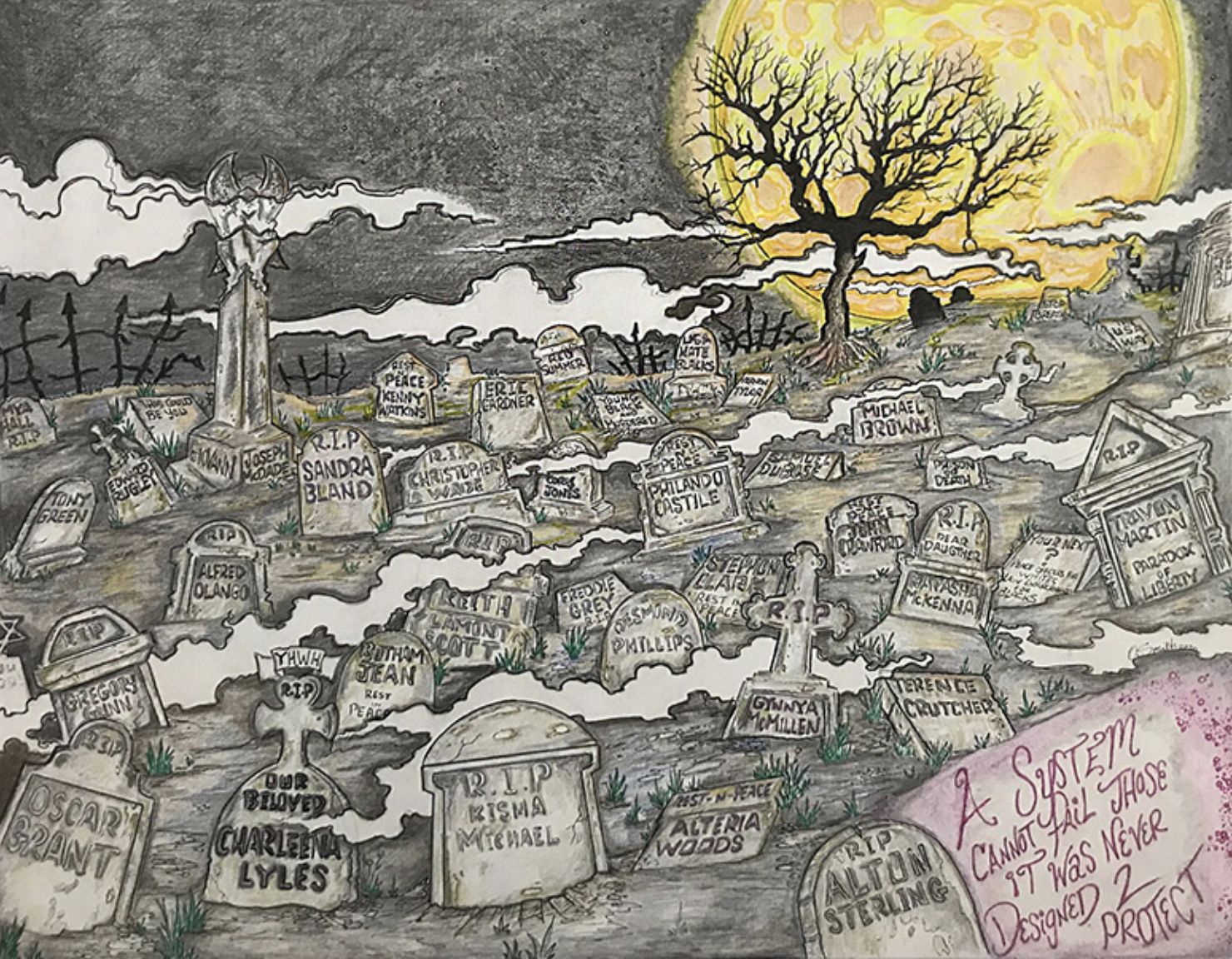
A System Cannot Fail Those It Was Never Designed to Protect
Palm trees help define California. There are palms running down the Embarcadero. There are palms lining streets in Beverly Hills. To look at these plants is to stretch our eyes to the heavens. Now, imagine that, as you turn to face the palm, your eyes catch the armed guard tower inside the San Quentin exercise yard.
Orlando Smith is a graphic artist whose drawings carry urgent political demands. He has been able to reflect on that palm-tree-guard-tower combo since 1999.
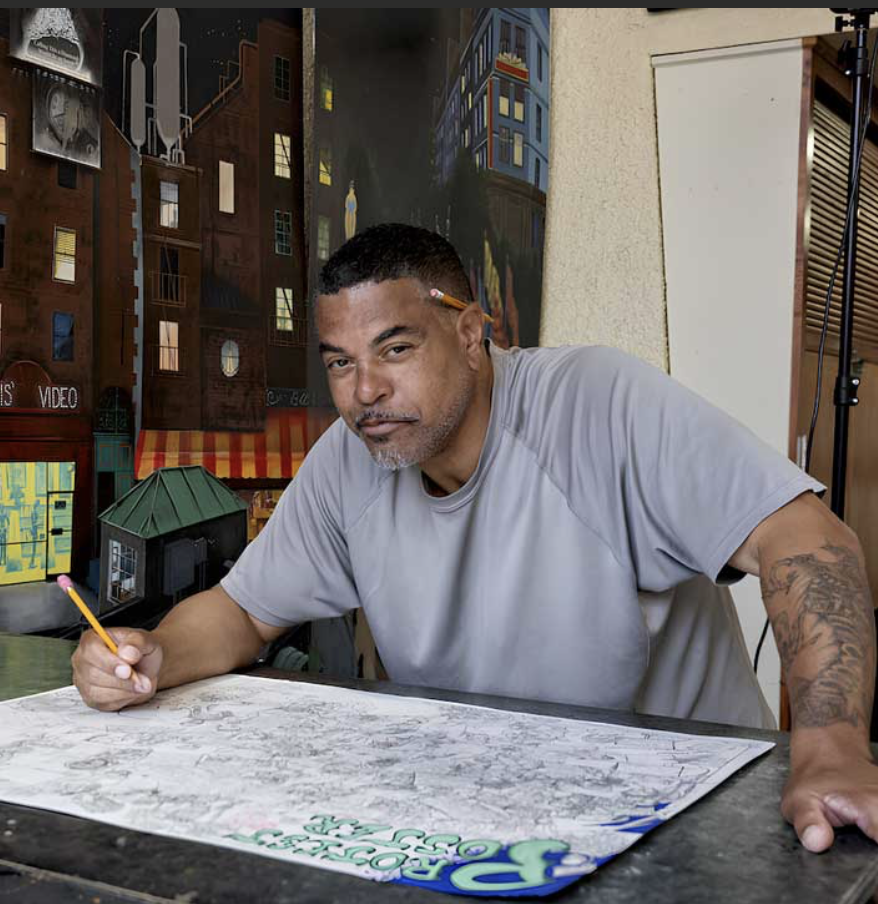
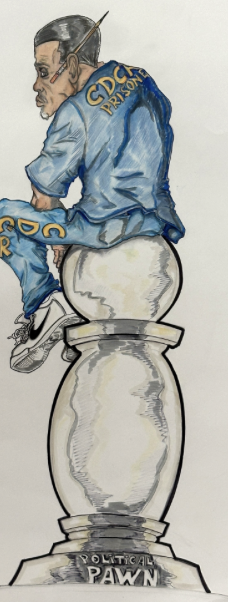
A self-described “artivist” — both artist and activist — he uses pencil and paper to chronicle daily life behind bars, to comment on the senselessness of the criminal legal system and to challenge abuses of power in the US and around the globe. Smith began drawing more than forty years ago, initially inspired by Marvel Comics. Since then, he has created 783 original characters and nearly seventy graphic novels under his own imprint, Skullthuggery Comics.
An illustrator and visual journalist, Smith’s richly detailed drawings offer his firsthand accounts of life as an inmate of San Quentin State Prison. A member of the Society of Professional Journalists, he’s been published in the Columbia Journalism Review and has exhibited his art in dozens of galleries, universities and museums, including MoAD, Oakland Museum, Berkeley Art Center and University of Derby in England.
Historic First
O. Smith: Artivist at SFMOMA is the first time any museum in the world has mounted a solo show by a currently incarcerated artist. (The museum has also acquired several of his pieces for its permanent collection.)
“When they said SFMOMA and a solo exhibit, man, it was mind blowing… I live in a concrete box, you know? So it brought to mind that whatever you work for and you work hard, you can achieve.”
His works depicting life in San Q during Covid caught the eye of SFMOMA curator Nancy Lim. “Ever since I first saw his work, it stayed with me,” Lim says. “He has such a rare clarity, a voice and conviction and this really rare combination of artistry and research. And I felt very compelled to see those works in concentration and density.”
Covid-19 in Prison
While witnessing the devastation of COVID-19, Smith redirected his approach moving from comics to illustrated journalism “to reveal the truth from inside the prison itself.” He watched panic over the virus spread through the overcrowded facility. By July 2020, with no vaccine yet available, 75% of San Quentin’s population had been infected. Twenty-nine people died, and the prison went into a months-long lockdown. A judge eventually ruled that California prison officials had inflicted cruel and unusual punishment by acting with deliberate indifference towards San Quentin’s incarcerated population.
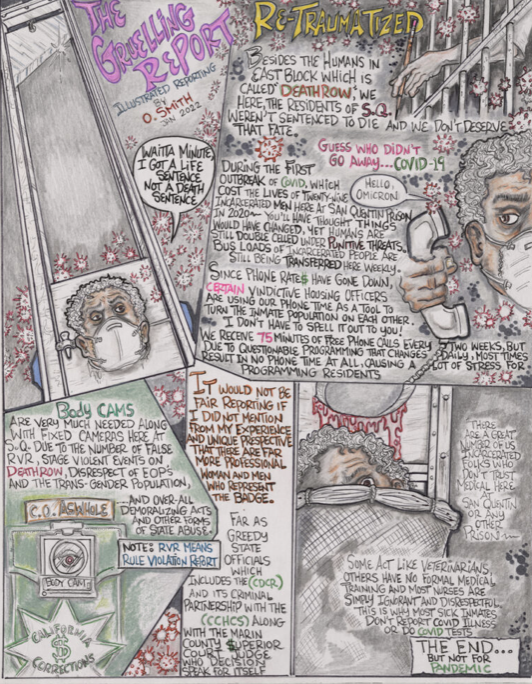
Orlando Smith, Re-Traumatized
“Whatever was hard for people out there, it was even crazier inside of a prison environment,” Smith recalls. “There was no way to really get down to the phones. We didn’t have tablets then.”
With no way to communicate with people on the outside, he put pen to paper. “I would just illustrate different stories, starting off with the routine of being locked down — housed in a double cell at that time, how stressful it was,” he says.
With chiseled linework and soft watercolor flourishes, he drew cramped cells and showers that made it impossible to socially distance, and illustrated officers flouting public health protocols for the many residents who are immunocompromised.
He sent his work to the Prison Journalism Project. Eventually, it was published in over a dozen news outlets. “I felt I had to speak for people who didn’t have a platform,” Smith explaions. As his work was picked up by news outlets. galleries and museums came calling. Then, one of Smith’s works was featured in the Oakland Museum’s Afrofuturism exhibit.
Aging in Place
Now in his late fifties, Smith is particularly attuned to the struggles of San Quentin’s long-term aging population, whose chances for release are bleak despite a near-zero recidivism rate. “I just run and stay the course,” he writes. “Continue to better myself. I don’t have time to waste. None of us do. The goal is creating safer communities and a better life for ALL Californians.”
Driven by an irrepressible creative force — and a deep belief in the humanity of all people — Smith’s work fearlessly confronts injustice while crying out for universal civil rights. It is righteous, loud and productive: A new American Gothic.
Research suggests that people over 55 — many of them sentenced for crimes they committed decades ago — have an extremely low recidivism rate. Prison reform advocates argue that they no longer poses a threat to public safety.
Smith himself is serving eight life sentences for a spate of eight armed robberies, charged separately, with sentence enhancement under California’s draconian Three Strikes Law. (The 2012 Prop 36 revisions to the Three Strikes Law are not retroactive.) The robberies resulted from Smith’s addiction to crack cocaine in the mid-1990s. It is worth noting that records reflect that no one was seriously harmed during these robberies and no gun was used in the commission of these crimes. Speaking of his fellow aging inmates, Smith says, “[Y]ou have to understand that people do change and they change for the better if you give them that opportunity.”
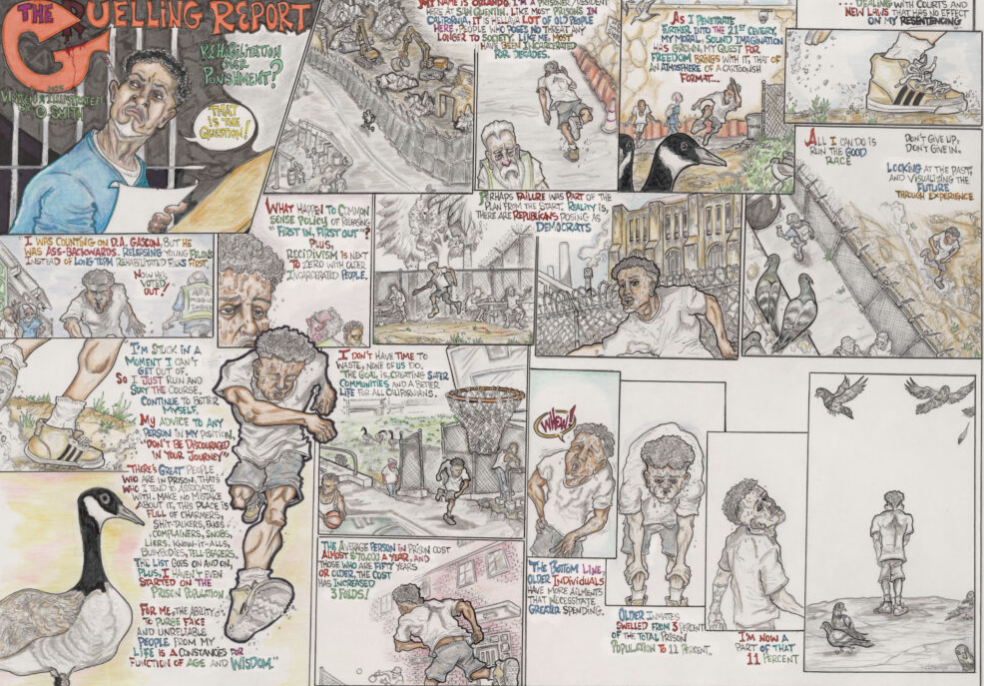
Orlando Smith, Rehabilitation Over Punishment?
Rahsaan Thomas, whose nonprofit—Empowerment Avenue—helped organize the SFMOMA exhibit, says punishments like Smith’s don’t make society safer. Despite harsh sentences, “somebody’s still gonna get robbed today,” notes Thomas. “What works is making people feel like they’re part of the community. Economic empowerment.”
In some of Smith’s comics, he depicts his personal evolution from the young man he once was. Now he dedicates his time to serving others, both as a journalist and as an arts educator inside San Quentin. He has contributed protest posters to social justice organizations like the Ella Baker Center and used his art to raise money for breast cancer treatment. “Orlando has no place in prison,” says Christine Lashaw, who directs Empowerment Avenue’s Visual Arts for Liberation program.
Cause Célèbre?
Orlando Smith is remarkable. Although we cannot look into his heart, he is not Jack Henry Abbott, probably. Most of us cannot predict the future. However, there are some facts that can aid us in our assessment of what that future might hold. To wit, the data from California’s Elderly Parole Program, which needs to be understood through it cumulative findings, and not defined by the most extreme cases.
Those released on elder parole have a near zero (0.6%) recidivism rate for violent reoffense. The process that evaluates them is rigorous. “Aging out of crime” is one of the most established findings in criminal justice research. The single strongest predictor of whether someone can safely return to their community is the combined result of time served and age. For almost all prisoners, there is no cumulative beneficial or deterrent effect of incarceration after 20 years. (Those are facts. Nonetheless, I personally maintain my skepticism when it comes to sexual offenders and serial killers.)
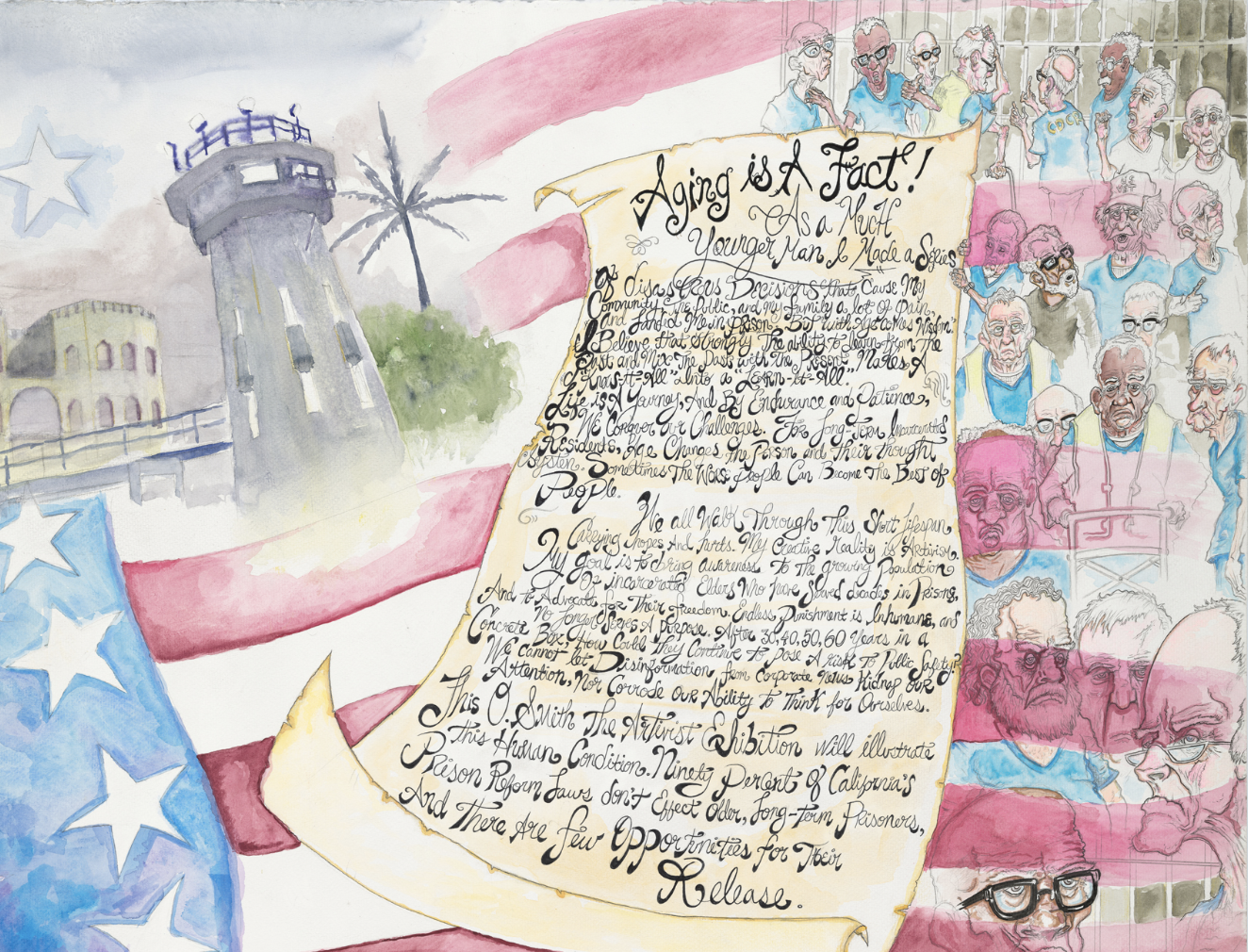
Orlando Smith, Aging Is a Fact!
More than 20% of San Quentin’s population is now over the age of 55. To qualify for elder parole, someone must be at least 50 and have served at least 20 years. (Current legislation being considered would raise the age to 65.)
It costs $128,000 a year to incarcerate a younger person, and two to three times that for someone over 80. Moreover, a growing number of these inmates are living with dementia. California has opened memory care units in two prisons for people who attend parole hearings and cannot remember why they are there. Meanwhile, we spend more every year to incarcerate people that evidence tells us are safe to release — money that could go toward what actually keeps communities safe: trauma recovery for victims, mental health treatment, housing improvements and programs designed to prevent harm before it happens.
Recently, the California Department of Corrections and Rehabilitation (CDCR) recommended Smith for resentencing. His sentence was adjusted, granting him the potential for future parole and release.
My thanks to Nastia Voynovskaya, KQED The Do List
For more information, click here.