Vishnu’s Cosmic Ocean
Asian Art Museum
Ongoing — January 25
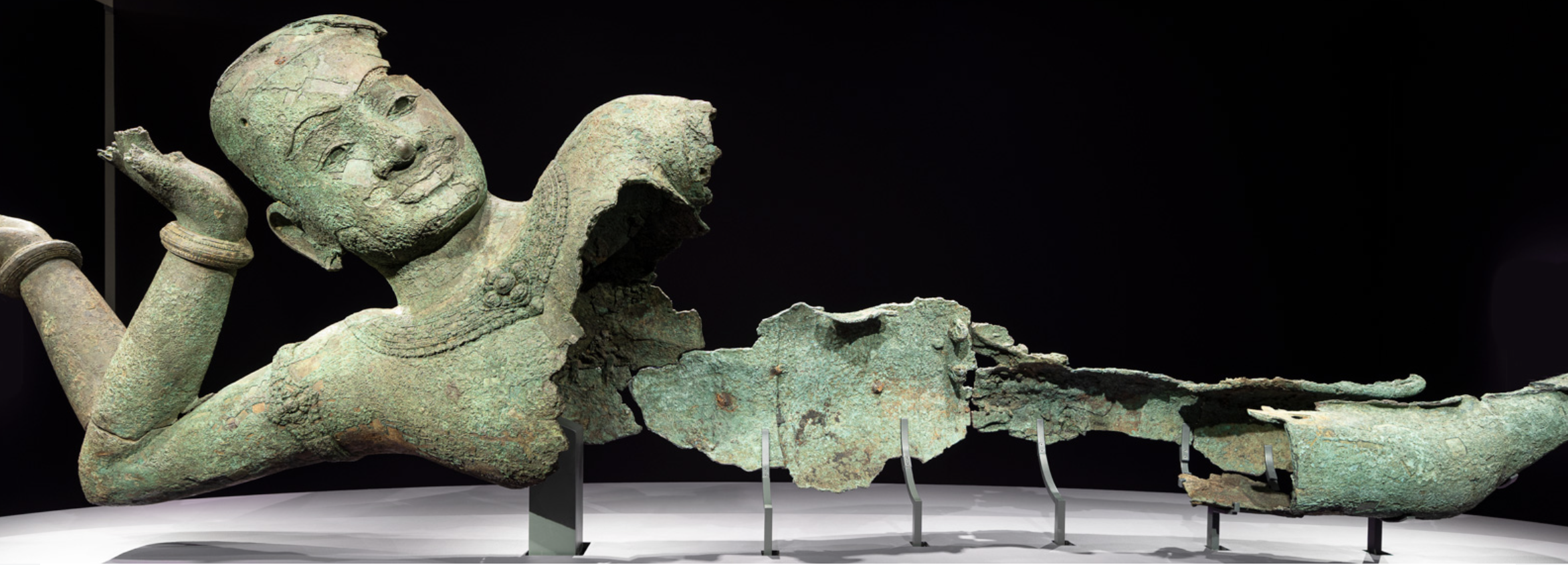
At 20 feet, the sculpture is recognized as the largest ancient bronze ever found in Southeast Asia.
The Reclining Vishnu makes a once-in-a-lifetime stop in San Francisco.
A thousand years ago in the Kingdom of Angkor, a colossal bronze statue of the Hindu god Vishnu reclined on a serpent-shaped pedestal at a temple located on human-made island, West Mebon, in the middle of a massive water reservoir called West Baray in modern-day Siem Reap Province, Cambodia. For centuries, it was buried in mud beneath a temple on the island.
In 1936, a man living nearby had a dream wherein the Buddha appeared to him and asked to be freed from his confinement. Upon awakening, he instigated an archaeological exploration of the temple and island. The Vishnu bronze head was rediscovered in a shaft buried beneath the temple. Turns out, that discovery revealed only 25% of the sculpture. Archaeologists and conservationists then began the decades-long, painstaking task of safely removing the bronze, a nearly 20-foot-long representation of Vishnu.
Newly conserved, this national treasure has already toured Paris and Washington, D.C. After its stop at the San Francisco Asian Art Museum, this national treasure will return to Cambodia. This is your last opportunity to experience the full statue, “the most important bronze artwork of Cambodia,” says Chhay Visoth, director of the National Museum of Cambodia. “This is the last chance that this great masterpiece will be out of the country.” (I suppose you could plan a visit to Cambodia, but a BART ticket is a lot cheaper.)
The Reclining Vishnu offers a window into the grandeur and sophistication of the Khmer civilization. “Cambodia takes immense pride in the creations of our ancestors,” says Minister of Culture and Fine Arts Phoeurng Sackona, “whose works, despite being thousands of years old, continue to serve as the nation’s greatest cultural ambassadors on the world stage.”
Hindu Creation Cosmology & Angkorian History
The statue’s original location — a temple surrounded by the expansive waters of a reservoir — echoes Hindu religious beliefs. According to Natasha Reichle, associate curator of Southeast Asian Art at the Asian Art Museum, a sleeping Vishnu, reclines atop a coiled serpent, dreaming worlds into existence. Vishnu then drifts on a cosmic ocean in the intervals between cycles of creation, preserving the universe within himself until a new world emerges.
The exhibition traces the history of the bronze from its inception, likely in an Angkorian royal foundry, to its rediscovery. You will gain new insights into the work’s manufacture, including evidence of the human ingenuity behind the sculpture’s creation, plus the astonishing amount of molten bronze and gold needed to produce and gild the work.
Interpretive displays, maps and videos will guide you into the Kingdom of Angkor, the mythology surrounding Vishnu’s cosmic ocean, and the central role water played in shaping Cambodian society. The exhibition also highlights Angkor’s enduring significance as a UNESCO World Heritage Site and a source of cultural identity and pride for Cambodians today.
An accompanying film Awkun by Cambodian-American director praCh [sic] Ly documents the community around the present-day reservoir walking us through a day in the life of a local fisherman and a young Buddhist monk. Meanwhile, the soundtrack fills the gallery with the subtle, serene sounds of a vast body of water.
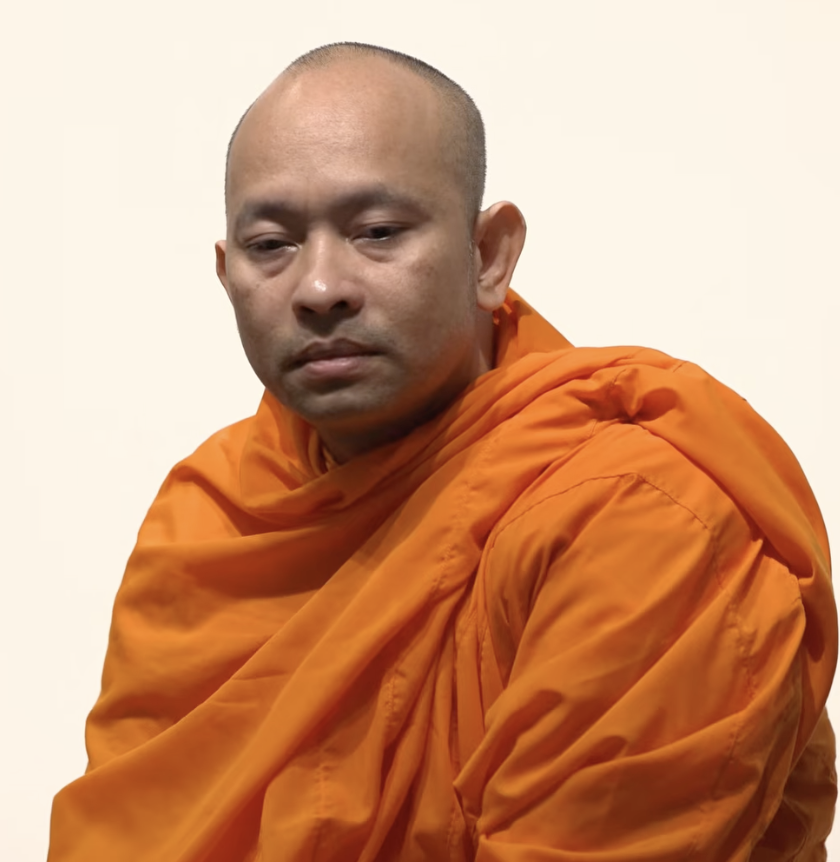
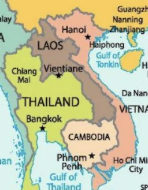
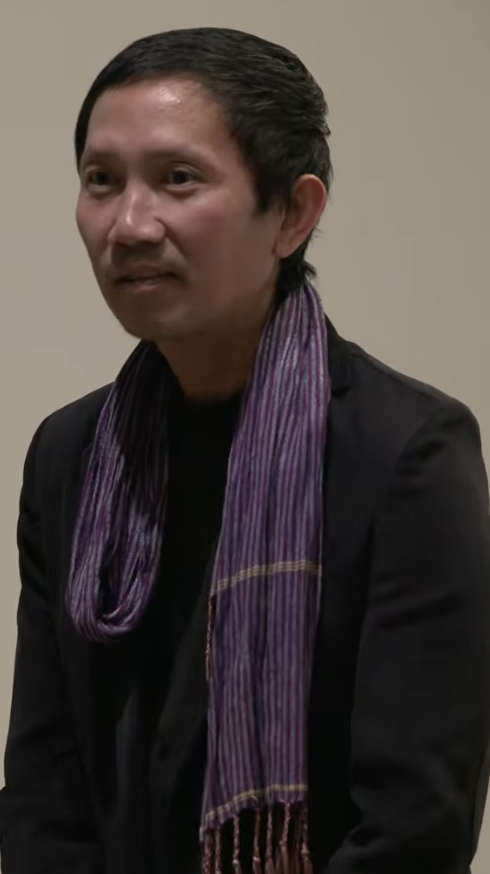
L2R: Buddhist monk at Blessing Ceremony for opening of exhibition; Map including Cambodia, and Director praCh Ly.
There’s Still a Story to Tell
“Visitors may arrive expecting to see a masterwork of ancient sculpture,” said Reichle. “What they discover is a much bigger story — one about the relationship between water and power, the ingenuity of Angkor’s engineers, and the ways societies use art to express their deepest ideas about creation, kingship, and the natural world. The Vishnu is both a work of extraordinary beauty and a gateway into understanding Cambodia’s remarkable history.”
In the end, she notes, “The exhibition highlights the importance of water, both in the mythology around Vishnu and as a crucial resource in ancient Angkor, exploring connections between art, water, and power that continue to resonate globally in the present day.”
More than an exhibition about a single object, Vishnu’s Cosmic Ocean offers a rare encounter with a sculpture that stands at the intersection of art, belief, environment and human ingenuity. It is a story rooted in Cambodia, yet one that speaks to universal questions about how civilizations flourish, how people understand their place in the world, and how the resources that sustain us continue to shape our collective future.
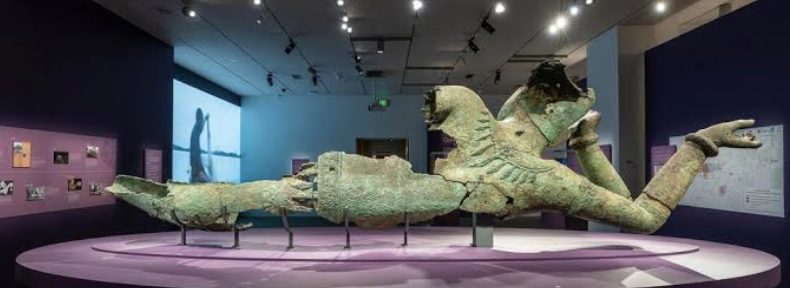
Reverse view of Reclining Vishnu with praCh Ly’s film playing in the background. To hear the soundtrack, you’ll have to visit the Museum 😉.
My thanks to Sharon Anderson, The Voice of San Francisco
For more information, click here.