💚 Alcatraz = Resistance, Resilience & Activism
Welcome to Indian Land
Alcatraz Island
Ongoing

Alcatraz is not an island, it’s an idea.
– Richard Oakes
How do you get to Alcatraz Island?
How do you get to Alcatraz Island in 1969 when the Ferry didn’t start until 1973?
How do you get to Alcatraz Island in 1969 with enough people to stage a protest when the National Park Service prevents entry?
The best reason to take the ferry to Alcatraz is to experience Welcome to Indian Land: Resistance, Resilience and Activism, a new exhibit about the Native American protests (and most specifically the 1969 occupation) of Alcatraz. Throughout the occupation, the protesters publicized injustices against Indigenous Peoples and inspired ordinary people to take organized, nonviolent political action to create a more just society for all. Today, Alcatraz is a part of the Golden Gate National Recreation Area. GGNRA is a member of the International Coalition of Sites of Conscience, whose goal is to connect past struggles to today’s movement for human rights.

Multimedia presentation
This exhibition is a result of the vision and efforts of Kris Urbanzezlife Longoria (Caddo, Cheyenne, Arapaho), a member of the San Leandro Art Association.
Longoria opened her solo exhibition thoughts of a large red woman: chapter one: interactions just months after the Alcatraz exhibition opened. For more information on Longoria’s solo exhibition, click here.
COMING ACROSS ON THE FERRY
Currently, when you disembark from the ferry, the National Park Service (NPS) has everyone gather under the “Indians of All Tribes, Welcome” sign. The park ranger explains the importance of this political statement and what happened in November 1969. The ranger will point to the rebuilt water tower with its bold red letters reading, “Peace and Freedom. Welcome. Home of the Free Indian Land.” This is an exact replica of the message left during the 19 months when Native American activists commandeered the wind-scoured Island five decades ago and may be the only example of the NPS restoring modern-day protest art. “The water tower was the occupation’s most outwardly focused message to the world and it is an important part of the island’s history,” said Alexandra Picavet, a spokeswoman for the NPS.

A WEEK BEFORE THANKSGIVING 1969
The current greeting is a far cry from NPS’ response 56 years ago.
The federal prison on Alcatraz was closed in 1963 and the site was declared surplus federal property. Terms in the 1868 Sioux Treaty have been interpreted to potentially allow Indigenous Peoples to claim ownership of any lands once held by the federal government which are now abandoned. On the basis of the 1868 Treaty, Indigenous Peoples from multiple tribes (“Indians of All Tribes”) decided to assert their right to lands they had used for at least 10,000 years before Europeans arrived.
In the early morning of November 20, 1969, a group of 89 Indigenous Peoples (including children) sailed from Sausalito to Alcatraz. Many were turned away but an initial group of 14 gained entry to the Island to begin the occupation. The lone guard on the Island radioed for help, announcing "Mayday! Mayday! The Indians have landed!" Eventually, others gained entry to the Island and the Indigenous population grew to 400.
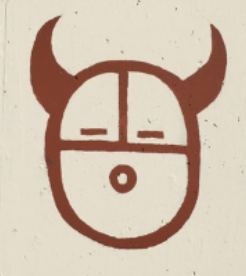
Intent on drawing attention to the injustices faced by Indigenous Peoples, the activists, led by Richard Oakes, announced they would hold the Island until their demands were met. They found buckets paint, left over from painting the Golden Gate Bridge and repurposed it to spell out declarations of native sovereignty and to paint raised red fists on the Island’s prison buildings and water tower.
“We will purchase said Alcatraz Island for $24 in glass beads and red cloth, a precedent set by the white man’s purchase of a similar island about 300 years ago,” Oakes stated.* [Remainder of the Proclamation is appended at the end of this Blog.]
Alcatraz served as a historic metaphor for Indigenous areas of the US – the Island lacked running water, mineral resources, employment, adequate housing, education, health care and was impossible to escape – just like most “rez.” Faced with these daily challenges combined with the federal government cutting off electricity and telephone service a month earlier, on June 11, 1971 (19 months after they arrived), the last remaining Indigenous Peoples left the Island.
The Indians of All Tribes, who took control over the island, transformed this former prison into a vibrant “Indian City” and hastened a global Indigenous rights movement. Alcatraz’ Indian City included a school, daycare, a health clinic with doctors and nurses and a communal kitchen.
Activism by Richard Oakes, LaNada War Jack (then known as LaNada Means) and others sparked a movement that helped launch twenty-six pieces of self-determination legislation, including:
1978 the American Indian Religious Freedom Act,
1975 Indian Self-Determination and Education Assistance Act (Tribal colleges were formed as a result) and
Indian Child Welfare Act, to prevent Native children from being sent to non-Native families without any say from the Tribe or extended family members.
The federal government also ended their Indian Termination Policy of forced assimilation. These major reforms followed the Alcatraz takeover, after decades of inaction.
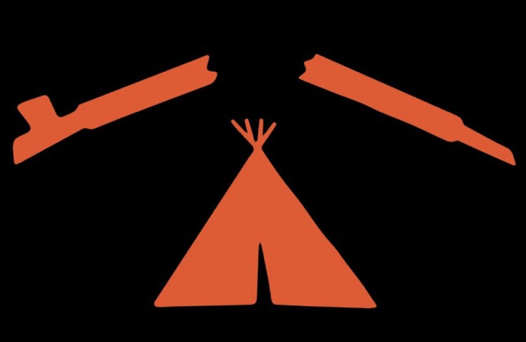
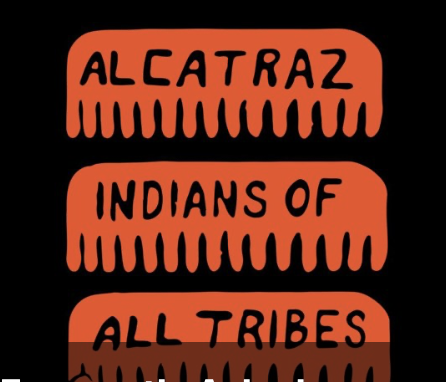

Common signs on Alcatraz during the protest, including (far right) a flag that flew over the Island at one point, developed by Lulie V. Nall (Penobscot).
WOMEN OF THE INDIGENOUS PROTESTS
(With a Little Sexism to Add Spice)
Mainstream media had an obsession with documenting the stereotype of the male “Indian Warrior” and as such it was only the men who were highlighted as being the leaders and creators of many Indigenous movements. Women at the occupation of Alcatraz, such as LaNada War Jack and Stella Leach, receive little attention for their contributions. The many women who initiated movements such as the 1973 Wounded Knee Incident would never be as well-known as Russell Means and other American Indian Movement (AIM) leaders, even though, in the case of the Wounded Knee protest, of the 350 occupiers, just 100 were men.
Women were vital to the the Alcatraz residents garnering support. Iroquois-Irish singer, Kay Starr worked with Grace Thorpe, daughter of Jim Thorpe (Sak & Fox) to convince celebrities like Jane Fonda, Marlon Brando and Dick Gregory to visit the Island and show their support.
Thorpe also provided a generator, water barge and an ambulance service to the Island. Although the Alcatraz occupation inspired many other Pan-Indian movements to occur, it also showed how gender played a part in that activism.
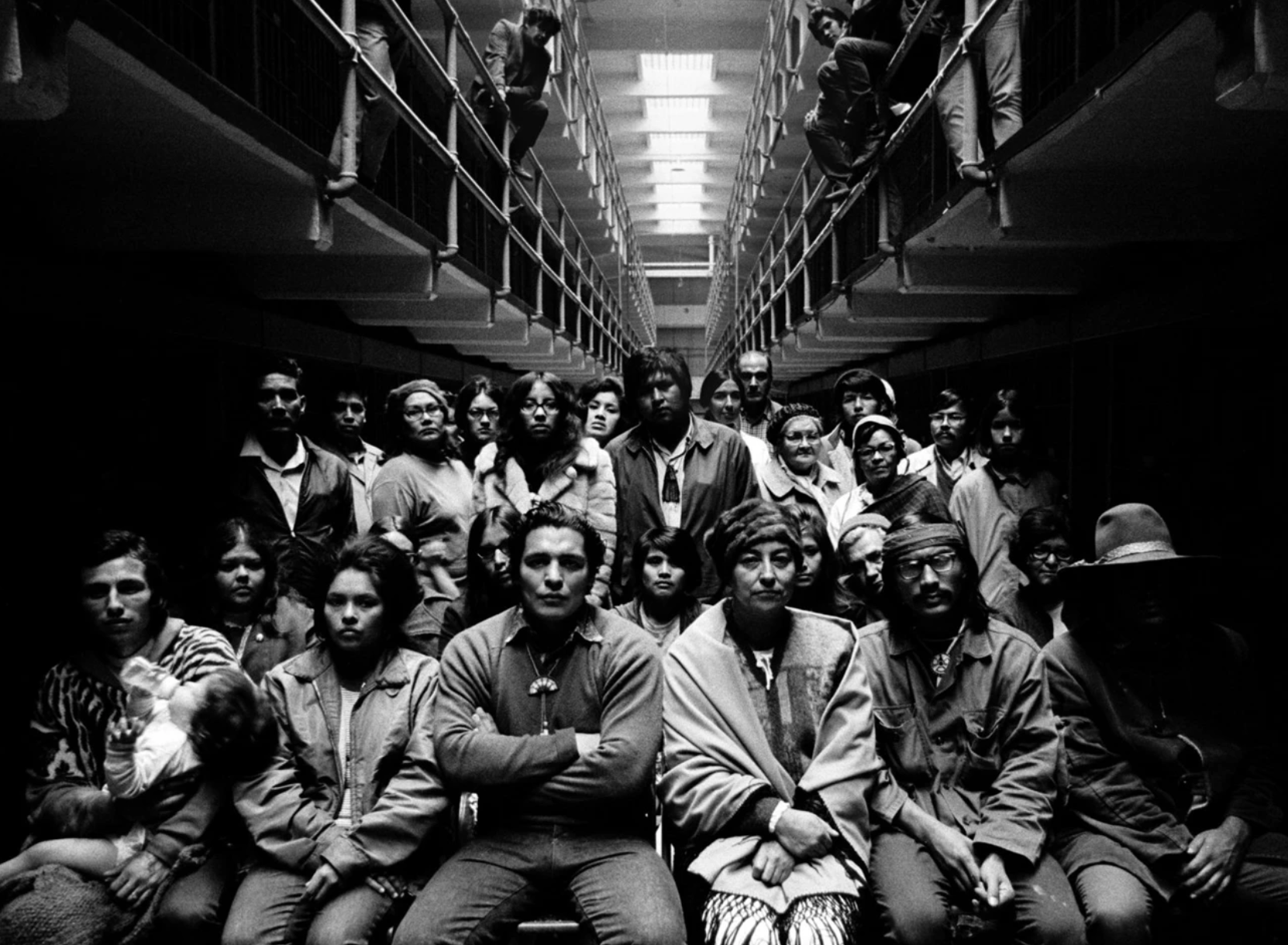
The takeover also connected young Native American activists from dozens of tribes, confirming the concept of Indians from All Tribes. Native American college students would haul fresh water and food on a resupply boat on weekends. Urban Indians learned about varied cultural traditions from being on the Island with Indian people from all over the country.
Also, many longshoremen, like Joseph Morris, (Blackfoot) were active supporters of the occupation. The International Longshoreman’s Association even threatened to close all Bay Area ports if the government interfered with the occupation. (In one of those oddball footnotes of history: As a young child, actor Benjamin Bratt lived on the Island with his mother and siblings.)
THE END OFFERED NEW BEGINNINGS
Every year, Native Americans from across the country — including many of the original occupiers — still gather on Alcatraz for sunrise ceremonies on Thanksgiving and Indigenous Peoples (a/k/a “Columbus”) Day. This gathering is more than symbolic. While it reflects the connection to the past, it also reverberates in present action.
After Alcatraz, in November 1972, there was an occupation of the Bureau of Indian Affairs. That was followed by the Trail of Broken Treaties, the Wounded Knee Occupation, and the Longest Walk. On their visit to Alcatraz, AIM leaders noted that the demonstration garnered national attention, while those involved faced no punitive action. So, when AIM members seized the Mayflower II on Thanksgiving 1970, the Occupation of Alcatraz was noted as "the symbol of a newly awakened desire among Indians for unity and authority in a white world."
Alcatraz is the link to contemporary Indigenous protests, such as the 2016 Standing Rock water protectors’ action to halt the Dakota Access Pipeline from being built across the Missouri River and the opposition to Enbridge, the Canadian oil company, running pipelines through Indigenous lands inside Wisconsin.
The occupation of Alcatraz Island served as a strong symbol and unifying force for Indigenous Peoples everywhere because of the importance the Island held in their ancestors' lives: as a camping ground, a place to hunt for food and (ironically) at one point a remote place where Indigenous law violators were held. The occupation lives on in our awareness because it continues to remind Native Americans what the Island has meant to them as a People.
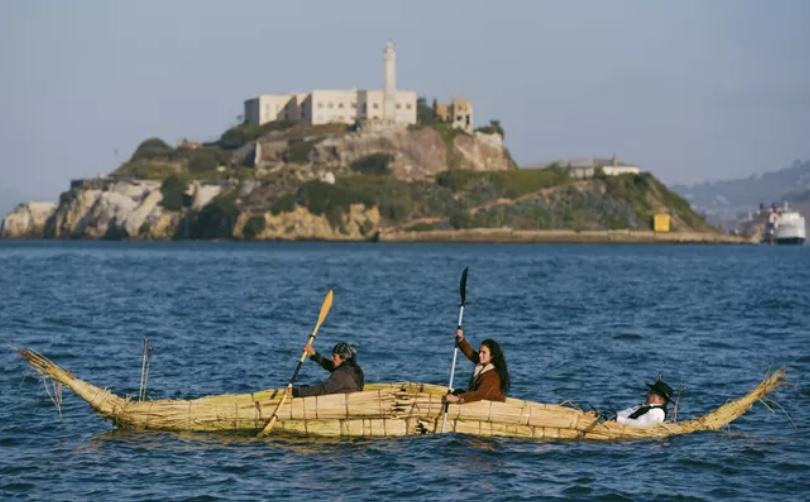
Indigenous Reed Boat used to sail The Bay.
In 2019, a group of Native Americans and others sailed a tule boat from Bolivia to San Francisco to commemorate the 50th anniversary of the American Indian occupation of Alcatraz Island
* The Alcatraz Proclamation further stated:
We know that $24 in trade goods for these 16 acres is more than was paid when Manhattan Island was sold, but we know that land values have risen over the years. Our offer of $1.24 per acre ($214.80 in 2025) is greater than the 47¢ per acre that the white men are now paying the California Indians [sic] for their land ($4.07 in 2025).
We will give to the inhabitants of this island a portion of that land for their own, to be held in trust by the American Indian Affairs and by the [B]ureau of Caucasian Affairs to hold in perpetuity – for as long as the sun shall rise and the rivers go down to the sea.
We will further guide the inhabitants in the proper way of living. We will offer them our religion, our education, our life-ways, in order to help them achieve our level of civilization and thus raise them and all their white brothers up from their savage and unhappy state. We offer this treaty in good faith and wish to be fair and honorable in our dealings with all white men.
For more information about Alcatraz Island, Welcome to Indian Land, click here.
My thanks to Malia Wollen, New York Times