A Modern Scandal
Matisse’s Femme au Chapeau
SFMOMA
Ongoing – September 13
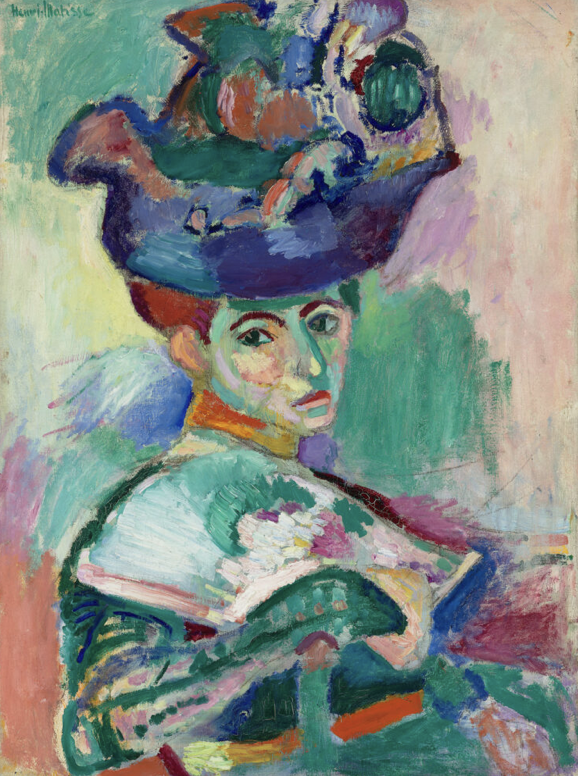
Sometimes, your visit to a museum reminds you of an Art History class. Boring? Maybe… unless the cold, digital slides are replaced with glorious, original works of art.
So, spend an afternoon charting the legacy of Matisse's pivotal Fauvist painting. It is paired with nine modern works that recognize this work heralds the new era of 20th century modern art. The exhibition positions Matisse in dialogue with his predecessors, contemporaries, collaborators and successors, probing the painting's historical context and impact over more than 120 years.
Matisse's Femme au chapeau (Woman With a Hat) was an inflection point. Its debut at the 1905 Salon d'Automne in Paris ignited passionate controversy, leading to its establishment as the key image of Fauvism, the first French avant-garde movement of the 20th century.
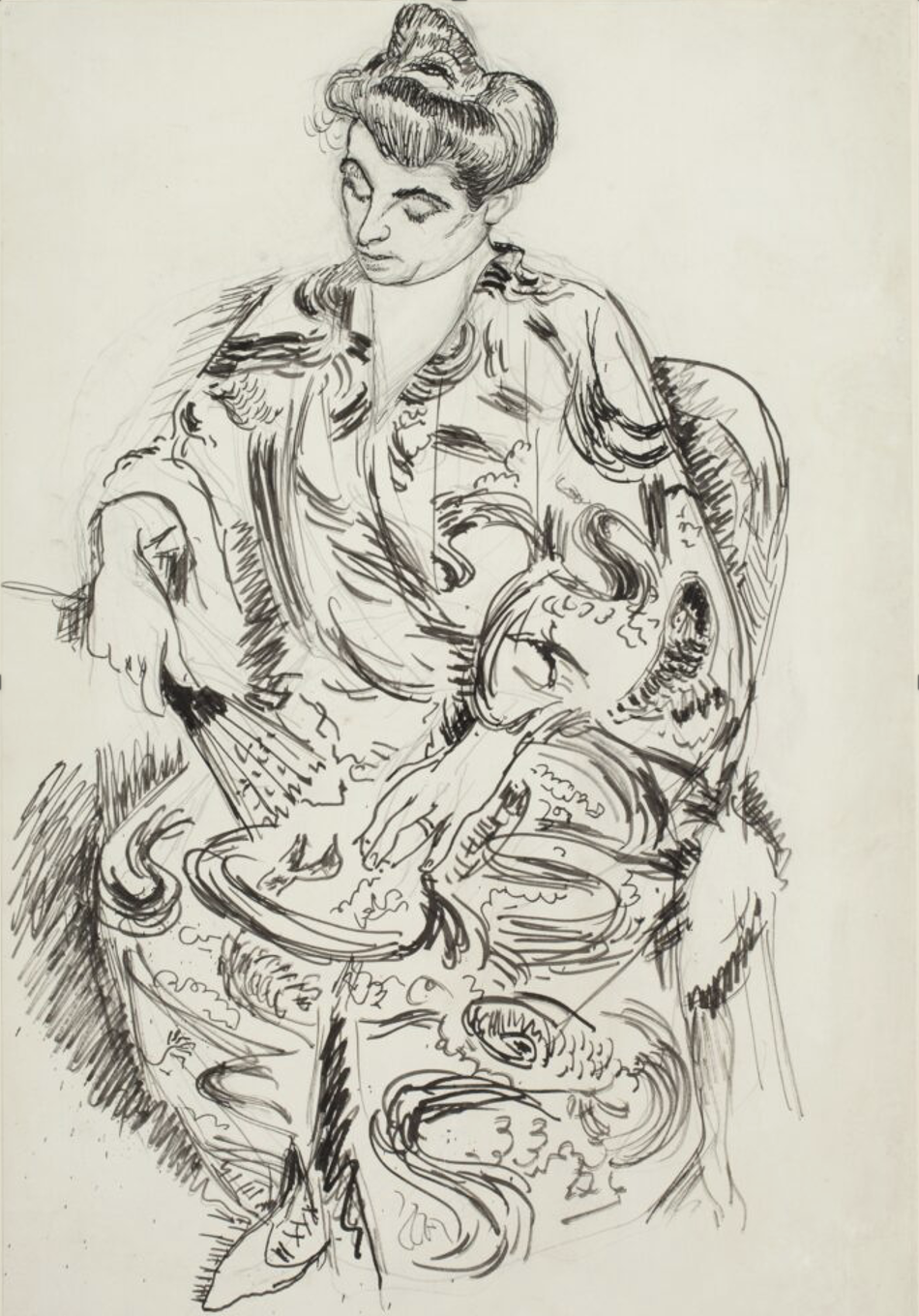
Matisse, Madame Matisse in a Kimono
Amélie Matisse, née Parayre, worked as a milliner in her aunt’s Paris boutique before operating her own hat shop between 1899 and 1902. She was thirty-three when she sat for Femme au chapeau, and it is assumed she designed the hat she wears in the portrait.
For 41 years, Amélie Matisse was Henri’s committed partner, business manager, muse and biggest advocate. In addition to the portraits, ephemera in the exhibition will shine a light on Amélie Matisse’s impact on the artist and as a maker in her own right.
Femme au chapeau made its way to the Bay Area in 1935. It was shown in the United States for the first time the following year, in one of the first exhibitions mounted at the one-year-old SFMOMA. Since entering the Museum's permanent collection in 1991, Femme au chapeau has continued to influence contemporary artists in its bold approach to color and form.
The Moment Matisse Used Color to Break the Rules of Modern Art
The portrait defied convention in its bold color and loose brushstrokes. This exhibition focuses on the risks Matisse took and the enduring impact of this iconic work. Of course, Impressionists and Post-Impressionists had been championing short brushstrokes, unmixed colors and bright synthetic pigments to capture the optical effects of light since the 1870s. Still, these leaps of painting did not prepare the art world for Matisse’s work.
“…Femme au chapeau marked a wholly new direction in style where color is fully divorced from observable reality and attempts to capture sensation rather than optical perception and naturalistic representation,” states Maria Castro co-organizer of the exhibition. “His brushwork is sketchy and features broad areas of color as well as moments when the canvas and pencil underdrawing are visible. This approach to color and technique stood out, even among other experimental works.”
The Gallery at the Salon d’Automne
SFMOMA’s unique approach to dramatize the impact of Femme au chapeau starts with a restaging of the Salon’s Gallery VII. We step back into 1905 and see the painting in its milieu with the other works actually on display at the same time. This show has gathered together the greatest number of works from that historic display. Step into your great-grandparents’ shoes (assuming they were sophisticated Parisians) and see why this work, along with paintings by André Derain, Albert Marquet and Maurice de Vlaminck sparked such heated debate.
Trace How Artists Have Responded to Femme au chapeau Across Generations
From Matisse’s peers to artists working today, such as Hilary Harkness and Rachel Harrison, visitors will see how the painting has shaped perceptions about color, content, form and expression. In addition, the exhibition further highlights local connections, by demonstrating the painting’s impact on Bay Area Figurative artists, including Joan Brown, Richard Diebenkorn and David Park.
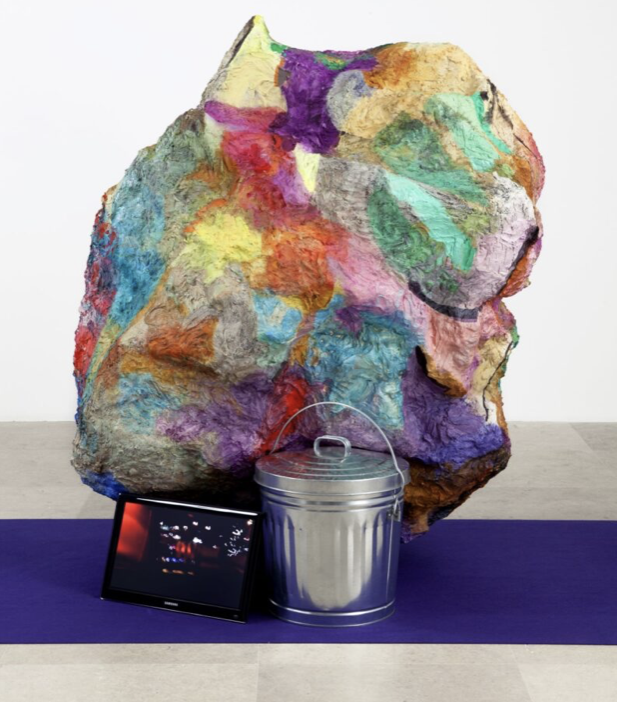
Rachel Harrison, Hoarders, a multimedia work. An exuberant abstract sculpture with no woman and no hat but that directly references Femme au chapeau in its high-keyed color palette, patchy paint handling and audacity
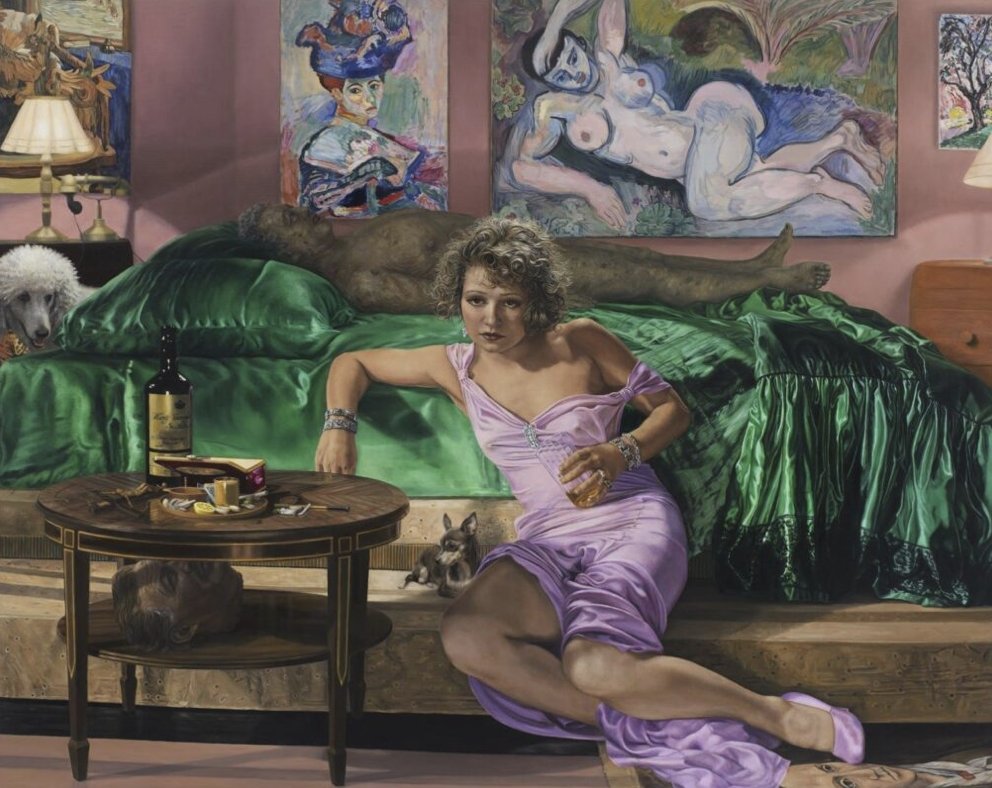
Hilary Harkness, Answered Prayers – A dark take on a 1930s-era boudoir scene with a central female figure reminiscent of Hollywood’s golden age, with direct and indirect references to Gertrude Stein and Alice B. Toklas, their legendary relationship, circle of associates and the times in which they lived. Here, Toklas sits with Stein’s corpse. She knew that the moment she left their apartment to receive medical treatment at a hot springs for an arthritis cure, Gertrude's family would (and did) swoop in and steal their art collection, leaving Alice penniless.
The painting is used to comment on contemporary issues of sex and class. Answered Prayers is one of three paintings by Harkness to address the Toklas-Stein relationship. In this work, she also includes the decapitated head of Ernest Hemingway (Stein's former protégé), and Stein’s famed purchase – Matisse’s Femme au chapeau – hanging in the background.
Exclusive Venue
SFMOMA is the only place where you can experience this landmark exhibition – the full story and radical spirit of this groundbreaking work. Matisse’s Femme au chapeau: A Modern Scandal, features over ninety works by more than forty artists from the early 1900s to today
The painting has a longstanding connection to the Bay Area beyond its US premiere at SFMOMA in 1936. In Paris, it had captured the attention of American collectors (and Oakland residents), siblings Gertrude and Leo Stein, who acquired the work on the last day of the exhibition.
“A thing brilliant and powerful, but the nastiest smear of paint I had ever seen” is how Leo Stein described his first impression of Femme au chapeau. Fortunately, Gertrude was a better judge of art. Though wealthy by most standards, the Steins’ resources were not without limits. Their Left Bank apartment was full of art but modest in footprint. Gertrude Stein once said: “You could buy art or you could buy clothes.” She made her choice.
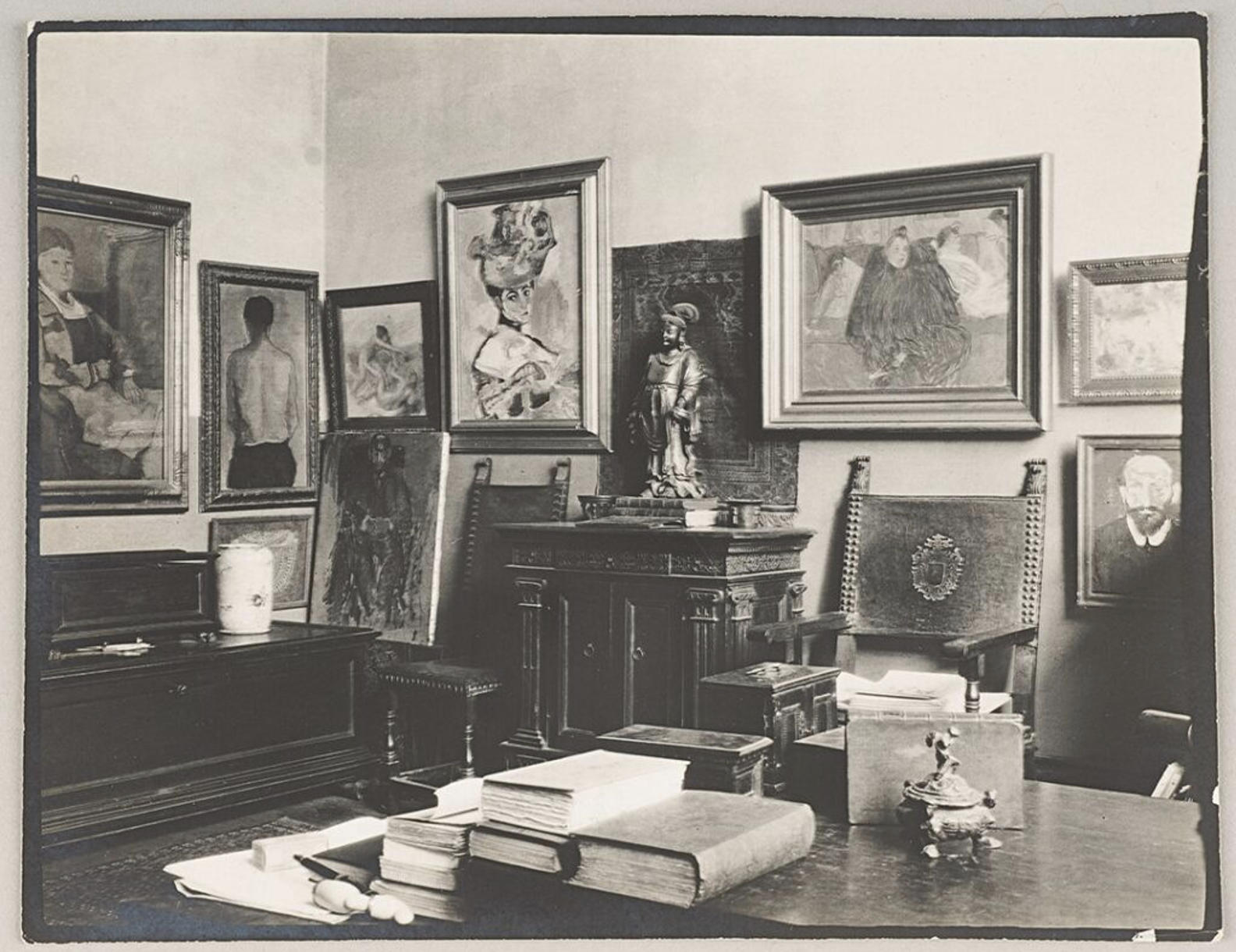
The apartment of Leo and Gertrude Stein at 27 rue de Fleurus, Paris, ca. 1906, with Femme au chapeau in upper left center.
Leo and Gertrude Stein, and their older brother and sister-in-law, Michael and Sarah Stein, were all deeply curious, intellectually engaged and passionate about art. Acquiring Femme au chapeau was a crucial moment for them as well. After Gertrude’s purchase, both Stein households focused their efforts on collecting new works.
Sarah Stein was so captivated by Matisse’s work that she and her husband readily amassed their own Matisse collection. After Leo and Gertrude parted ways in 1913, Sarah acquired Femme au chapeau. Of all its owners, Sarah Stein was closest to Matisse. The artist once said that she knew his paintings even better than he did.
The Wild Beasts of “Fauvism”
A minor historical note: Why Fauvism?
At the 1905 Salon, in the same Gallery VII that held Matisse’s works and those of his like-minded contemporaries, there were two Renaissance-style sculptures by Albert Henri Marque also on display. One sculpture was a representation of Donatello.
In his review of the Salon, art critic Louis Vauxcelles described Marque’s outlier works as “Donatello chez les fauves,” (“Donatello among the wild beasts”). The 1900s equivalent of #trending was born, as others embraced the description and “Fauvism” emerged as the name for this avant-garde movement.
For more information on this exhibition, click here.